Published: October 30, 2026 Last Updated 2 hours ago by Esther Ejoh
On the first major runway evening of Heineken Lagos Fashion Week 2026, Hertunba opened the show at 5 p.m., setting the tone for the night with a collection that celebrated Nigerian craftsmanship, textile heritage and contemporary design.
Under this season’s theme, CRAFTED: Heritage. Innovation. Circular Futures, Florentina Agu’s brand presented a collection that stayed true to its established identity while reflecting the fashion week’s wider focus on preserving traditional techniques and giving them relevance in modern fashion.
The Hertunba Lagos Fashion Week 2026 presentation brought together indigenous fabrics, sculptural construction and a thoughtful approach to production, offering an opening statement that connected cultural knowledge with the way women dress today.
Hertunba’s reputation is built on creating clothes that empower women while preserving softness and cultural roots. The name combines “Her” with the Yoruba title Otunba, signifying a woman of distinction and influence.
 Photo: Instagram/fvafrica
Since its founding in 2020, this concept has guided the brand. At Lagos Fashion Week, it appeared in statement silhouettes, heritage textiles, and a clear commitment to upcycling and artisanal production.
Florentina Agu’s approach is intentional. Hertunba uses traditional woven fabrics such as Aso Oke and Akwete, alongside upcycled vintage wrappers and other materials that give textiles a second life.
The fashion brand demonstrates that these materials are not limited to ceremonial or traditional dress. They can be transformed into contemporary shapes, including sculptural bodices, asymmetric skirts, fluid sets and structured yet wearable pieces.
Previous seasons have explored themes of femininity, strength and rebirth. The 2025 presentation, described as slow, intentional and grounded, established Hertunba as a label that prioritises presence over spectacle.
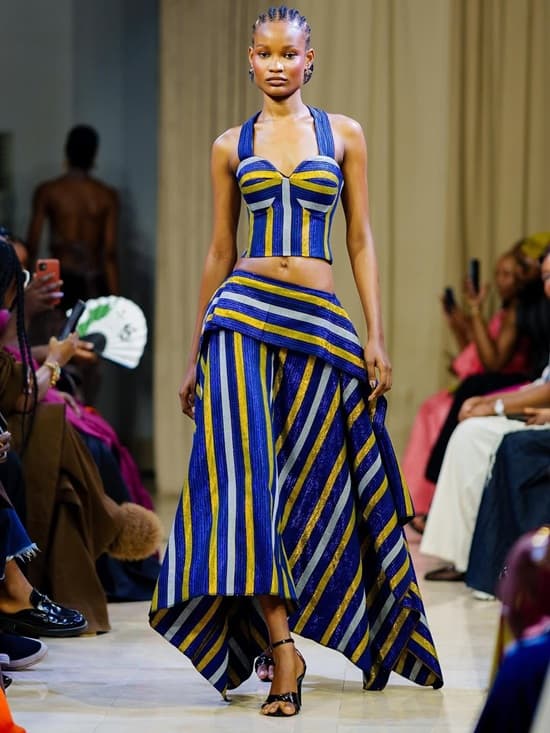 Photo: Instagram/fvafrica
Reviewers highlighted engineered drapes, ruffles and cuts that offered architectural detail while remaining wearable for different body types. This inclusive approach has attracted women who value both visual impact and practical comfort.
The Hertunba Lagos Fashion Week 2026 collection continued this design direction. Opening the main runway night gave the brand greater visibility and responsibility.
In a season focused on craft and circularity, its established use of indigenous weaving techniques and upcycled materials positioned Hertunba as a natural fit for the conversation, rather than a recent adopter of sustainability language.
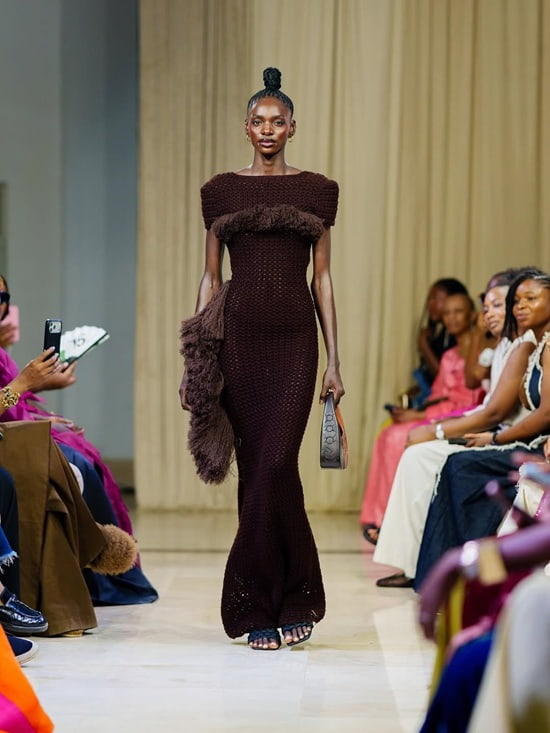 Photo: Instagram/fvafrica
Hertunba stands out for its commitment to textile heritage. Akwete cloth, rooted in southeastern Nigerian weaving traditions, and Aso Oke, a prestigious Yoruba fabric, are used as primary materials rather than decorative elements.
The brand emphasises preserving traditional techniques while ensuring the finished garments remain relevant to contemporary wardrobes. Upcycling vintage wrappers also extends the life of existing textiles, transforming personal and family archives into modern fashion pieces.
This approach carries both aesthetic and ethical significance. In an industry facing waste and environmental challenges, designers who work with existing materials and skilled local labour offer an alternative model of production.
Hertunba’s small-batch, handcrafted approach and relationships with artisan communities reinforce this commitment. The clothes are designed and made in Nigeria, supporting traditional craft knowledge and providing opportunities for local production.
 Photo: Instagram/hertunba
Runway images from the Hertunba Lagos Fashion Week 2026 show reflected this material intelligence. Bold stripes in blue and black, green and white, alongside other colour combinations, moved across the body in layered, asymmetric constructions.
The fabrics maintained their structure while allowing movement. The overall effect was controlled drama: clothes that command attention through their construction, colour and proportions without relying on unnecessary excess.
Hertunba’s design language centres on the modern African woman who moves confidently through professional, social and personal spaces.
The silhouettes favour volume that flatters, cuts that introduce interest through asymmetry or architectural details, and proportions that feel intentional rather than dictated by short-lived trends.
Matching sets, dresses and dramatic statement pieces coexist within a cohesive visual identity.
 Photo: Instagram/hertunba
This consistency has helped the brand extend beyond the runway. Celebrities and public figures such as Tiwa Savage, Temi Otedola, Wunmi Mosaku, Genevieve Nnaji and Bonang Matheba have chosen Hertunba for significant appearances.
The clothes photograph well, but their appeal goes beyond their visual impact. They are designed to give the wearer a sense of presence through considered fabric placement, proportions and construction.
At Lagos Fashion Week 2026, the collection continued this conversation. Opening the show allowed the brand to establish a clear design perspective before the evening shifted to streetwear, conceptual design and international influences.
Within a programme featuring Nigerian and continental fashion designers, Hertunba’s presentation highlighted the depth of Nigeria’s sustainable and craft-focused fashion industry.
 Photo: Instagram/hertunba
Lagos Fashion Week 2026 centres on the knowledge, skill and creative processes shaping African fashion. The CRAFTED theme encourages fashion designers to explore heritage techniques, innovation and circular approaches to production and consumption.
For Hertunba, whose identity is already connected to these values, the season offers both recognition and a platform for further growth.
The questions raised by the brand’s work remain relevant to the wider industry. How can indigenous textile traditions be preserved and economically sustained?
How can fashion designers create clothes that reflect how people dress today while honouring the labour and knowledge behind traditional materials? How can sustainability move beyond marketing language and become part of everyday design, sourcing and production decisions?
 Photo: Instagram/hertunba
The Hertunba Lagos Fashion Week 2026 showcase does not suggest that these questions have simple answers.
Instead, it offers a working example through small-batch production, visible relationships with artisans, upcycling as a core method and a design vocabulary that treats African textiles as contemporary fashion materials.
In an industry that increasingly needs to consider its environmental impact, this consistency is significant.
 Photo: Instagram/hertunba
Since its founding, Hertunba has expanded through runway presentations, international trade platforms such as Who’s Next in Paris and a growing client base across Nigeria and the diaspora.
The brand’s ability to dress women for both red-carpet appearances and professional settings has strengthened its commercial position. Yet its central proposition remains unchanged: clothes that empower through craftsmanship, cultural references and thoughtful construction.
Opening the main runway on the first evening of Lagos Fashion Week 2026 presented this proposition to buyers, media professionals, fashion industry stakeholders and an audience interested in the season’s themes.
 Photo: Instagram/hertunba
The collection’s presence in fashion coverage and social media conversations further extended its reach. Statement silhouettes, heritage textiles and a commitment to upcycling continue to define the brand’s contribution to Nigerian fashion.
As the week progresses and other fashion designers present their interpretations of craft, innovation and circular futures, Hertunba’s opening presentation offers an important reference point.
It demonstrates that sustainability and visual impact can exist within the same design approach, that traditional textiles have a place in contemporary wardrobes and that consistency can be just as significant as seasonal experimentation.
In a fashion landscape that often rewards novelty, Hertunba’s appearance at Lagos Fashion Week 2026 offered something more enduring: a clear design perspective, executed with care, connected to Nigerian textile traditions and focused on the women who wear the clothes long after the runway presentation ends.
Photo: Instagram/hertunba
You May Also Like:
Lagos Fashion Week 2026: Day 1 Conversations on the Future of African Fashion
LFJ’s Jupiter Collection Takes Lagos Fashion Week into Orbit
Atafo’s Sharp Tailoring and Empowered Elegance Kick Off Lagos Fashion Week 2026
Ejiro Amos Tafiri’s Reverie Collection Lights Up Lagos with Colourful Pieces
Why Nigerian Party Fashion Hits Different
South African Fashion Week 2026 Returns to Johannesburg with David Tlale Opening the AW27 Runway
7 Fashion Trends to Watch at the 2026 Lagos Fashion Week
Lagos Fashion Week 2026: What to Wear, Know and Expect
7 Emerging Fashion Designers We Would Love to See at Lagos Fashion Week 2026
9 Reasons You Should Attend (or Watch) Lagos Fashion Week 2026
Maxhosa Africa: The First South African Fashion Brand Showcasing at Paris Fashion Week
Method Dressing Among Nigerian Celebrities: Are We Finally Getting It Right?


Esther Ejoh is a Fashion Editor at Fashion Police Nigeria, where she writes all things fashion, beauty, and celebrity style, with a sharp eye and an even sharper pen. She’s the girl who’ll break down a Met Gala look one minute, rave about a Nigerian beauty brand the next, and still find time to binge a movie or get lost in a novel. Style, storytelling, and self-care? That’s her holy trinity.