Published: October 30, 2026 Last Updated 1 hour ago by Esther Ejoh
On Thursday, 29 October 2026, as Lagos Fashion Week 2026 entered its first full day, Nigerian fashion label Kilentar took a different approach to presenting its latest collection.
Rather than joining the main tents at the Federal Palace Hotel, the brand opted for an invitation-only offsite presentation, creating a more intimate setting for its Spring/Summer 2027 collection.
Under this season’s theme, CRAFTED: Heritage. Innovation. Circular Futures, founder and creative director Michelle Adepoju presented a body of work that continues the brand’s exploration of West African craftsmanship through contemporary womenswear.
The Kilentar Lagos Fashion Week 2026 presentation offered an opportunity to examine the relationship between traditional textile techniques, artisanal knowledge and modern design.
Known for its collaborations with women weavers, dyers and beaders across West Africa, Kilentar has built its identity around the people and processes behind its garments.
From organic cotton fabrics to intricate hand-applied beadwork, each piece reflects a production approach that places craftsmanship at the centre of the design process.
For a fashion week increasingly interested in the future of African design, Kilentar’s participation felt particularly relevant. The brand has consistently demonstrated that traditional techniques can exist within modern wardrobes without losing their cultural significance.
Its SS27 collection continues this conversation, presenting clothing that balances ceremonial presence with everyday wearability.
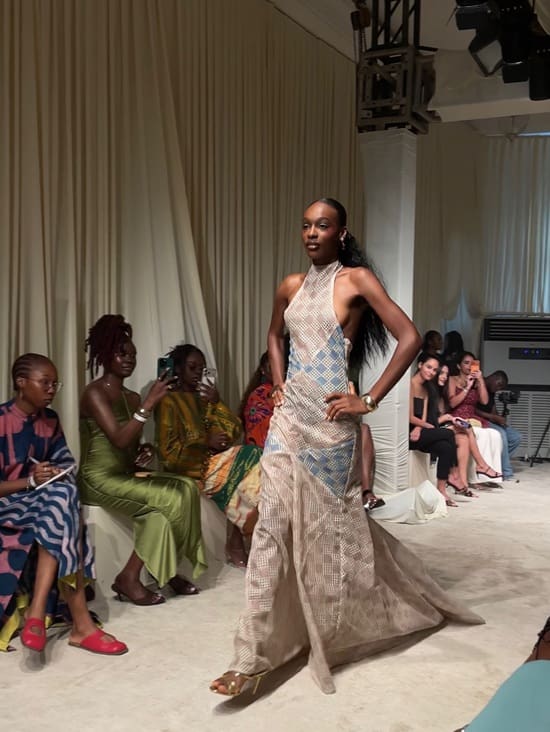 Photo: Instagram/anastasiaugo_
Michelle Adepoju’s journey into fashion was driven by curiosity rather than formal training. Raised in the United Kingdom in a Nigerian household, she developed an early interest in clothing through thrifting, experimenting with fabrics and reworking existing garments.
However, a post-university trip through West Africa in 2018 became a turning point in her creative direction.
During her travels, Adepoju encountered local markets, textile workshops and artisans whose skills had been passed down through generations. What initially began as an idea for a marketplace gradually developed into a full womenswear brand built around African craftsmanship and contemporary design.
The name Kilentar comes from the Yoruba phrase “Kí lẹ̀ ń tà?” meaning “What are you selling?” Commonly heard in southwestern Nigerian markets, the expression captures the spirit of exchange that informs the brand’s identity.
For Adepoju, it represents more than a name. It reflects an ongoing conversation about the materials, stories, relationships and cultural knowledge that fashion brings together.
Today, Kilentar works with a growing network of artisans, including weavers in Burkina Faso, dyers and beaders in Nigeria, and other craftspeople across West Africa.
The fashion brand also develops many of its own textiles, overseeing the process from thread selection to finished fabric. This involvement gives its garments a distinctive texture and visual character that is difficult to achieve through conventional mass production.
This philosophy was evident throughout the Kilentar Lagos Fashion Week 2026 presentation. Rather than treating traditional craftsmanship as an additional design feature, the brand continues to make it the starting point of its creative process.
By choosing an offsite presentation at 3 p.m. on the first runway day, Kilentar created an opportunity for guests to experience the collection outside the usual pace of a traditional catwalk show.
The decision also follows an approach the brand has explored in previous seasons, where the presentation of garments is treated as an important part of the overall creative experience.
For its SS26 collection, Súrùlérè, meaning “patience is rewarding”, Kilentar opted for a quiet installation at Temple Muse rather than a conventional runway presentation.
Models stood on individual podiums while guests moved around the garments, allowing them to examine the construction, textures and details at close range.
The Kilentar Lagos Fashion Week 2026 presentation maintained this interest in attentive viewing. Early documentation and social media posts described the collection as “Seen From Every Angle”, a phrase that offers insight into the brand’s approach to garment construction.
The designs respond to movement, perspective and changing light. Hand-applied beadwork and woven textures reveal different patterns as the wearer moves, meaning that a garment can appear relatively simple from the front but reveal more intricate details from the side or back.
This attention to detail is deliberate. Adepoju has previously spoken about the time and labour required to develop each garment. While earlier collections featured as many as thirty looks, more recent presentations have adopted a curated approach that places greater emphasis on individual pieces.
In an industry where collection size and runway spectacle often attract attention, this decision offers a different perspective on fashion presentation.
Focusing on fewer garments allows the design team to devote more attention to construction, material selection and finishing. It also supports a production model that places greater value on considered output.
One of the most recognisable aspects of Kilentar’s design language is its use of traditional West African textile techniques within contemporary silhouettes.
Handwoven Akwete and other regional fabrics feature alongside intricate beadwork, raffia detailing and carefully controlled volume.
These materials are not simply added to finished garments for decoration. They inform how the clothing is constructed, how it moves and how it sits on the body.
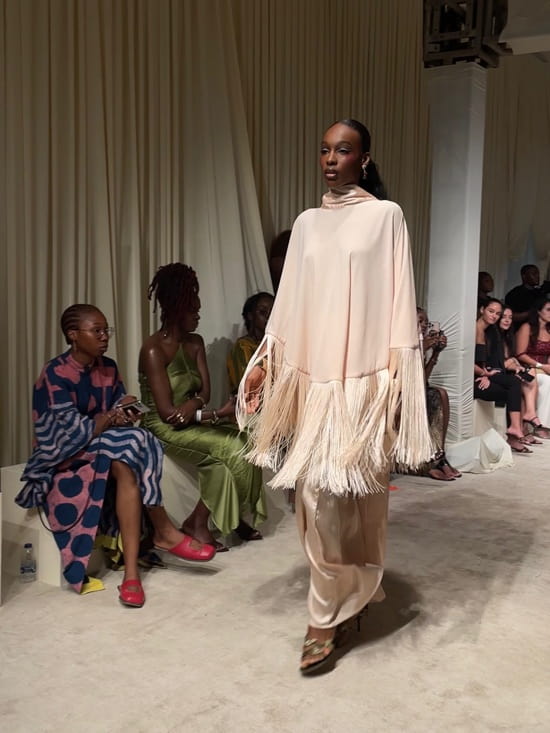 Photo: Instagram/anastasiaugo__
Across its collections, the brand has explored fringes, draping, structured bodices and fluid skirts. These elements create a relationship between firm construction and softer fabric movement, allowing traditional materials to take on new forms.
The Kilentar Lagos Fashion Week 2026 collection continues this exploration, drawing attention to the value of textile knowledge and the skill required to transform raw materials into finished garments.
Sustainability also remains central to the brand’s business model. Organic cotton, natural dyes where possible, small-batch production and long-term relationships with artisans form part of its approach.
Adepoju has maintained that the brand’s growth should not come at the expense of the people and processes responsible for its identity.
This position aligns closely with the CRAFTED theme of Lagos Fashion Week 2026, which places emphasis on heritage, innovation and circular futures.
Kilentar’s work demonstrates how these ideas can be applied through actual production decisions rather than remaining abstract conversations about sustainability.
There is also an interesting distinction in how the brand approaches occasionwear. Although its garments can feature bold colours, intricate beadwork and elaborate textures, they do not rely on theatrical construction to make an impression.
The pieces maintain a sense of wearability, making them suitable for special occasions while remaining relevant to everyday wardrobes.
This balance has helped the brand attract Nigerian and international clients interested in clothing that carries a story beyond its appearance.
Lagos Fashion Week 2026 opened with industry conversations and offsite presentations before moving into its main runway programme.
Kilentar’s afternoon presentation positioned the brand among the early voices of the season, offering a different perspective from the larger evening showcases.
Its participation also highlighted the range of approaches shaping contemporary African fashion. While some fashion designers use the runway to explore dramatic silhouettes, experimental styling and visual spectacle, Kilentar focuses on the relationship between craftsmanship, material development and the finished garment.
The CRAFTED theme provided a fitting context for this approach. It encouraged designers to consider how traditional knowledge can work alongside new ideas, responsible production and changing consumer expectations.
Within this conversation, Kilentar Lagos Fashion Week 2026 offered a practical example of how a fashion business can build its identity around artisan collaboration.
By working directly with women weavers, dyers and beaders, maintaining involvement in textile development and prioritising carefully produced garments, the brand presents a model that places creative value and production responsibility side by side.
This does not suggest that artisan-led production is without challenges. Working with traditional techniques requires time, coordination, investment and a willingness to respect the pace of individual craftspeople. However, Kilentar’s approach shows that these processes can form the basis of a commercially relevant fashion label.
Across its collections, Kilentar has maintained several defining characteristics. There is a continued interest in the feminine form, an appreciation for construction that reveals the work behind a garment, and a balance between structured shapes and softer elements.
African textiles remain foundational to the brand’s identity rather than functioning as decorative references. This distinction is important because it places the people, skills and cultural knowledge behind the materials at the centre of the finished design.
The SS27 collection builds on this established language while exploring how clothing can change depending on perspective and movement. The idea behind “Seen From Every Angle” suggests an interest in garments that reward closer attention.
A beaded surface may reveal one pattern when viewed directly and another when the wearer turns. A structured bodice may create a different visual effect when paired with a flowing skirt. These details encourage viewers to consider the garment beyond its initial appearance.
This approach also offers an interesting contrast to the way fashion is increasingly consumed through digital platforms. Social media often reduces runway collections to individual photographs and short videos, where garments are viewed from a single angle.
Designs that reveal additional details through movement invite a more complete appreciation of the work involved.
At Kilentar Lagos Fashion Week 2026, this attention to perspective became part of the collection’s wider story. The garments were not simply presented as finished products but as examples of how material, construction and movement can work together.
Michelle Adepoju has developed Kilentar from an idea inspired by West African markets into an internationally recognised womenswear label.
The brand has presented its work in fashion capitals including New York and London, alongside its continued presence in Lagos. Its growing recognition has also brought attention to its approach to craftsmanship and collaboration.
What makes this development particularly interesting is the consistency of its creative direction. Although the brand continues to explore new silhouettes and presentation formats, its commitment to working with artisans remains central to its identity.
The Kilentar Lagos Fashion Week 2026 showcase reaffirmed this position at a time when conversations about African fashion are increasingly moving beyond aesthetics to examine production, ownership, sustainability and cultural preservation.
There is a growing interest in understanding where garments come from, who makes them and what happens to traditional skills as the fashion industry changes. For brands working with heritage techniques, these questions are especially important.
Kilentar’s work offers one perspective on how fashion designers can respond. Rather than treating cultural heritage as a seasonal reference, the brand incorporates it into the actual development of its clothing. The result is fashion that connects traditional knowledge with contemporary womenswear without separating the two.
As Lagos Fashion Week continues to provide a platform for designers exploring the relationship between African identity and global fashion, Kilentar’s approach remains an important contribution to the conversation.
The SS27 presentation demonstrated that a collection does not always need an elaborate runway production to communicate a strong creative vision. Sometimes, the most interesting details are found in the fabric, the construction and the hands responsible for bringing a design to life.
Kilentar’s latest collection is a reminder that craftsmanship requires time, collaboration and a clear understanding of the value behind each garment. Its presentation at Lagos Fashion Week 2026 reinforced the idea that African fashion‘s future can be shaped by innovation without abandoning the knowledge and traditions that came before it.
Photo: Instagram/kilentar
You May Also Like:
Hertunba Opens Lagos Fashion Week 2026 with Heritage and Powerful Silhouettes
Lagos Fashion Week 2026: Day 1 Conversations on the Future of African Fashion
LFJ’s Jupiter Collection Takes Lagos Fashion Week into Orbit

Atafo’s Sharp Tailoring and Empowered Elegance Kick Off Lagos Fashion Week 2026

Ejiro Amos Tafiri’s Reverie Collection Lights Up Lagos with Colourful Pieces
Why Nigerian Party Fashion Hits Different
South African Fashion Week 2026 Returns to Johannesburg with David Tlale Opening the AW27 Runway
7 Fashion Trends to Watch at the 2026 Lagos Fashion Week
Lagos Fashion Week 2026: What to Wear, Know and Expect

7 Emerging Fashion Designers We Would Love to See at Lagos Fashion Week 2026
9 Reasons You Should Attend (or Watch) Lagos Fashion Week 2026
Maxhosa Africa: The First South African Fashion Brand Showcasing at Paris Fashion Week


Esther Ejoh is a Fashion Editor at Fashion Police Nigeria, where she writes all things fashion, beauty, and celebrity style, with a sharp eye and an even sharper pen. She’s the girl who’ll break down a Met Gala look one minute, rave about a Nigerian beauty brand the next, and still find time to binge a movie or get lost in a novel. Style, storytelling, and self-care? That’s her holy trinity.