Published: August 6, 2026 Last Updated 3 months ago by Faustina Marfo
Nigerian fashion has moved beyond a fleeting moment to become a sustained movement, reshaping global perceptions of African luxury, craftsmanship, and cultural storytelling.
By 2026, the industry is producing not only exceptional clothing but also institutions, philosophies, and global brands that command international attention.
This rise is driven by Nigerian fashion designers who blend heritage with innovation and redefine luxury. From Mai Atafo’s bespoke tailoring to Veekee James’s conceptual designs, Nigerian fashion designers are leading global fashion.
Fashion designers working between Lagos ateliers and international cities have turned local textiles into luxury statements, expanded the language of menswear and womenswear, and refused to treat African identity as decorative.
Ankara (a.k.a African prints) has been elevated through hand-beading and precise construction. Aso-oke has moved from ceremonial cloth to international runways. Gender expression has become fluid.
Bridal dressing has also grown sculptural and powerful. Sustainability has shifted from slogan to practice. Behind every significant collection sits a personal story of risk, craft, and conviction.
These are the Nigerian fashion designers whose work and narratives matter most right now, told with the depth their journeys deserve.
Mai Atafo
Ohimai Atafo’s path to becoming one of Africa’s leading fashion designers exemplifies calculated risk-taking. Born in Ile-Ife, Osun State, he developed an early interest in clothing, sewing aprons in secondary school and using his mother’s sewing machine.
This Nigerian fashion designer’s journey was not straightforward; after earning a Master’s in Information Systems and Technology from City University in the UK, he returned to Nigeria in 2002 and worked in marketing roles at British American Tobacco Nigeria and later as a Brand Manager at Guinness Nigeria.
Atafo’s turning point came when he began making Aso-oke waistcoats for friends’ weddings.
 Instagram.com/maiatafo
 “I specially ordered lilac and purple aso oke with which I designed the waistcoats,” he recalled to Nairametrics. “Everybody looked good on the day, and people really liked the outcome. I did it for about six other weddings, and that was the beginning of Mai Atafo Inspired.”
In 2010, he left Guinness to pursue fashion full-time, a decision that solidified his legacy. The fashion designer briefly served as Fashion Editor for Genevieve Magazine and refined his skills at the Savile Row Academy in Leeds.
His brand is now known for impeccable tailoring and premium craftsmanship. He has dressed celebrities such as Banky W, Omowunmi Akinnifesi, and IK Osakioduwa, and designed wedding outfits for the 2016 film The Wedding Party.
His “Weddings by Mai” line, launched in 2011, is a top choice for bespoke bridalwear. Atafo’s career demonstrates that fashion is only twenty percent of the business; the remainder is effective risk management.
Lisa Folawiyo
Lisa Folawiyo’s journey illustrates that artistry transcends boundaries. Although she studied law rather than fashion, she shifted her focus in 2005, motivated by a passion for detail and craftsmanship.
The Nigerian fashion designer founded Jewel by Lisa, now Lisa Folawiyo, with the aim of creating contemporary womenswear with artisanal quality, crafted by hand from locally sourced materials.
Her brand is defined by a commitment to elevating Ankara fabric. “Our mothers, grandmothers and probably great-grandmothers have worn this fabric,” Folawiyo told the BBC.
 Instagram.com/lisafolawiyo
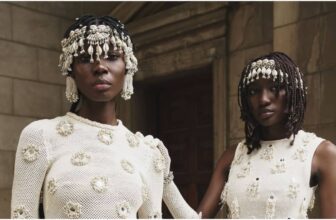
 Lisa reimagined the eponymous brand with intricate embellishments, hand-beaded details, crystal trims, and modern tailoring, transforming everyday fabric into high fashion. Each garment is hand-finished in Nigerian workshops, supporting local artisans and redefining the meaning of “Made in Nigeria.”
Her distinctive style has attracted global recognition, with collections featured in Vogue, The New York Times, Harper’s Bazaar, and Elle.
In 2012, Lisa Folawiyo won the African Fashion Awards, and her SS21 pieces were exhibited at the Victoria & Albert Museum in London. Icons like Lupita Nyong’o, Issa Rae, and Solange Knowles have worn her work.
Despite her achievements, the Nigerian fashion designer remains grounded, describing fashion as her “calling,” not merely a business.
Tolu Coker
Tolu Coker is an award-winning British-Nigerian fashion designer, textile artist, and illustrator based in London.
After working with Maison Margiela, J.W. Anderson, and Celine, she graduated from Central Saint Martins in 2017 with First Class Honours. In 2018, she launched her eponymous brand to express political reform and respond to evolving social and economic climates.
Coker’s work is largely inspired by the politics of identity, particularly Diasporic Black Identity, and social climates.
The Nigerian fashion designer’s collections are illustrative, dynamic, and thought-provoking, flirting with the boundaries of contemporary art and fashion.
 Instagram.com/tolucoker
 She is renowned for her reformative luxury philosophy, blending high-end tailoring with sustainability and social activism.
Tolu sources materials entirely from deadstock and merges traditional artisan craftsmanship such as weaving, screen printing, and hand embroidery with technological innovation. Her brand is a catalyst for acceptance and freedom in fashion.
In February 2026, Tolu Coker opened London Fashion Week with a landmark show attended by HRM King Charles III, underscoring the increasing recognition of Nigerian design talent.
The fashion designer has been named to the Evening Standard Progress 1000 list as one of London’s most influential people under 25. Her work demonstrates that African designers are shaping the global fashion agenda.
Andrea Iyamah
Andrea Iyamah Nehikhare, a Nigerian-Canadian fashion designer, founded Andrea Iyamah in 2011.
With locations in Toronto and Lagos, the brand is recognized globally for its chic swimwear and resort wear, featuring high-waisted cuts and strategic designs for women of all shapes and sizes.
 Instagram.com/andrea.oi
 Andrea Iyamah has expanded into Resort Wear, Ready-to-Wear, and Custom Bridal, establishing itself as a comprehensive luxury brand.
Its success reflects the increasing global demand for African-inspired resort wear that combines contemporary design with cultural elements.
Deola Sagoe
Deola Sagoe has spent more than three decades defining what Nigerian haute couture can look like.
She entered the industry when few local designers were thinking in global terms and steadily built a practice that combined traditional techniques with dramatic, sculptural silhouettes.
Her breakthrough moments included becoming one of the first Black women to present at AltaRoma in Rome and later staging a landmark standalone show at New York Fashion Week.
 Instagram.com/deola_sagoe
 Those appearances were not merely career milestones. They shifted the conversation about where African design belonged.
Sagoe’s work has always balanced ceremony and modernity, creating pieces that feel appropriate for major life events while remaining visually progressive. Clients have included African royalty, public figures, and international collectors.
In an industry that often celebrates the new at the expense of the enduring, her longevity itself is a statement.
The Nigerian fashion designer has maintained excellence across changing trends and generations of clients. Her story is one of quiet authority and institutional presence. She did not chase relevance. She set a standard and held it.
Adebayo Oke-Lawal
Adebayo Oke-Lawal launched Orange Culture in 2011 with a clear and ambitious goal: to expand the visual language of Nigerian menswear and challenge rigid ideas of masculinity.
Self-taught and intellectually driven, he began creating clothes that blended street energy with refined tailoring.
Early collections explored androgyny, bold colour, and fluid construction at a time when such approaches were still uncommon in the local market. International recognition followed, including shortlists for major prizes and placements with influential retailers.
 Instagram.com/theorangenerd
 Yet the deeper impact has been cultural. Orange Culture gave many young men permission to dress more freely and express themselves. Oke-Lawal’s work feels emotionally charged and wearable.
He designs with a strong sense of narrative, treating clothing as a vehicle for identity and conversation.
In 2026, the Nigerian fashion designer continues to shape discussions about gender, youth culture, and what contemporary African menswear can communicate on a global stage.
His story is one of intentional disruption carried out with consistency and care.
Kenneth Ize
Kenneth Ize grew up between Lagos and Europe, carrying both contexts into his design practice. He studied fashion in Vienna under notable mentors while remaining deeply connected to Nigerian textile traditions, particularly hand-loomed aso-oke.
Rather than treating the cloth as nostalgia, the Nigerian fashion designer elevated the labour of local weavers into international luxury collections. His presentations at major fashion weeks treated Nigerian craft as high design rather than ethnic novelty.
 Instagram.com/kennethize
 Critical recognition followed, along with growing demand from clients who valued both origin and execution. Ize’s strength lies in translation.
The fashion designer moves fluidly between the loom and the runway, insisting that the hands producing the fabric deserve the same visibility as the designer shaping the final garment.
In an industry still learning to properly value supply chains and cultural origin, the fashion designer’s approach feels both principled and commercially intelligent.
In 2026, he remains one of the most important bridge figures between tradition and contemporary luxury.
Veekee James
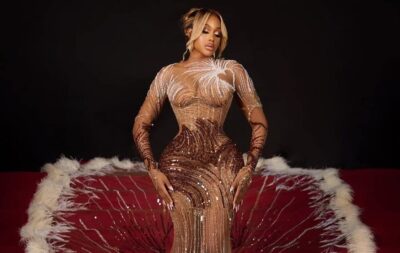
Veekee James built her reputation on an almost architectural understanding of the female form. Her bridal and red-carpet designs are known for precise construction, dramatic silhouettes, and an ability to make clients feel powerful rather than simply decorated.
The Nigerian fashion designer rose rapidly through consistent quality and celebrity dressing, becoming one of the most commercially successful Nigerian fashion designers of her generation.
 Instagram.com/veekee_james
 James identified a clear demand for modern, body-conscious luxury that still honoured African aesthetics, and she met it with technical skill and a strong visual identity. Her pieces dominate wedding seasons and major events.
The story of her ascent is one of clarity and execution. She did not dilute her point of view to gain attention. She refined it until the market came to her.
In 2026, her influence is visible every time a high-profile client steps out in one of her sculptural gowns.
Bubu Ogisi
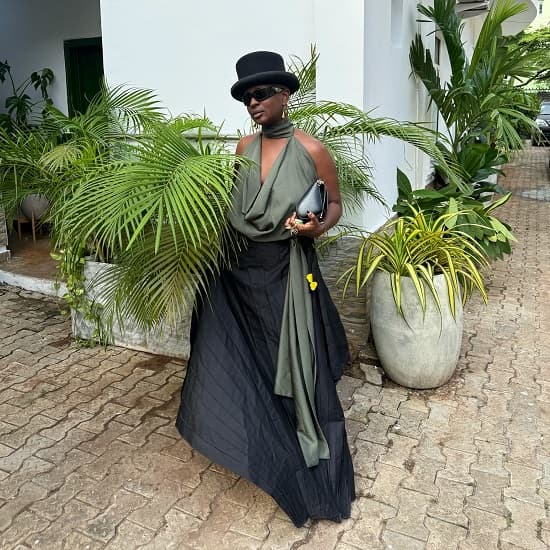
Bubu Ogisi approaches fashion as research, responsibility, and cultural practice through her brand Iamisigo. Her collections often incorporate natural materials, raffia, recycled elements, and traditional techniques, producing work that feels experimental yet grounded in place.
Ogisi’s practice challenges conventional notions of luxury by asking what materials and processes actually sustain communities and environments. She refuses easy aesthetics in favour of deeper cultural and ecological questions.
 Instagram.com/bubuogisi
 The result is clothing that carries weight beyond surface beauty. Her story is one of intentional friction.
In a fashion system still dominated by speed and novelty, the Nigerian fashion designer insists on slower, more considered ways of making.
In 2026, Iamisigo remains one of the most distinctive and thoughtful voices in contemporary African design.
Kanyinsola Onalaja
Kanyinsola Onalaja has emerged as a leading figure in refined, maximalist womenswear. Blending Nigerian heritage with European craftsmanship, she creates sculptural gowns and intricately detailed pieces that command attention.
Recent presentations on major fashion-week calendars have expanded her visibility and confirmed her place among the Nigerian fashion designers to watch most closely.
Onalaja’s trajectory is one of steady, deliberate ascent.
 Instagram.com/kkencoo
 Kanyinsola has moved from promising talent to a designer whose work is increasingly expected at the highest levels of the conversation.
Her collections balance drama with technical control, carrying forward a new generation’s confidence in both cultural reference and global ambition.
Tokyo James
Tokyo James, working between Nigerian and British influences, brings a sharp, modern sensibility to menswear.
His designs often reconsider proportion, tailoring, and attitude, offering a distinct point of view that feels neither purely local nor purely Western.
 Instagram.com/kkencoo
 As global menswear continues to evolve, Tokyo James represents the growing number of Nigerian fashion designers whose dual cultural fluency produces work that feels original rather than derivative.
His practice reflects the reality of many contemporary Nigerian creatives who move fluidly between geographies and references.
Prudent Gabriel
Prudent Gabriel‘s journey to becoming one of Nigeria’s most sought-after fashion designers is a story of resilience, faith, and sheer determination. Born on August 12, 1996, she grew up in Lagos, where her mother worked as a tailor.
Despite excelling in physics and chemistry and serving as head girl in secondary school, the fashion designer could not afford the fees for her university entrance exam. She learned tailoring from her mother, but her journey was far from smooth.
In 2018, she could barely thread a needle; by 2020, she was styling some of the biggest names in the entertainment industry.
Her breakthrough came when she left her job as a waitress to pursue fashion full-time. Starting out was daunting as she had a small shop in Ajah, Lagos, and convincing clients to trust a newcomer in a competitive market was a daily struggle.
 Instagram.com/prudent_gabriel
 Determined to prove herself, Prudent kept designing even when no one was ordering, posting her work online and asking friends to share. Her persistence paid off eventually.
By 2020, she had dressed Tim Godfrey’s crew, Debbie Rise of Big Brother Naija, Naomi Mac of Nigerian Idol, and Queen B of Ultimate Love.
In 2024, Prudential Atelier became one of the most talked-about names in Nigerian fashion. She designed evening gowns for Miss Universe Nigeria, Chidimma Vanessa Adetshina, and her iconic dresses for the Miss Universe competition in Mexico.
The fashion designer also styled Beauty Tukura, Liquorose Afije, Peggy Ovire for her wedding, and Mercy Chinwo for her traditional wedding and reception. Her work has made her a fixture at the AMVCA, where her designs dominate the red carpet and cultural day celebrations.
Beyond her commercial success, Prudent Gabriel is deeply committed to giving back. In 2020, she launched Prudential Fashion Academy, a fashion school that has produced over 5,000 graduates to date.
Other Nigerian fashion designers continue to expand the field in meaningful ways. Nkwo Onwuka advances sustainable practices with quiet consistency. Emmy Kasbit reinterprets heritage for contemporary menswear.
Streetwear labels such as Ashluxe connect Lagos urban energy to international culture. Emerging voices keep testing new materials, upcycling methods, and silhouettes at platforms like Lagos Fashion Week, ensuring the industry remains restless and inventive.
What unites these fashion designers is a shared refusal to treat Nigerian identity as limitation or costume. They work with local textiles, techniques, and stories while meeting the technical and commercial standards of a global industry.
These fashion designers dress celebrities, fill international stockists, earn critical recognition, and still remain connected to the communities and crafts that shaped them.
In 2026, watching Nigerian fashion means watching people who have moved past the need for external validation. They are not asking for space. They are defining the terms of contemporary style on their own rigorous, creative, and culturally grounded terms.
Photo: etcoker/_adamajalloh
You May Also Like:
Anil Padia Becomes The First Kenyan Fashion Designer to Win a LVMH Prize
This Ghanaian Fashion Designer Turns Garbage Into Your Favourite Footwear
24 Nigerian-Owned Luxury Handbag Brands You Didn't Know
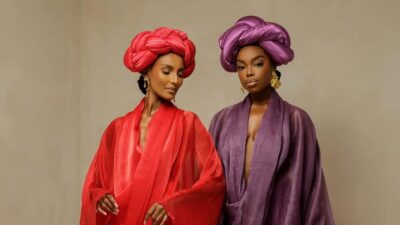
8 African Fashion Designers to Watch at the 2026 Nairobi Fashion Week
Christie Brown’s 2025 Resort Collection is the Ultimate Vacation Wardrobe
Ejiro Amos Tafiri Showcases at AFWL 2025 London
Africa Fashion Week London 2025: Meet the Designers from the British Council’s Creative DNA Initiati...
Meet the Fashion Designers Showcasing at Africa Fashion Week London 2025
Ejiro Amos Tafiri Just Showcased Her New Collection at the Shanghai Fashion Week 2025
NITÉMI Unveils “Handwork” – A Celebration of Craftsmanship, Time & Intention
7 Fashion Brands in Rwanda That You Should Know
An Honest Review of Veekee James Brand: Is It Worth the Hype?


Esther Ejoh is a Fashion Editor at Fashion Police Nigeria, where she writes all things fashion, beauty, and celebrity style, with a sharp eye and an even sharper pen. She’s the girl who’ll break down a Met Gala look one minute, rave about a Nigerian beauty brand the next, and still find time to binge a movie or get lost in a novel. Style, storytelling, and self-care? That’s her holy trinity.