Published: November 23, 2026 Last Updated 1 minute ago by Esther Ejoh
In contemporary African fashion, few fashion designers have maintained a distinct creative identity while expanding their cultural and commercial reach as effectively as Ejiro Amos Tafiri.
Known as Nigeria’s Drape Queen, the Lagos-based designer has spent sixteen years refining her approach through fluid silhouettes, expressive drapery, and thoughtful use of indigenous textiles.
This November, her creative vision comes to Abuja with the presentation of the Spring/Summer 2027 collection, REVERIE.
The Ejiro Amos Tafiri REVERIE SS27 showcase in Abuja follows a private unveiling during Lagos Fashion Week at The Citadel in Victoria Island.
The Lagos event brought together industry leaders, fashion patrons, media personalities, and representatives of the British Council Nigeria, including chef and media personality Hilda Baci.
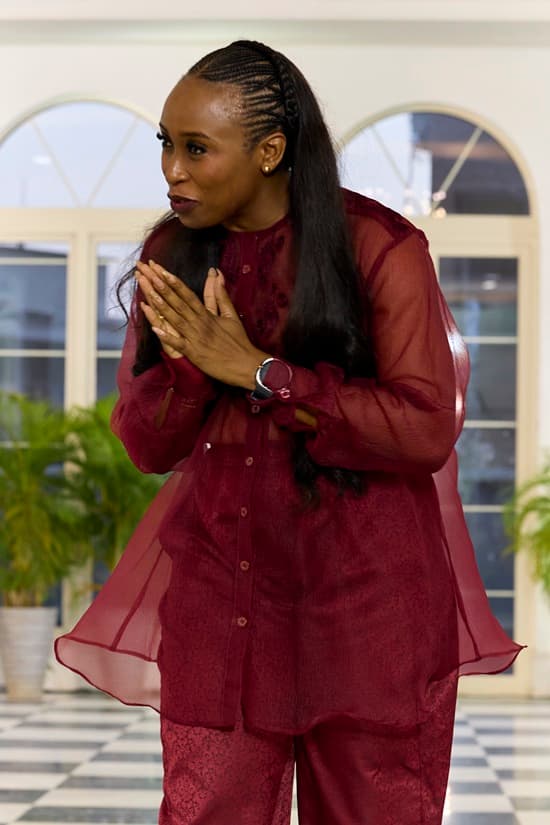 Photo: Emmanuel Oyeleke Photography
It also coincided with the third edition of the brand’s symposium, Fashioning a Legacy: Leaving a Mark in Time, at the British Council in Ikoyi. These events underscore Tafiri’s commitment to developing her creative identity and supporting the growth of African fashion.
REVERIE is rooted in a personal concept rather than a typical seasonal theme. The term refers to a pleasant state of daydreaming, where the mind drifts between reality and imagination.
Tafiri draws inspiration from daydreaming and nature, envisioning a walk through a forest. Elements such as filtered light, layered textures, gentle movement, and quiet emotions form the foundation of the designs.
This inspiration is not shown through literal images of trees, flowers, or landscapes. Instead, it is reflected in the movement of the garments, fabric textures, color choices, and the interplay of materials.
Some pieces convey stillness, while others suggest movement, creating a collection that shifts from quiet reflection to fuller expression.
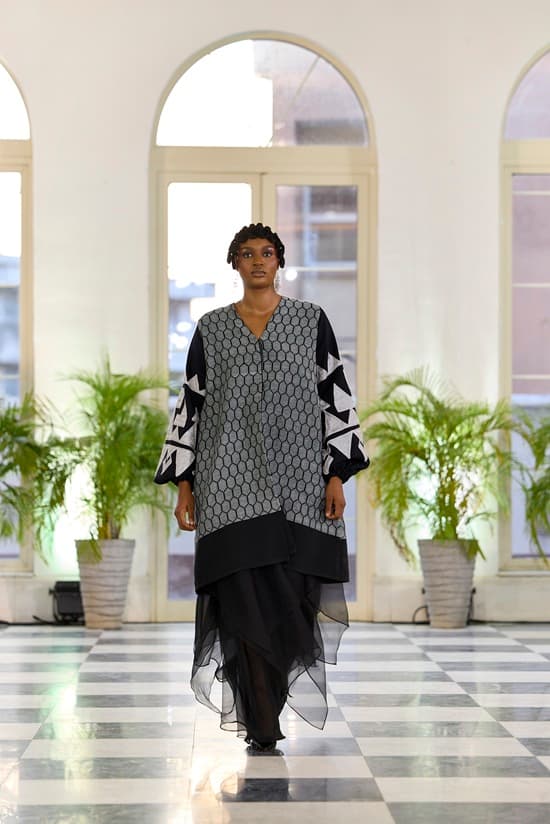 Photo: Emmanuel Oyeleke Photography
The REVERIE SS27 collection explores renewal, playfulness, and reinvention. Some garments feature asymmetrical drapes, while others have layers that seem caught in motion. The open, evolving silhouettes create an intimate quality, encouraging viewers to notice details instead of relying on dramatic volume or heavy embellishment.
Drapery remains central to Tafiri’s design identity and is the technical foundation of the collection. REVERIE offers a lighter interpretation of this signature, with fabric moving around the body without unnecessary weight.
This approach ensures comfort while maintaining visual interest. Instead of using volume for its own sake, Tafiri focuses on how fabric can fall, gather, overlap, and create movement.
This approach demonstrates Tafiri’s skill in balancing structure with softness. The garments combine sculptural details and fluid shapes, resulting in visually engaging yet practical pieces. It continues her established design language, now with a more reflective and atmospheric direction.
Material choices are central to this effect. Sheer organza, delicate Chantilly lace, and flowing chiffon introduce transparency and lightness.
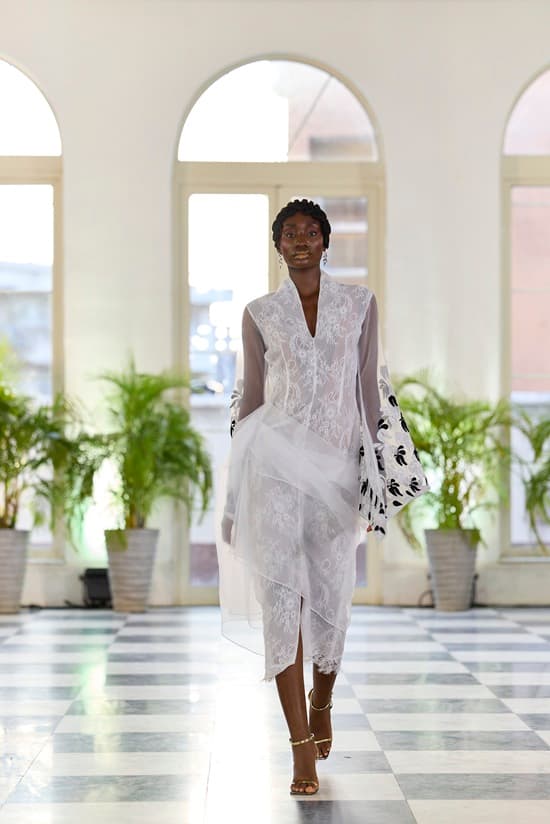 Photo: Emmanuel Oyeleke Photography
These fabrics catch light and move with the body, supporting the forest-inspired concept. Carefully arranged layers add depth without making the garments feel heavy.
Hand-woven aso-oke introduces a contrasting texture. Its density and cultural significance provide a strong counterpoint to the lighter fabrics, grounding the collection in Nigerian textile traditions.
Tafiri uses its texture and weight to shape the garments, rather than as mere decoration. This interplay between traditional fabric and contemporary construction is a key feature of the collection.
Experimental embroidery inspired by nature adds texture and visual interest. Geometric and organic motifs appear on selected designs, providing detail without overwhelming the silhouettes.
The embroidery acts as punctuation rather than full decoration, keeping fabrics and shapes central. This creates a thoughtful balance between sheer and solid materials, light and dense textures, and soft and structured forms.
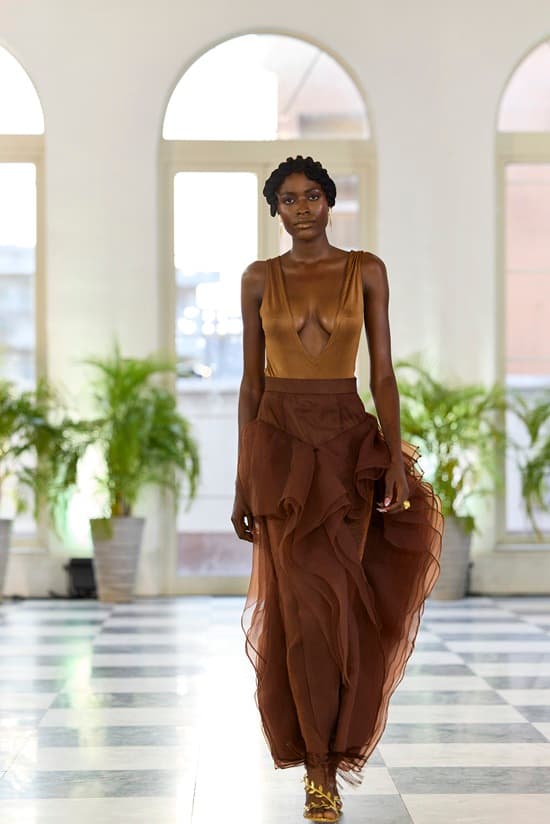 Photo: Emmanuel Oyeleke Photography
Classic Nigerian dress forms play a significant role in REVERIE. The iro, buba, and danshiki are presented in updated proportions and constructions that honor their origins while fitting contemporary wardrobes.
These are not mere recreations; their shapes and details are reimagined to carry cultural references without being limited by tradition.
Structured evening pieces contrast with the softer daywear and transitional designs. The collection also features traditional-inspired menswear, expanding the house’s offerings beyond womenswear and showcasing a broader design vocabulary.
The mix of familiar Nigerian forms, fluid separates, and structured pieces creates a versatile wardrobe for various settings.
Colour enhances the collection’s narrative. Soft neutrals such as creams, gentle greys, and muted skin tones create a calm foundation. As the collection progresses, brighter shades of lime green, fuchsia, and pink emerge alongside deep burgundy. This gradual shift moves the viewer from a quiet visual mood to stronger expression.
This colour progression reinforces the themes of renewal and playfulness in REVERIE. Neutrals evoke reflection and stillness, while brighter shades add energy and personality.
Tafiri combines colour with fabric, texture, and construction to maintain a cohesive visual story, rather than relying on colour alone for impact.
The collection raises broader questions about the nature of African luxury fashion. There is often an expectation for African designers to express cultural identity through bold prints, elaborate embellishments, or recognizable heritage references.
REVERIE takes a different approach, drawing from Nigerian textiles and traditional forms while presenting them in a quieter, more contemporary design language.
Tafiri does not treat heritage as a costume or a fixed set of references. She focuses on the qualities that make traditional dress distinctive, such as draping techniques, proportions, and the relationship between fabric and the body.
These elements are reinterpreted through modern construction and updated silhouettes, resulting in clothing that honors cultural references while appealing to those seeking contemporary Nigerian design.
This balance between creative exploration and practicality is evident in the construction of the pieces. Although the collection has an imaginative starting point, the garments are designed for wearability.
Ejiri Amos Tafiri emphasizes the importance of creating runway pieces that can be produced and sold, believing that a collection should offer products customers can purchase and wear, not just exist for the runway or social media.
This commercial discipline is key to understanding Tafiri’s career. She chose fashion over the medical path her family envisioned. After graduating with distinction from Yaba College of Technology, she gained experience at established fashion houses, including Tiffany Amber.
In 2010, she launched her own label, establishing herself as a leading contemporary Nigerian designer.
Drapery has defined Tafiri’s work from the start. Her skill in shaping fabric into flowing, expressive forms earned her the title Nigeria’s Drape Queen, recognized in Lagos, Dakar, Paris, and beyond.
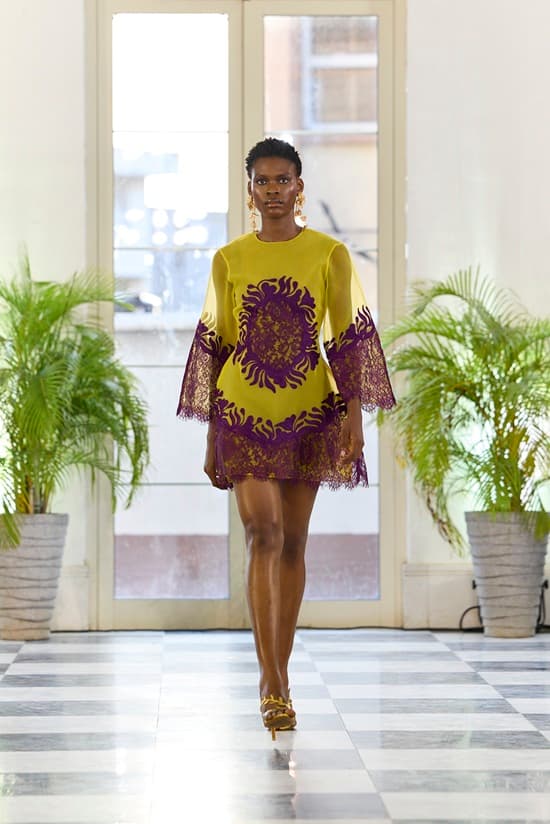 Photo: Emmanuel Oyeleke Photography
The brand is known for clothing that celebrates women’s confidence and individuality while maintaining commercial relevance.
The business has expanded beyond its main fashion line. A diffusion line has broadened the brand’s reach, and the Ejiro Amos Tafiri School of Design shares technical knowledge with aspiring professionals.
These initiatives demonstrate an understanding of how to build a sustainable fashion business beyond individual collections and runway shows.
This commitment to education continues through Fashioning a Legacy, the brand’s conference series. The platform brings together emerging designers, students, retail professionals, and other stakeholders to discuss technical skills, business discipline, and sustainable career development.
Tafiri has highlighted the limitations of social media visibility without practical knowledge of garment construction and product development.
Her perspective highlights a key issue in African fashion. While digital platforms have increased visibility for designers, building a sustainable business requires more than attention.
Fashion designers need to master production, quality control, pricing, retail, and customer needs. Tafiri’s insistence that runway pieces be retail-ready demonstrates a practical understanding of how brands achieve long-term success.
The Ejiro Amos Tafiri Foundation advances the designer’s commitment to developing young creatives through mentorship and capacity-building initiatives across Africa.
These efforts link her personal achievements to a broader goal: creating opportunities for others to build the skills and businesses that will strengthen African fashion.
Presenting REVERIE in Abuja is both practical and symbolic. With a flagship already in the capital, the brand is deepening its relationship with the northern market.
An intimate runway show and private viewing for diplomats, government dignitaries, northern luxury patrons, fashion editors, and tastemakers will introduce the collection to an audience beyond its established Lagos base.
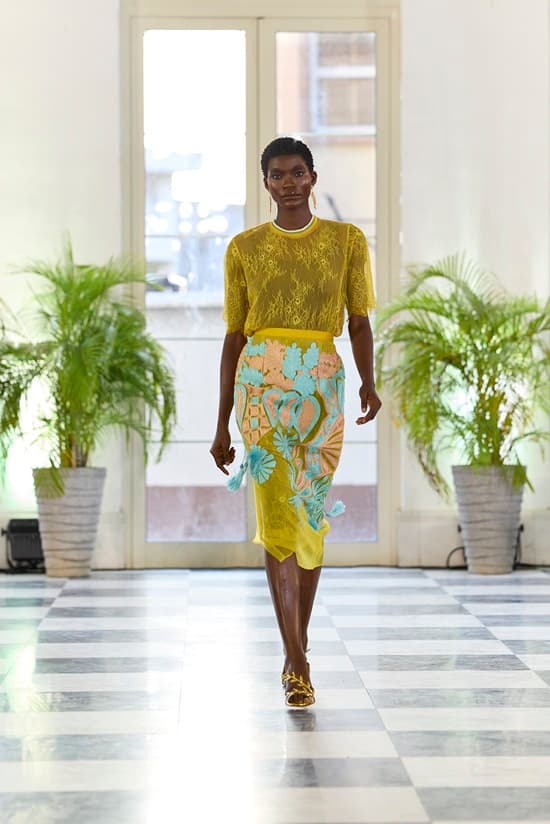 Photo: Emmanuel Oyeleke Photography
For a growing Nigerian fashion label, expanding beyond Lagos is essential to building a stronger national and continental market. Abuja provides access to new consumers, including professionals, business leaders, and patrons of African designer fashion.
This presentation also reinforces that the country’s fashion industry should not be confined to a single commercial center.
In this context, the Abuja showcase of Ejiro Amos Tafiri REVERIE SS27 is more than a seasonal launch. It connects design, craftsmanship, and business with an audience that may view the brand from a different cultural and commercial perspective.
It also allows the designer to show how Nigerian fashion can reach diverse audiences while maintaining its distinctive creative identity.
Sixteen years is significant in an industry where new labels frequently emerge and sustaining a business is challenging. Tafiri’s career demonstrates the importance of clear creative direction, technical expertise, and ongoing investment in future designers.
Her work has evolved from a focus on drapery to a broader business encompassing design, education, retail, and industry engagement.
REVERIE marks a period of refinement, not a departure from Tafiri’s established identity. It builds on familiar elements such as fluid tailoring, expressive drapery, and indigenous textiles, while introducing a more introspective approach to colour, texture, and movement.
The collection relies on material quality and thoughtful construction rather than spectacle.
The forest walk that inspired the collection serves as a metaphor for the brand’s journey. It reflects an appreciation for detail, changing environments, and the potential to discover something new along a familiar path. Similarly, Tafiri continues to develop her design language with each collection.
For followers of African luxury fashion, the Abuja showcase offers another chance to experience a designer who continues to refine her approach and expand her reach.
Ejiro Amos Tafiri REVERIE SS27 combines imagination, expressive drapery, Nigerian textile traditions, and practical insight into contemporary dressing.
Presenting the collection in the Federal Capital Territory also highlights the importance of connecting fashion, craftsmanship, and the communities that support the industry.
As the brand marks sixteen years, REVERIE reminds us that a designer’s identity can evolve while remaining recognisable. It can grow, embrace new ideas, and explore different creative directions while retaining the principles that made the work distinctive.
For Tafiri, this means continually seeking new possibilities in fabric, form, and the stories clothing can tell.
Photo: Emmanuel Oyeleke Photography
You May Also Like:

Lanre Da Silva Goes Full Bloom in the Living Colour SS27 Collection

A Guide to Building a Nigerian Fashion Label from Scratch
The African Boubou Is Having Its Fashion Moment

Rendoll's SS27 Collection Makes a Case for Dressing for Every Moment
12 Things We Want to See From African Fashion Brands in 2027
Sarah Diouf Gave Prints a New Meaning at GTCO Fashion Weekend in Lagos
Let's Talk About Imane Ayissi's Collection at the 2026 GTCO Fashion Weekend
The African Girlie Starter Pack To Follow

AFRIFF at 15: Africa's Biggest Film Festival Just Doubled Down on the Future
Lagos Fashion Week Day 4: Closing the On-site Runway in Style
Lagos Fashion Week Day 3: The People and Designs Moving Fashion Forward Beyond Craftsmanship
Lagos Fashion Week Day Two: Insights, Industry, and Runway Highlights


Esther Ejoh is a Fashion Editor at Fashion Police Nigeria, where she writes all things fashion, beauty, and celebrity style, with a sharp eye and an even sharper pen. She’s the girl who’ll break down a Met Gala look one minute, rave about a Nigerian beauty brand the next, and still find time to binge a movie or get lost in a novel. Style, storytelling, and self-care? That’s her holy trinity.