Published: November 5, 2026 Last Updated 1 day ago by Esther Ejoh
Few places hold as much significance in the history of Chanel as Biarritz. Located along France’s Atlantic coast, the Basque resort town is where Gabrielle Chanel opened one of her first couture houses in 1915.
It was here that she found inspiration in the relaxed seaside lifestyle, sporting activities and freedom of movement that would later influence her approach to modern dressing.
More than a century later, Matthieu Blazy returned to this historic destination for his first Cruise collection as creative director, bringing a fresh perspective to the house’s long-standing relationship with the coast.
Presented in April 2026 at the Casino Municipal, with the Atlantic Ocean providing a natural backdrop, Chanel Cruise 2026/27 explored the relationship between fashion and coastal living.
The collection drew from Biarritz’s history as a seaside destination, translating its relaxed atmosphere into garments that balanced structure with movement.
From reworked sailor-inspired separates and lightweight tweeds to marine embroidery, knitted swimwear and updated versions of the iconic little black dress, Blazy approached the house’s established codes with a sense of freedom and playfulness.
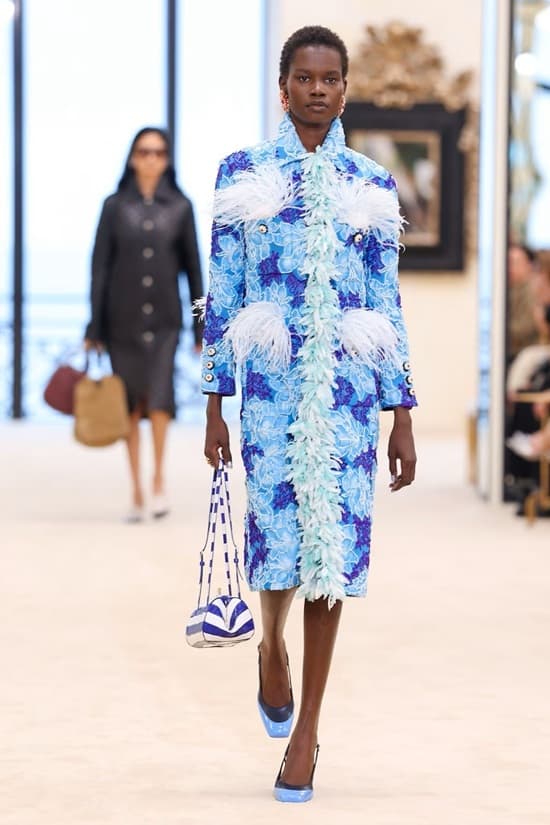 Photo: Chanel
The collection’s story did not end in France. In November 2026, Chanel brought the presentation to Australia, staging its first official runway show in the country at The Cutaway in Barangaroo, Sydney.
The Australian presentation recreated elements of the original Biarritz setting, including sun-bleached stripes, marine-inspired details, sandy tones and accessories influenced by seaside life. The occasion also attracted an impressive guest list, including Nicole Kidman, Margot Robbie, Kylie Minogue and Baz Luhrmann.
Beyond the celebrity appearances and elaborate setting, the arrival of Chanel Cruise 2026/27 in Sydney represented an important moment for the fashion house.
It connected two coastal destinations through a collection shaped by Gabrielle Chanel’s history, Matthieu Blazy’s creative direction and a shared appreciation for clothing that allows women to move comfortably between different settings.
What began as a return to one of the house’s most important historical locations became a wider conversation about heritage, modern dressing and the evolving identity of Chanel.
Biarritz as the Origin and Inspiration
Matthieu Blazy has described Biarritz as the place he wanted to return to for his first Cruise collection. The decision was closely connected to Gabrielle Chanel’s history in the town and the influence its seaside culture had on her early work.
Rather than treating the location as a decorative reference, Blazy used its history as the starting point for the collection’s creative direction.
When Chanel established herself in Biarritz, she observed how people dressed and moved around the coast. Sportswear, workwear and naval uniforms became important sources of inspiration, encouraging a more relaxed approach to women’s clothing.
Her designs challenged the restrictive garments that had dominated women’s fashion, introducing pieces that allowed greater freedom without losing their sense of refinement.
Chanel Cruise 2026/27 revisits this philosophy through clothing designed around movement, comfort and practical details. Blazy explored the idea of bringing the beach beneath the salon, creating a wardrobe that could move between a seaside setting and more formal occasions.
The collection reflected the relaxed atmosphere of Biarritz while maintaining the tailoring and craftsmanship associated with the French fashion house.
The runway presentation reinforced this relationship between fashion and its surroundings. Models appeared against a setting that framed the ocean, while mirrored walls and a sandy-toned carpet created a visual connection between an interior salon and the natural landscape outside.
The environment allowed the clothes to remain the focus while giving the audience a sense of the location that inspired them.
The collection opened with a reworked version of the little black dress, marking a century since Vogue famously described the original silhouette as Chanel’s Ford.
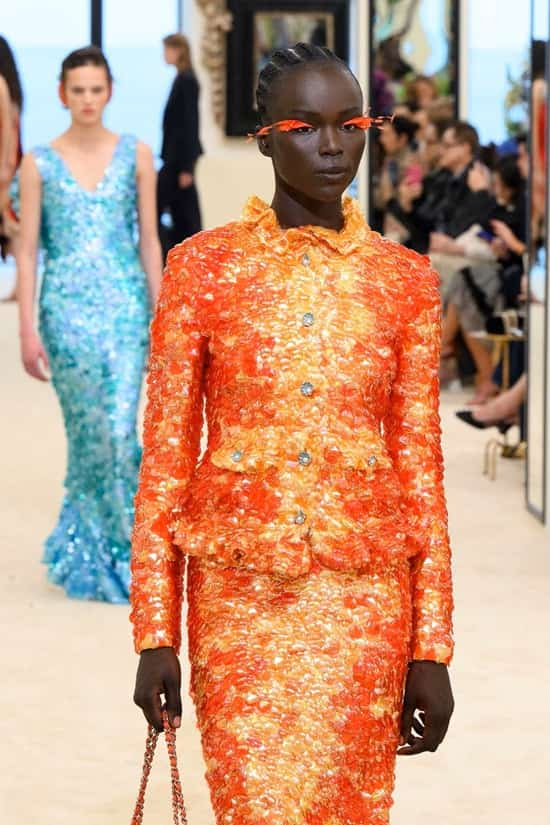 Photo: Chanel
This updated interpretation featured a dropped waist and white topstitching, giving the familiar design a different character. An oversized black bow, taken from an archival Chanel design, was also transformed into a clutch, demonstrating how Blazy approached familiar house details with a sense of experimentation.
From there, the wardrobe expanded into a colourful exploration of seaside references. Basque stripes appeared across sailor tops, skirts and coordinated ensembles, while chili-pepper jewellery introduced a playful reference to local produce.
Tamarisk motifs and marine-inspired designs featuring fish, shells and coral appeared in buttons, embroidery and accessories.
Sequinned surfaces reflected the appearance of fish scales and crustacean shells, catching the light in a way that recalled sunlight moving across the water.
Knitted bathing suits and swim caps referenced early twentieth-century beachwear, while cotton-canvas suits, fluid overshirts, raffia-trimmed skirts and lightweight cashmere offered practical options for warmer weather.
Even the house’s familiar tweeds received a seasonal adjustment, with lighter constructions that made them suitable for a coastal wardrobe. This was an important part of Blazy’s approach: retaining the recognisable elements of Chanel while reconsidering how they could function in contemporary life.
Chanel Cruise 2026/27: Texture, Craft and the Little Black Dress Anniversary
One of the strongest features of Chanel Cruise 2026/27 is its attention to texture. Rather than relying entirely on dramatic silhouettes or elaborate embellishments, Blazy created visual interest through the materials used throughout the collection.
Lightweight tweeds, raffia, iridescent sequins, netted overlays and silk scarves contributed to a wardrobe that felt connected to the coast. Some surfaces recalled fishing nets, while others resembled the reflective quality of fish scales and shells.
These details gave familiar garments a different appearance without taking them too far from the house’s established design language.
The use of silk scarves was particularly interesting. Knotted into dresses, they introduced movement and offered another way to approach the relationship between accessories and clothing.
Raffia and netted materials also reinforced the collection’s connection to the beach, while maintaining the attention to construction expected from Chanel.
Footwear followed the same direction. Two-tone slingbacks appeared alongside rubber wading boots and nearly bare heel-cap shoes. These contrasting designs reflected the collection’s central idea: a woman should be able to move between different environments without having to completely change her wardrobe.
The anniversary of the little black dress added another important historical reference. First introduced in 1926, the design represented a major shift in women’s fashion. Its simplified silhouette challenged the heavily decorated and restrictive clothing that had previously defined formal dressing.
Blazy’s interpretation acknowledges this history while introducing new proportions and details. The dropped waist, white stitching and oversized bow accessory demonstrate how a familiar design can be reconsidered without losing its identity.
For Chanel Cruise 2026/27, the little black dress is not simply an archival reference. It becomes part of a wider discussion about the relationship between fashion history and contemporary dressing. The original design offered women a more practical approach to dressing nearly a century ago, and Blazy’s updated version continues that conversation through a modern wardrobe.
On 5 November 2026, Chanel brought its Cruise 2026/27 collection to Sydney, marking its first official runway presentation in Australia. The event took place at The Cutaway in Barangaroo, a venue known for its striking sandstone architecture and waterfront location.
The choice of venue was significant. Just as Biarritz provided the original collection with its coastal identity, Sydney offered another setting where the relationship between fashion and the sea could be explored.
The Cutaway’s towering sandstone walls created a contrast with the French-inspired runway presentation, connecting the house’s heritage with Australia’s architectural and natural surroundings.
The Sydney presentation recreated important elements of the original Biarritz show. Sandy-toned flooring and mirrored details helped maintain the atmosphere of the first runway, while the surrounding harbour reinforced the collection’s maritime references.
Guests also received specially designed invitations that reflected the collection’s themes. The silver shell-shaped necklace opened to reveal a whale’s tail engraved with details of the presentation.
It was a thoughtful reference to the marine motifs running throughout the collection and Australia’s strong relationship with its coastline.
The runway also featured Australian models, including First Nations talent Latahlia Hickling and Tatyana Perry, alongside Julia Nobis, Josephine Akuei, Gemma Ward and other familiar faces from the modelling industry.
Their participation gave the presentation a local connection, ensuring that the event was not simply a recreation of the French show but also an opportunity to recognise Australian talent.
The front row brought together international celebrities and prominent Australian personalities. Nicole Kidman and Margot Robbie attended alongside Kylie Minogue, Baz Luhrmann and Olympian Cathy Freeman, as well as Australian creatives, clients and fashion industry figures.
Their presence reflected the wider cultural significance of the event. For Chanel, presenting Chanel Cruise 2026/27 in Sydney was an opportunity to introduce the collection to a new audience while acknowledging the country’s influence on international fashion and culture.
Celebrity appearances added another dimension to Chanel’s Australian runway presentation. Nicole Kidman and Margot Robbie were among the most recognisable names in attendance, bringing international attention to an event that already carried historical importance for the house.
Both actresses have established relationships with the fashion industry and regularly appear at major international events. Their presence in Sydney reflected Chanel’s connection to film, entertainment and contemporary culture.
Kylie Minogue also brought her influence as one of Australia’s most recognisable music stars, while Baz Luhrmann represented the country’s contribution to international filmmaking.
Cathy Freeman’s attendance added another perspective, recognising an Australian sporting figure whose achievements extend well beyond athletics.
The guest list was particularly relevant because it brought together different areas of Australian cultural life. Rather than limiting the presentation to fashion personalities, Chanel created an event that acknowledged the wider creative community.
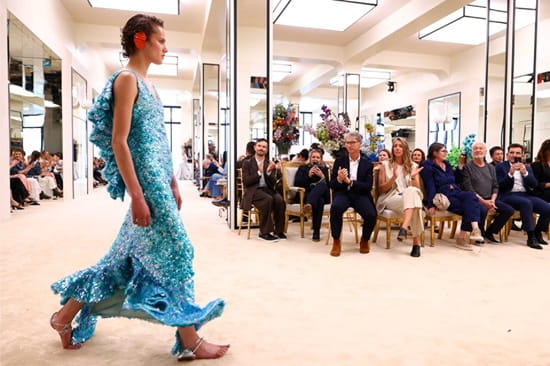 Photo: Chanel
This approach also complemented the collection itself. Chanel Cruise 2026/27 was inspired by a specific place and its people, and its presentation in Sydney offered an opportunity to create a similar connection with another coastal city.
Following the Biarritz presentation, Chanel released a campaign photographed by Alec Soth along the Grande Plage. The images captured models wearing the collection against the natural surroundings of the Basque coastline, with rocks, sand and the ocean providing the backdrop.
Instead of presenting the clothes through overly formal poses, the campaign focused on natural movement and interaction with the environment. Models were photographed laughing, walking along the beach and emptying sand from their shoes.
These moments reinforced the collection’s central message that clothing should be worn and experienced rather than simply admired.
The campaign also helped communicate the practical side of the collection. The pieces were designed to move between different settings, offering options for daytime activities, seaside outings and evening occasions. This relationship between function and appearance was central to Blazy’s creative direction.
Accessories continued the same visual story. Raffia Maxi Flaps, embellished classic bags, striped totes and east-west shopping bags brought the coastal references into the house’s accessories collection.
Jewellery also maintained the connection to Biarritz through marine-inspired designs featuring coral, fish and chili-pepper motifs. These details gave the accessories a playful quality while remaining connected to the wider collection.
The campaign extended the life of the runway presentation, allowing the audience to experience the clothes outside the controlled environment of the show. It also reinforced the importance of Biarritz as more than a historical reference. The town remained an active part of the collection’s identity.
The Future of Chanel Under Matthieu Blazy
The first Cruise collection offers an interesting indication of the direction Blazy may continue to explore at Chanel. His approach suggests a creative interest in the relationship between the house’s established codes and the way women dress today.
The use of lighter tweeds, relaxed proportions, marine-inspired accessories and reworked classics points towards a wardrobe that places greater emphasis on versatility.
Rather than relying on recognisable logos or familiar silhouettes alone, the collection allows construction, fabric and smaller details to communicate its identity.
It also demonstrates the value of fashion storytelling. Biarritz was not selected simply because it is a beautiful destination. Its connection to Gabrielle Chanel gave the collection a historical foundation, while the Sydney presentation expanded that story into an international setting.
As Blazy continues his work at the house, collections such as this will help establish how he interprets Chanel’s history and translates it into contemporary fashion.
The challenge is to maintain the qualities that make the maison recognisable while ensuring its designs remain relevant to changing lifestyles and expectations.
Chanel Cruise 2026/27 provides a promising example of how this can be achieved. It brings together historical references, practical design, craftsmanship and a clear sense of place.
From Biarritz’s Atlantic coastline to the sandstone walls of Barangaroo, the collection tells a story about freedom, movement and the relationship between fashion and its surroundings. It revisits Gabrielle Chanel’s early ideas while giving Matthieu Blazy room to introduce his own perspective.
Ultimately, the collection reminds us that fashion history does not have to remain in the past. It can provide the foundation for new ideas, different interpretations and meaningful experiences.
With Biarritz as its starting point and Sydney as its next destination, Chanel has created a Cruise collection that connects two coastal worlds through a shared appreciation for thoughtful design and modern dressing.
Photo: Chanel
You May Also Like:

Martine Rose Named the New Creative Director of Balenciaga
The 2027 Met Gala Theme Puts Everyday Fashion in the Spotlight

Why Every Girl Has an Emergency Outfit
The Difference Between Online Fashion Expectations and Real Life
Andrea Iyamah Marks 15 Years with a Vibrant Show to Kickstart Lagos Fashion Week 2026
Minimalist Fashion Can Have a Maximalist POV
Bella Hadid Opened the 2026 Victoria’s Secret Fashion Show as a Blooming Spring Angel
Who is Solange Omon, the Newest Victoria's Secret Angel?
The 2026 Victoria’s Secret Fashion Show is Happening: Here’s Everything You Need to Know
Are We Done With Oversized Clothes?
Who is Rachel Ojuromi, the Lagos Street Model who Walked the Chanel SS27 Show?
Chanel SS 2027 Collection: A Fresh Flight Through Heritage and Freedom


Esther Ejoh is a Fashion Editor at Fashion Police Nigeria, where she writes all things fashion, beauty, and celebrity style, with a sharp eye and an even sharper pen. She’s the girl who’ll break down a Met Gala look one minute, rave about a Nigerian beauty brand the next, and still find time to binge a movie or get lost in a novel. Style, storytelling, and self-care? That’s her holy trinity.