Published: October 2, 2026 Last Updated 3 weeks ago by Esther Ejoh
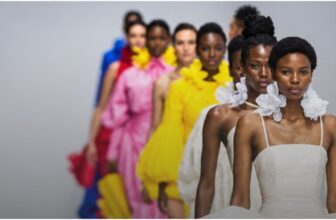
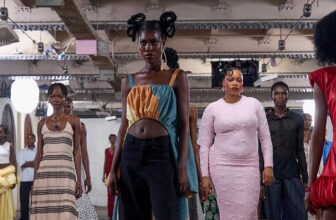
On 28 September 2026, Maxhosa Africa Paris Fashion Week 2026 debut made history as the South African fashion designer, Laduma Ngxokolo, presented the brand’s first full runway show on the official Fédération de la Haute Couture et de la Mode calendar.
Hosted at the South African ambassador’s residence in Paris, the Spring/Summer 2027 presentation marked a major moment not only for Maxhosa Africa, but for South African fashion and the wider African fashion industry.
Titled Izihlwele Zivumile, which translates from isiXhosa as “the ancestors have approved,” the collection represented sixteen years of work by Ngxokolo. Rather than reshaping the brand to fit established European fashion codes, the fashion designer brought Maxhosa Africa’s own visual language to one of fashion’s most important stages.
Xhosa-inspired geometry, locally produced knitwear, pan-African references, traditional craft influences and a production model rooted in Johannesburg and the Eastern Cape formed the foundation of the collection.
The Maxhosa Africa Paris Fashion Week debut therefore carried meaning beyond the clothes themselves. It demonstrated how a fashion house built around African heritage can enter an international fashion system while maintaining a clear connection to its origins.
The presentation placed South African craftsmanship, textile production and cultural storytelling directly within the official Paris Fashion Week conversation.
For Ngxokolo, the moment was the result of years of persistence. For Maxhosa Africa, it represented another step in a journey that began with an idea to modernise Xhosa cultural references through knitwear and has grown into an internationally recognised fashion house.
 Photo: Instagram/maxhosa
 Ngxokolo founded Maxhosa in 2010 after noticing a lack of contemporary knitwear that reflected the beadwork, colours and symbolism associated with Xhosa culture during his own initiation.
His background in textile design, combined with his interest in heritage and contemporary fashion, became the foundation for the brand.
He studied textile design at Nelson Mandela University and later won an international Society of Dyers and Colourists competition with a collection inspired by Xhosa culture.
These early experiences helped shape a philosophy that continues to define Maxhosa: cultural heritage does not have to remain trapped in the past to retain its meaning.
The brand has consistently explored how traditional references can exist within modern clothing. Instead of reproducing cultural garments as costumes, Ngxokolo translates familiar colours, patterns and geometric structures into knitwear, tailoring and contemporary silhouettes.
That approach has allowed Maxhosa Africa to develop an identity that is immediately recognisable while continuing to evolve. Production remains rooted in South Africa, with the brand operating its own factories in Johannesburg and East London and using wool sourced from the Eastern Cape.
 Photo: Instagram/maxhosa
 The international reach of the label has grown significantly over the years. Its designs have been worn by figures including Beyoncé, Alicia Keys and Michelle Obama, helping introduce the distinctive Maxhosa aesthetic to audiences far beyond South Africa.
Yet the brand’s expansion has not required it to abandon the cultural references that shaped its beginnings.
The Maxhosa Africa Paris Fashion Week presentation brought that philosophy into a particularly significant setting.
Maxhosa had previously appeared in presentation formats connected to the official Paris fashion calendar, but a full runway slot represented another level of visibility. Following several applications, the brand was granted an official runway opportunity on the opening day of the Spring/Summer 2027 season.
Speaking after the presentation, Ngxokolo reflected on the length of the journey and the wider issue of African representation within the fashion industry. He said he had been “fighting to sit at the table for 16 years,” while also pointing to the continued underrepresentation of the African continent.
The fashion designer had hoped to include other African fashion designers in the moment, but limited resources made that difficult. Even so, the presence of Maxhosa Africa on the official calendar created a new reference point for fashion designers from the continent seeking greater access to international fashion platforms.
 Photo: Instagram/maxhosa
 The Spring/Summer 2027 collection, Izihlwele Zivumile, featured approximately 54 to 60 looks and presented Maxhosa’s familiar design language through new shapes, textures and techniques.
One of the standout moments came early in the show with a bead-inspired print created using trompe l’œil. Instead of simply reproducing the appearance of traditional beadwork, the design created an optical illusion that appeared to reshape the body.
The technique turned a two-dimensional print into something that suggested three-dimensional form. It was a clear example of how Ngxokolo continues to take familiar cultural references and reinterpret them through contemporary textile techniques.
 Photo: Instagram/maxhosa
 Elsewhere, Maxhosa’s geometric patterns became softer and more fluid. Motifs stretched across caftans and other flowing silhouettes, responding to the movement of the fabric rather than remaining rigid.
This was an important distinction. Traditional beadwork geometry often relies on precise structure and repetition, but the collection allowed those patterns to move. As garments shifted on the runway, the designs changed with them.
The result was a collection in which pattern was not simply decoration. It became part of the construction and movement of the clothing.
 Photo: Instagram/maxhosa
 Texture also played an important role. Fringed jacquards continued Maxhosa’s interest in traditional weaving techniques while introducing additional movement to the garments. The fringe created a sense of motion as models walked, giving the collection a kinetic quality.
The use of these techniques also reinforced the connection between contemporary fashion and older forms of African craft. Rather than presenting craft as something separate from high fashion, Maxhosa incorporated it directly into the construction of the collection.
 Photo: Instagram/maxhosa
 Headpieces added another layer of cultural reference. Crown-like designs decorated with cowrie shells drew attention to African traditions surrounding status, ceremony and royalty. Positioned around the face, the pieces worked almost like wearable architecture.
They were not simply accessories. They helped establish the visual language of the collection and connected the clothing to ideas of ancestry and lineage that were central to its title.
 Photo: Instagram/maxhosa
 The Maxhosa Africa Paris Fashion Week show also extended beyond South African references through a collaboration with Kenyan artist Cyrus Kabiru.
Kabiru created sculptural eyewear using his distinctive approach to found materials. His work introduced another African artistic voice into the collection and expanded its cultural scope beyond a single country.
The collaboration reflected the broader pan-African ambition of Maxhosa Africa. South African knitwear, Kenyan contemporary art and international fashion came together within a single runway presentation in Paris.
 Photo: Instagram/maxhosa
 The show took place at the South African ambassador’s residence, a choice that transformed a private diplomatic space into a temporary home for African fashion on the global stage.
Maxhosa later issued a special appreciation that captured the spirit of the collaboration in a series of Instagram posts, captioned: “a special thank you to Ambassador Ayanda Dlodlo, the Minister Plenipotentiary Nthabiseng Makuwa, as well as the @sainfrance team and the whole Embassy team for their tireless work in ensuring the venue, the setting for casting, the setup and all the work behind the scenes, as well as creating a beautiful home away from home for our showcase.”
The acknowledgment underscored that the historic debut was not achieved by the brand alone. It was made possible by a network of people who treated the presentation as a national as well as a creative milestone.
One of the most important aspects of the Maxhosa Africa Paris Fashion Week debut was what happened behind the runway.
Every garment presented was produced through Maxhosa’s own knitting factories using locally sourced wool. This production model is significant because it places manufacturing at the centre of the brand’s identity rather than treating it as an invisible part of the supply chain.
For Ngxokolo, producing in South Africa is closely connected to the brand’s wider purpose. The aim is not simply to create garments inspired by African culture but to contribute to the development of the textile industry on the continent.
International fashion has historically placed strong value on labels such as “Made in Italy” and “Made in France.” Maxhosa’s approach challenges the assumption that high-end fashion must be manufactured in established European production centres.
The brand’s presence in Paris therefore carried two messages at once. The first was creative: South African design belongs in conversations about contemporary fashion. The second was industrial: South African manufacturing can support high-end fashion production.
The collection also included direct references to the wider African continent. Some garments featured knitted labels bearing the names of African countries, while another motif referenced the recent rescaling of Africa on the United Nations’ official map.
These details helped prevent the collection from being read solely through a South African lens. Although Maxhosa’s foundation is distinctly Xhosa and South African, the brand increasingly engages with the wider African experience.
Music added another layer to the presentation. South African musician Sjava opened the show with a live performance, creating an atmosphere that connected the runway to South African music and culture.
The result was a presentation that brought together fashion, music, art, manufacturing, and cultural history rather than treating the runway as a display of clothing alone.
 Photo: Instagram/maxhosa
 A major part of Maxhosa Africa’s appeal comes from its approach to heritage.
The brand does not simply reproduce traditional Xhosa patterns and place them on contemporary garments. Instead, it treats cultural references as materials that can be transformed.
Beadwork patterns become knit structures. Familiar colour combinations are reworked into new palettes. Geometric motifs are stretched, enlarged and reshaped. Traditional techniques such as jacquard weaving become part of contemporary silhouettes.
This distinction matters because it allows cultural heritage to remain active rather than frozen in time.
The Maxhosa Africa Paris Fashion Week collection demonstrated this particularly clearly. The clothing referenced tradition without attempting to recreate historical dress. The result was fashion that could be understood within an international context while retaining a strong connection to South African identity.
The brand’s journey has already received institutional recognition. Maxhosa has been included in the Business of Fashion 500 and has had work exhibited at the Museum of Modern Art in New York. Its designs have also gained international visibility through celebrity wear and global fashion coverage.
The Paris runway brought these different strands together.
 Photo: Instagram/maxhosa
 Fashion calendars are not simply schedules of shows. They help determine which designers receive international attention and which fashion narratives are placed at the centre of the industry.
For years, African fashion designers have often had to find alternative routes into global fashion conversations. Some have presented during satellite events, hosted independent showcases or participated in guest programmes rather than receiving prominent positions within established fashion calendars.
The Maxhosa Africa Paris Fashion Week debut represents a notable change in that pattern.
The fashion brand did not enter the official runway by abandoning its identity or recreating European aesthetics. Instead, it brought its own visual language to Paris.
The saturated colours remained. The geometric intensity remained. The Xhosa references remained. Local manufacturing remained. African collaborations remained.
That consistency is important because international recognition does not necessarily have to come at the cost of cultural specificity.
The show also creates a precedent for future African designers. One runway appearance cannot resolve the wider barriers involving funding, infrastructure, manufacturing capacity, distribution and institutional access. However, it creates a visible example of what is possible.
Ngxokolo himself has spoken about the need for greater representation of African designers. His Paris appearance therefore carries significance beyond his own label.
It raises a broader question about who gets to define contemporary fashion and which places are recognised as sources of innovation.
 Photo: Instagram/maxhosa
 The significance of Maxhosa Africa Paris Fashion Week extends beyond one collection or one designer.
Africa has a large and diverse fashion industry with fashion designers working across couture, streetwear, tailoring, textiles, accessories and traditional craft. Yet international visibility has not always reflected the scale or creativity of that industry.
Maxhosa’s official runway debut places one South African fashion house within a global system that has historically been centred around European capitals.
It also demonstrates the value of maintaining production and creative development close to home.
For emerging fashion designers, the Maxhosa model offers an example of how cultural identity, manufacturing and international ambition can exist within the same business. The brand has spent sixteen years developing its language rather than rushing to fit into an established mould.
That patience is reflected in Izihlwele Zivumile.
The collection feels connected to the past while being designed for the present. It draws from Xhosa beadwork without recreating it literally. It references African royalty through cowrie-adorned crowns while presenting them as contemporary objects.
It brings Kenyan sculpture into conversation with South African knitwear. It places local production within an international fashion environment.
 Photo: Instagram/maxhosa
 The next challenge will be turning the attention generated by the Paris runway into lasting commercial and industry opportunities.
International visibility can create new possibilities for retail partnerships, wholesale distribution, press coverage and collaborations. For Maxhosa, the focus will now be on building from this moment while maintaining the production and cultural foundations that have shaped the company.
There is also an opportunity for the wider African fashion ecosystem.
Greater international interest could create more demand for African textile manufacturers, artisans, creative directors, photographers, stylists and other professionals working across the industry. The impact of a major runway appearance can therefore extend beyond the fashion designer whose name appears on the invitation.
For Laduma Ngxokolo, the Paris presentation represents sixteen years of persistence. For Maxhosa Africa, it marks another stage in the development of a brand that began with Xhosa-inspired knitwear and has grown into an international fashion name.
 Photo: Instagram/maxhosa
 The title Izihlwele Zivumile — “the ancestors have approved” — gave the collection its emotional centre. On 28 September 2026, that message travelled from South Africa to Paris.
The Maxhosa Africa Paris Fashion Week debut was defined by more than its place on the official calendar. It was defined by what the brand chose to bring with it: Xhosa-inspired geometry, South African manufacturing, locally sourced wool, pan-African collaboration, contemporary art and sixteen years of creative development.
From trompe l’œil beadwork prints and fluid geometric motifs to fringed jacquards, cowrie crowns and Cyrus Kabiru’s sculptural eyewear, the collection presented African heritage as something active, evolving and capable of speaking to a global fashion audience.
For Maxhosa Africa, Paris was not an opportunity to become something else. It was an opportunity to show the world what the brand had already spent sixteen years building.
Photo: Instagram/maxhosa
You May Also Like:
South African Fashion Week 2026 Returns to Johannesburg with David Tlale Opening the AW27 Runway
7 Fashion Trends to Watch at the 2026 Lagos Fashion Week
Lagos Fashion Week 2026: What to Wear, Know and Expect
7 Emerging Fashion Designers We Would Love to See at Lagos Fashion Week 2026
9 Reasons You Should Attend (or Watch) Lagos Fashion Week 2026
Method Dressing Among Nigerian Celebrities: Are We Finally Getting It Right?
Camcassid: The Sustainable Fashion Brand Turning Textile Waste into Wearable Art
The 2026 Africa Fashion Week London was a Defining Moment for African Fashion
What Does Luxury Fashion Mean to an African?
African Fashion Weeks 2026: Biggest Trends and Highlights
10 Top Affordable Luxury Fashion Brands in Africa
How to Style Ankara Dresses for Every Occasion


Esther Ejoh is a Fashion Editor at Fashion Police Nigeria, where she writes all things fashion, beauty, and celebrity style, with a sharp eye and an even sharper pen. She’s the girl who’ll break down a Met Gala look one minute, rave about a Nigerian beauty brand the next, and still find time to binge a movie or get lost in a novel. Style, storytelling, and self-care? That’s her holy trinity.