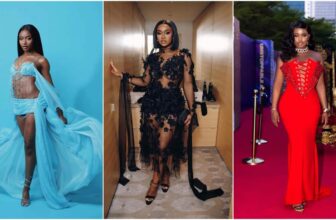
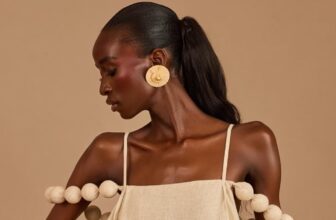
Fashion is often described as a form of self-expression. What we wear can tell people something about our personality, profession, culture, mood, taste, or even the occasion we are attending.
Yet when it comes to women, clothing is often asked to say much more than that. A dress can become a statement about modesty. A neckline can be interpreted as a reflection of sexual behaviour. A suit can be read as a sign of ambition.
Even a simple choice of shoes, makeup, or skirt length can invite assumptions about a woman’s character.
That is what makes the question of why we judge women by what they wear so complicated.
The judgment is rarely limited to whether an outfit looks good or suits the occasion. Instead, women are often expected to understand an invisible set of rules about what is considered respectable, attractive, feminine, professional, appropriate, or too much.
Break one of those rules, and the clothing can quickly become evidence used to judge the person wearing it.
A woman steps outside in a short dress and the comments begin: too revealing, attention-seeking, asking for it.
Another woman chooses a loose, covered outfit and the judgment simply takes another form: frumpy, trying too hard to look modest, hiding her figure.
A third woman walks into a room wearing a sharply tailored suit and may encounter a different set of assumptions about whether she is too intimidating, too ambitious, or trying to appear masculine.
The outfit changes. The scrutiny does not.
This is why judging women by their clothes is not simply a fashion issue. It sits at the intersection of psychology, gender expectations, sexuality, social class, race, culture, power, and the long history of regulating women’s bodies.
For generations, societies have tied morality and respectability to female appearance.
Clothing has been used to distinguish the “proper” woman from the rebellious one, the respectable woman from the supposedly promiscuous one, and the traditionally feminine woman from the woman who refuses to follow expected roles.
Some of these judgments are so deeply embedded in everyday life that they can be difficult to notice. A woman may be told to dress differently for a job interview, a family gathering, a religious setting, a date, or a public appearance.
Celebrities can face thousands of comments over a dress worn on a red carpet, while politicians and professionals can have their clothing discussed alongside their qualifications.
On social media, a photograph can generate immediate conclusions about a woman’s intentions based on little more than what she chose to wear.
Clothing does communicate. There is nothing inherently wrong with noticing what someone is wearing or recognising the messages a particular style may send.
The more complicated question is what happens after that first impression. Why does a woman wearing a revealing dress become “attention-seeking”?
Why can modest clothing be interpreted as evidence of virtue? Why can a powerful woman in traditionally masculine tailoring be judged differently from a man wearing the same silhouette?
And perhaps most importantly, why are women so often expected to manage other people’s reactions to their bodies through their clothing?
Men’s clothing can certainly attract attention and communicate status, wealth, profession, personality, or taste.
But women’s appearance has historically carried an additional burden. Their clothes can be treated as moral statements, sexual signals, measures of respectability, or reflections of character in ways that go far beyond the practical purpose of getting dressed.
Psychology helps explain part of this process. Humans make rapid judgments based on visual information, often forming impressions before a conversation begins. Clothing can provide useful social cues about a person and their surroundings.
The problem begins when those observations become fixed assumptions.
A particular hemline becomes a judgment about sexuality. A fashion designer label becomes a judgment about class. A head covering becomes a judgment about beliefs. A power suit becomes a judgment about personality.
Clothing becomes the evidence, even when there is little evidence at all.
Media and popular culture have also played a major role in reinforcing these ideas. Films, advertising, celebrity coverage, music videos, magazines, social media, and even everyday conversations have repeatedly presented women’s clothing as something that should be evaluated.
Women are praised when they get the balance “right” and criticised when they appear to cross an invisible line.
Too covered, too exposed. Too feminine, not feminine enough. Too fashionable, too plain. Too confident, too attention-seeking.
No version often escapes scrutiny completely.
To understand why we judge women by what they wear, then, we have to look beyond fashion trends and individual outfits.
We have to examine the beliefs attached to women’s bodies and the social expectations that determine what different communities consider acceptable.
We also have to consider how those expectations change across cultures, generations, social classes, workplaces, and historical periods.
Because the story is not really about dresses, trousers, skirts, suits, heels, or hemlines.
It is about what society believes those things say about the women wearing them and why we have become so comfortable turning an outfit into a judgment about a person.
 Photo: Instagram/meshki
 Objectification theory helps explain part of the intensity.
Female bodies are more frequently evaluated as objects for visual consumption, which can shift attention away from the whole person and toward appearance.
When clothing is perceived as revealing, observers may begin making assumptions about sexuality, personality, or character that have little connection to the garment itself.
Research into self-objectification also examines what happens when women begin viewing themselves through the eyes of an imagined observer.
Instead of simply experiencing their bodies, they may become increasingly aware of how their bodies look, whether their clothes fit a particular standard, and how other people might respond to them.
This creates a cycle of observation and self-monitoring. Women learn that others will evaluate their appearance, so they become more conscious of it. That heightened attention can then reinforce the idea that appearance should matter in the first place.
The result is a culture in which a woman’s outfit can become a conversation before her personality, achievements, opinions, or abilities ever enter the picture.
The same neckline that passes unnoticed at a beach can trigger commentary in an office or on public transport. The clothing itself has not changed. The meaning assigned to it has.
Context obviously matters. There are reasonable situations in which clothing needs to meet particular requirements.
A laboratory may require protective clothing. A construction site may require safety equipment. A formal event may have a stated dress code. These expectations are about the environment and its practical needs.
The problem begins when a conversation about clothing moves from suitability to morality.
Saying that an outfit does not meet a particular workplace dress code is one thing. Saying that the woman wearing it has no self-respect is something else entirely.
Women’s clothing has historically carried a heavy moral burden. Across different societies and periods, what women wore could be connected to family honour, religious devotion, social class, sexuality, marriageability, and respectability.
Clothing was not simply a matter of personal taste; it could communicate where a woman supposedly belonged within the social order.
This history still influences modern attitudes.
Many older expectations have not disappeared. They have simply found contemporary forms.
They appear in family conversations about “decent” dressing, workplace policies that focus heavily on women’s bodies, school rules that disproportionately regulate girls, and social media comments that treat a woman’s outfit as public property.
 Photo: Instagram/rabia.cissokho
 Fashion itself can also reinforce the contradiction. Women are constantly encouraged to look attractive, youthful, stylish, confident, and desirable.
At the same time, they can be criticised when they appear to be enjoying or deliberately expressing those qualities.
The message can become confusing: Be attractive, but do not look like you are seeking attention. Be fashionable, but do not appear vain. Be feminine, but do not appear weak.
Be confident, but do not appear intimidating. Be sexy, but not too sexy. Dress professionally, but remain approachable.
There is almost always another rule waiting.
This is one reason we judge women so intensely by what they wear. Women are often navigating a much narrower corridor of acceptable appearance, where moving too far in either direction can attract criticism.
A revealing dress can be criticised as inappropriate. A completely covered outfit can be criticised as frumpy or overly conservative.
A tailored suit can be praised as powerful but also described as masculine. A colourful outfit can be considered expressive in one setting and unprofessional in another.
The rules are rarely as straightforward as they appear.
Sexualisation makes the situation even more complicated. The American Psychological Association’s research on the sexualization of girls has examined how women and girls are frequently presented through sexualised images and expectations in popular culture and media.
Women are therefore exposed to two conflicting messages. They are encouraged to participate in beauty and fashion culture, yet they can be judged for appearing too interested in their own appearance.
Celebrity culture makes this contradiction especially obvious.
A female celebrity can arrive at an awards ceremony in a revealing gown and receive praise for being daring and fashionable. The same woman can wear a similarly revealing look at another event and be criticised for seeking attention.
Sometimes the difference is not the outfit at all. It is the story people decide to tell about the woman wearing it.
This is where clothing stops being fashion and becomes a form of social interpretation.
Professional environments add another layer.
Clothing can influence how people perceive competence, authority, confidence, and professionalism. Research published in the Journal of Applied Psychology has examined the relationship between appearance, clothing, and workplace judgments.
For women, the expectations can be particularly complicated.
Dress too casually, and you may be considered unprofessional. Dress too femininely, and you may be viewed as less authoritative. Wear something fitted, and attention may shift toward your body.
Dress in oversized clothing, and someone may describe you as careless or unpolished.
 Photo: Instagram/nmabekeh
 Men also experience appearance expectations, but women often face more competing demands around how their clothing should balance professionalism, femininity, attractiveness, and approachability.
That means getting dressed for work can become another form of social calculation.
What will people think?
Will this look professional enough?
Is it too fitted?
Is it too short?
Does it make me look serious?
Does it make me look older?
Does it make me look too severe?
These questions may have little to do with whether someone can actually perform their job.
The most damaging form of clothing judgment appears when an outfit is used to explain or excuse another person’s harmful behaviour.
Questions such as “What were you wearing?” have long appeared in conversations about sexual harassment and assault. Although the question may appear to seek context, it can subtly move attention toward the survivor rather than the person responsible for the violence.
RAINN’s guidance on sexual assault makes an important point: sexual violence is never the survivor’s fault.
Clothing does not create consent.
A short skirt does not give someone permission to touch another person. A low neckline does not communicate consent. A crop top does not invite sexual contact.
A woman’s decision to dress in a particular way does not transfer responsibility for another person’s behaviour onto her.
That distinction should be obvious, yet clothing continues to appear in conversations about sexual violence because society has spent so much time connecting women’s appearance with sexuality.
Social media has made these judgments faster and louder.
A photograph can now be posted in seconds and analysed by thousands of strangers. People comment on the length of a dress, the amount of skin showing, the fit, the designer, the body wearing it, and the supposed reason behind the outfit.
Women in the public eye experience this at an enormous scale. Politicians, athletes, musicians, actors, influencers, businesswomen, and even ordinary social media users can find their clothing becoming the centre of conversations that have little to do with what they actually posted.
The digital environment can make the problem worse because outrage and controversy often attract attention.
A thoughtful discussion about personal style may receive less engagement than a heated argument about whether someone’s outfit is “appropriate.”
 Photo: Instagram/29byadele_
 But social media has also given women a platform to challenge these expectations.
Women can now document double standards, discuss body autonomy, challenge restrictive dress codes, and share their experiences of being judged. The same technology that amplifies criticism can also amplify resistance.
Judgment is not distributed equally, either.
Race, class, age, body size, disability, religion, and cultural background can all influence how a woman’s clothing is interpreted. A style praised as fashionable on one woman may be considered inappropriate on another.
Body size can change how people discuss clothing.
Older women can be criticised for dressing “too young,” while younger women may be told that their clothing is too mature. Women from different racial and cultural backgrounds can have their clothing interpreted through stereotypes that have little to do with the actual outfit.
The American Psychological Association’s research on Asian American women, for example, explores how racial and gender stereotypes can overlap and shape the experiences of women.
This matters because no one has a single experience of being judged for clothing.
A woman is not simply judged as a woman. She may also be judged according to assumptions about her race, class, age, body, culture, sexuality, or profession.
The same dress can therefore carry completely different meanings depending on who wears it.
Another uncomfortable part of the conversation is that women sometimes judge other women.
Not every woman who criticises another woman’s clothing is intentionally participating in oppression. Sometimes it is personal taste. Sometimes it is concern. Sometimes it is advice based on experience.
But social expectations can become so deeply internalised that people begin enforcing them without questioning where they came from.
A woman may tell another woman to cover up because she believes it will protect her from unwanted attention.
Another may criticise a woman for dressing “too provocatively” because she has learned that this type of clothing is associated with poor character.
The intention may be different, but the underlying assumption can remain the same: that women are responsible for managing how other people respond to their bodies.
That is worth questioning.
Why should the person being looked at carry all the responsibility for the behaviour of the person doing the looking?
Why should a woman have to calculate the possibility of harassment before deciding what to wear?
Why does a man’s poor behaviour so often become his own action, while a woman’s clothing is brought into the explanation?
These questions reveal how deeply appearance and responsibility have become connected.
 Photo: Instagram/stylerave_
 Commercial forces are also at work. Fashion and beauty industries depend on changing preferences.
One season promotes minimalism; another celebrates maximalism. One year favours body-conscious clothing; another celebrates oversized silhouettes.
There is nothing inherently wrong with fashion changing. Fashion is creative precisely because it evolves.
But when social acceptance becomes tied to constantly updating our appearance, insecurity can become profitable.
Women are sold solutions to perceived flaws: products to smooth, shape, lift, hide, brighten, reduce, enlarge, cover, reveal, or transform. The more dissatisfied people become with their appearance, the more products can be sold to them.
This does not mean every fashion or beauty brand intentionally creates insecurity. It means consumers should be aware of the larger system surrounding appearance.
Clothing should be a form of expression, not a permanent examination.
None of this means people should stop having opinions about fashion. Personal taste is normal. You can dislike a particular dress. You can prefer modest clothing. You can love revealing silhouettes.
You can think a particular outfit is too formal, too casual, too colourful, or simply not your style. The important distinction is between preference and judgment.
“I would never wear that” is personal taste.
“She should not dress like that because respectable women do not dress that way” is a social judgment.
The first statement describes you.
The second attempts to define another woman.
That difference may appear small, but it changes the entire conversation.
So, judging women by what they wear is ultimately not a question about fabric, hemlines, necklines, trousers, dresses, heels, trainers, wigs, makeup, or any other individual fashion choice.
It is a question about meaning.
 Photo: Instagram/stylerave_
 Society has spent generations attaching ideas about femininity, sexuality, morality, respectability, class, and value to women’s appearance. Those ideas do not disappear simply because fashion changes.
They follow women into offices, classrooms, restaurants, family gatherings, public transport, dating spaces, red carpets, and social media feeds.
The answer is also not to create another list of rules telling women how they should dress.
That would simply replace one form of control with another.
A woman should be able to dress modestly without being praised as morally superior. She should be able to dress provocatively without being treated as sexually available.
She should also be able to wear a suit without having her femininity questioned. She should be able to repeat an outfit without being accused of lacking style.
A woman should be able to experiment with fashion without having her character put on trial.
Moving toward less judgment requires a change in the questions we ask.
Instead of asking, “What does her outfit say about her?” we can ask, “Why am I attaching this meaning to her outfit?”
Instead of asking whether she is dressed appropriately as a measure of her character, we can consider whether the clothing actually fits the environment.
Instead of asking what a woman was wearing after she experienced harassment or assault, we should ask why someone believed they had the right to harm her.
And instead of teaching girls that their clothes determine how they will be treated, we can teach everyone that respect should not depend on appearance.
 Photo: Instagram/styleconnaisseur
 Women will continue to use clothing for self-expression, pleasure, comfort, professionalism, creativity, cultural identity, and personal confidence. That is part of what makes fashion meaningful.
But clothing should not become a constant test of worth.
A woman’s outfit may tell you what she likes. It may give you clues about her mood, culture, profession, or personality. It may even tell you how she wants to present herself that day.
What it cannot reliably tell you is whether she deserves respect.
A woman’s outfit cannot tell you whether she is intelligent, kind, moral, responsible, trustworthy, or sexually available.
And it certainly cannot determine what happens to her.
Perhaps that is the most important answer to why we judge women by what they wear: we have been taught to see women’s appearance as more than appearance.
We have been taught to read clothes as character.
But clothes are not character.
A woman can dress for herself without dressing for our approval. And the more comfortable society becomes with that idea, the less power clothing will have to determine how women are valued.
Photo: Instagram/rabia.cissokho
You May Also Like:
What Happens When Everyone Has Access to the Same Fashion Trends?
October 1, 2026Fashion's Obsession With Shaping the Body Is Getting Boring
September 11, 202615 African Celebrity Looks Everyone Loved That I Just Couldn’t Get Behind
September 10, 2026Why African Fashion Needs Better Fashion Journalism
September 3, 2026I am an African Girl, 11 Celebrities Who Inspires My Wardrobe on Instagram
April 8, 2026Naomi Osaka Has Given Birth To A Baby Girl
July 12, 202310 Amazing Ways to Keep Your Closet Tidy
June 25, 2014Body Odor can be disgusting; these tips can get you out of the mess
June 7, 2014Father's Day Most Stylish Gifts Ideas for Every Dad
June 4, 2014The Best And Worst Colors For Interview
May 29, 2014Midi Skirt Rules You Need To Know
May 19, 2014


Esther Ejoh is a Fashion Editor at Fashion Police Nigeria, where she writes all things fashion, beauty, and celebrity style, with a sharp eye and an even sharper pen. She’s the girl who’ll break down a Met Gala look one minute, rave about a Nigerian beauty brand the next, and still find time to binge a movie or get lost in a novel. Style, storytelling, and self-care? That’s her holy trinity.