Published: September 11, 2026 Last Updated 1 month ago by Evelyn Adenike
There is a particular kind of dress you can almost guarantee will appear at a Nigerian wedding.
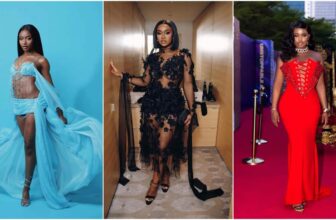
The waist is pulled in, the bust is carefully positioned, and the hips are given their moment. The skirt follows the body, before perhaps opening into a mermaid shape at the bottom. Add a corset, some boning, strategic seams, and enough structure to keep the silhouette exactly where it was intended to be.
It can be beautiful. That is not really the argument.
The problem is that this dress style has become so familiar that sometimes I find myself looking at an aso-ebi style and wondering what else the fabric could have become.
For instance, take a search drive for aso-ebi styles, and you will find page after page of dresses built around the same basic idea: create an hourglass shape, emphasise the waist, accentuate the bust and hips, and make sure the body remains the main event.
 Photo: Instagram/@eldiorsodeck_luxe
 Contemporary Nigerian fashion has embraced corsetry so enthusiastically that the corseted dress has become almost synonymous with the modern occasion look. Fashion coverage has even begun describing corsets as a defining feature of contemporary aso-ebi dressing, largely because they create that “snatched” silhouette.
And maybe that is exactly why I am getting a little bored.
Not because there is anything wrong with a defined waist, or a woman wanting to wear a fitted dress. And certainly not because loose clothing is inherently more fashionable or somehow more liberated.
I simply think we have spent enough time at one end of the silhouette spectrum.
Fashion is at its most interesting when it gives us different ways to see the body. Sometimes that means following the body closely, other times it means creating distance between the body and the clothes.
Why should one of those possibilities always be considered the most desirable?
This question feels particularly relevant now because the fashion industry itself is constantly moving between ideas about proportion. The current runway conversation is hardly limited to body-hugging clothes.
 Photo: Instagram/@nenye_ngwobia
 Fall 2026 collections have included everything from second-skin dressing and cinched waists to cocoon shapes, billowing trousers, exaggerated proportions, and voluminous dresses. Vogue’s trend coverage places figure-conscious dressing alongside a growing interest in playful, oversized proportions.
That contrast is important.
Fashion already knows how to make clothes that do not depend on a perfectly outlined waist. We simply do not always give those clothes the same attention.
We Have Become Very Attached to the Hourglass
There is nothing particularly new about fashion trying to shape the body.
Clothes have always manipulated proportion. Corsets narrowed waists. Bustles changed the appearance of the hips. Shoulder pads broadened the upper body. The New Look created a tiny waist beneath a fuller skirt.
Designers have always understood that clothing can change the way a body is perceived.
The interesting part is how narrow the conversation has become.
For a while now, fashion has had an almost obsessive relationship with the hourglass. A defined waist has become shorthand for a “good” silhouette, while curves are emphasised, lifted, sculpted and arranged to produce a very specific visual balance.
You can see that particularly clearly in occasion dressing. Research on contemporary aso-ebi notes that fabrics are taken to tailors and designers to be transformed into different styles, with Ankara and lace moving far beyond their traditional forms into an almost endless range of contemporary designs.
 Photo: Instagram/@tovia_o
 That creative possibility is precisely why it feels limiting when so many of those possibilities lead back to the same body shape.
A fabric with an incredible print can become a corseted mermaid gown. A dramatic piece of velvet fabric can be cut into another gown that follows the bust, narrows at the middle, and expands around the hips.
After a while, you start noticing the formula more than the clothes. Once you notice this silhouette, it becomes hard not to wonder whether we have confused showing the body with designing around it.
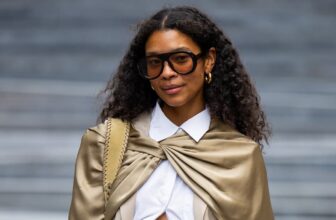
A garment can be sensual without being skin-tight, feminine without cinching the waist, dramatic without tracing every curve, and it can certainly be striking with something unexpected added to her proportions.
 Photo: Instagram/@opeoluwa_oos
 That is where I think fashion has more room to play.
And this is not an argument for bringing back shapeless clothes and pretending that fit does not matter. Good construction will always matter. So will proportion, balance, fabric, and tailoring. The point is that fit does not have to mean figure-hugging.
Sometimes the most interesting fit is the one that gives a garment room to move.
Perhaps We Need to Make More Room for Other Silhouettes
The fashion industry has already shown us how much can happen when designers stop treating the body as something that must always be outlined.
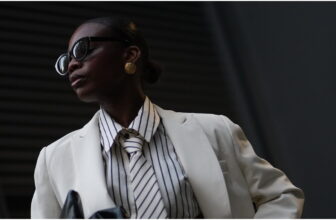
Look at the return of exaggerated proportions. Oversized jackets, balloon trousers, drop waists, dramatic skirts, and voluminous dresses have all been part of the recent fashion conversation.
That distinction opens up fashion.
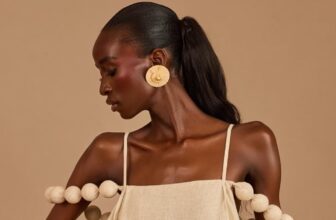
Suddenly, the sleeve can be the interesting part. The back can carry the drama, or create the illusion of a particular body underneath.
This is where I would like to see more experimentation in Nigerian occasion dressing too.
We have the fabrics for it. Lace, aso-oke, Ankara, velvet, organza, tulle, and embellished textiles can do so much more than become increasingly elaborate versions of the same fitted gown.
Nigerian designers have never lacked creativity. In fact, contemporary interpretations of Ankara and lace have already expanded far beyond traditional garments, with designers combining fabrics, shapes and construction techniques in increasingly inventive ways.
 Photo: Instagram/@mimionalaja
 Perhaps the next step is simply to push that creativity further.
What happens when we stop asking every garment to make the waist look smaller?
The garment does not have to compete with the body. The body does not have to disappear into the garment either. Both can exist at once.
Fashion has explored this balance many times before. The oversized silhouettes currently appearing on runways are less a rejection of the body than another way of thinking about proportion. The body remains present, but the garment is allowed to have its own identity.
That feels especially exciting because fashion becomes boring when the answer is always obvious.
If every wedding guest is expected to have a tiny waist, exaggerated hips, and a fitted bodice, eventually the surprise disappears. The dresses may be beautifully made, but the silhouette stops telling us anything new.
And I do not think the answer is to replace the hourglass with another mandatory shape. That would simply create a new version of the same problem.
Fashion does not need another body ideal. It needs more possibilities.
The hourglass can stay, and the corsets can stay. But these designs can stop being the automatic answer.
Because the most exciting thing about fashion has never been its ability to make every woman look the same. It is the possibility of making one piece of fabric look completely different on different bodies, in different proportions, with different ideas of beauty behind it.
We have spent a long time learning how to shape the body. Maybe it is time to let the clothes have a little more shape of their own.
Photo: Instagram/@hertunba
You May Also Like:
What Happens When Everyone Has Access to the Same Fashion Trends?
Why Do We Judge Women by What They Wear?
15 African Celebrity Looks Everyone Loved That I Just Couldn’t Get Behind
Why African Fashion Needs Better Fashion Journalism
I am an African Girl, 11 Celebrities Who Inspires My Wardrobe on Instagram
Naomi Osaka Has Given Birth To A Baby Girl
10 Amazing Ways to Keep Your Closet Tidy

Body Odor can be disgusting; these tips can get you out of the mess

Father's Day Most Stylish Gifts Ideas for Every Dad
The Best And Worst Colors For Interview
Midi Skirt Rules You Need To Know


Evelyn Adenike is an Associate Beauty Editor at Fashion Police Nigeria, where she covers all things beauty, from the glossiest nail trends to the best skincare finds. With a soft spot for storytelling and an eye for what’s fresh, she brings creativity and just the right dash of drama to every post. If it’s bold, beautiful, and blog-worthy, Evelyn’s probably already writing about it.