Published: September 9, 2026 Last Updated 1 month ago by FPN
For generations, long hair has been a powerful symbol of beauty standards, often linked to femininity, youth, health, and desirability. Fairy tales, films, advertising campaigns, fashion editorials, and even everyday compliments have helped reinforce the idea that longer hair represents a particular kind of beauty.
From Disney princesses with cascading locks to celebrities photographed on red carpets with waist-length waves, the message has appeared repeatedly: long hair is beautiful, feminine, and desirable.
The long-hair beauty standard has been so deeply embedded in popular culture that comments like “you look better with long hair” can sound almost ordinary.
Yet behind that seemingly harmless statement is a much bigger conversation about how women are expected to look. Why has length been valued so highly? Does long hair actually make someone more beautiful, or have generations of cultural expectations simply taught us to see it that way?
In 2026, the conversation is becoming more interesting. Long hair is experiencing another major comeback, with flowing lengths appearing on red carpets, runways, social media, and everyday street style.
At the same time, short bobs, pixie cuts, cropped hairstyles, natural textures, grey hair, braids, and culturally specific styles are challenging the idea that there should be one dominant definition of feminine beauty.
So, is long hair still the ultimate beauty standard? The answer is more complicated than a simple yes or no. Long hair remains powerful, desirable, and commercially important, but it no longer holds the same unquestioned position it once did.
 Photo Courtesy
 Increasingly, women are deciding for themselves what beauty looks like, and hair length is becoming a matter of personal style rather than a requirement.
The story begins with the way long hair has been presented throughout history. Fairy tales have traditionally given their heroines long, flowing hair rather than short cuts.
Rapunzel is perhaps the most obvious example. Her extraordinarily long golden hair is not simply part of her appearance; it is central to her story and identity.
Similar images appear throughout art, literature, and popular culture, where long hair has often communicated femininity, youth, romance, innocence, and beauty.
For centuries, women were expected to maintain longer hair, particularly in societies where femininity was closely tied to appearance and domestic ideals.
Hair was often treated almost like a crown. Growing and maintaining long, healthy hair could also suggest good health, youth, and access to the time and resources required for its care.
That history helped establish the long hair beauty standard that still influences fashion today. However, it has never been completely unchallenged.
The twentieth century provided some of the most important disruptions to the traditional preference for long hair. In the 1920s, flappers embraced short bobs as part of a wider cultural shift toward independence and modernity.
Cutting the hair was not simply a change in grooming; for many women, it became a visual rejection of older expectations.
The 1960s brought another major change. Vidal Sassoon’s precise geometric cuts demonstrated that short hair could be sophisticated, fashionable, and distinctly feminine.
Rather than viewing length as the foundation of beauty, fashion designers and stylists began placing greater emphasis on shape, structure, personality, and individual style.
These shifts are important because they show that beauty standards are not fixed. What society considers attractive can change dramatically depending on the period, culture, media, and social climate.
Yet long hair has repeatedly returned.
 Photo Courtesy
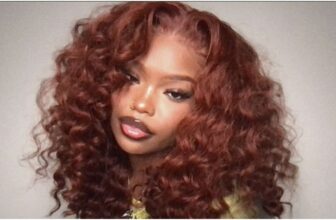
 In 2026, longer lengths are once again having a significant fashion moment. After several years when bobs, lobs, layered short cuts, and cropped styles dominated beauty conversations, long hair is reclaiming attention.
Celebrities have been wearing cascading waves, sleek lengths, textured layers, and dramatically extended styles, while salons are seeing renewed interest from clients who want to grow out shorter cuts.
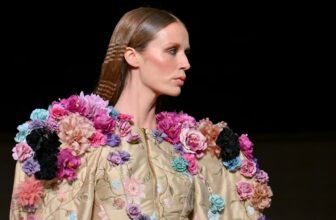
The current return to length, however, looks different from previous versions of the trend. It is not necessarily about having extremely elaborate hair or wearing obvious extensions. Instead, the emphasis is increasingly placed on condition, movement, softness, and healthy-looking strands.
That distinction matters.
The modern long-hair beauty standard is less about reaching a certain length and more about how that hair looks and feels. Shiny, healthy, well-maintained hair is often considered more desirable than extremely long hair that appears damaged or overprocessed.
The focus has moved toward quality rather than measurement.
This shift has also been influenced by the growing interest in hair health. Consumers are spending more time researching scalp care, strengthening treatments, protective styling, heat protection, and products designed to prevent breakage.
Growing hair long is no longer simply a waiting game. It has become a process involving intentional care.
For some women, this makes long hair appealing because it becomes evidence of patience and investment. Healthy length can communicate that someone has taken time to care for their hair. In a culture increasingly interested in wellness and personal maintenance, that can carry its own form of status.
 Photo Courtesy
 Long hair has also carried symbolic meaning across different cultures for centuries.
In many Western traditions, long hair has been connected with femininity, maidenhood, fertility, sensuality, and youth. In other societies, uncut hair has represented spirituality, strength, identity, or a connection to cultural heritage.
Sikhism provides one important example. Maintaining uncut hair, known as kesh, is a central article of faith and reflects respect for the natural form created by God. Among many Indigenous communities, long hair can also carry cultural and spiritual significance, representing identity, heritage, strength, and connection to community and land.
These meanings show why it is difficult to discuss the long-hair beauty standard as though it has one universal definition. Hair length means different things to different people.
It can represent femininity in one culture, spirituality in another, rebellion in another, and simply personal preference somewhere else.
The cultural meaning of long hair changed again during the 1960s and 1970s. For young people involved in counterculture movements, growing long hair became a rejection of conventional expectations. Men and women alike embraced longer styles as expressions of freedom and resistance.
This is one of the most interesting contradictions in hair history. The same long hair once used to reinforce traditional femininity later became a symbol of rebellion.
That contradiction continues today.
By 2026, women are wearing long hair in countless ways. Some choose sleek, straight lengths. Others prefer natural curls, coils, braids, locs, waves, or textured layers. Some use extensions or wigs, while others spend years growing their natural hair.
 Photo Courtesy
 Celebrities have played an important role in bringing longer styles back into the spotlight.
Figures such as Nicole Kidman, Sandra Bullock, Zoë Kravitz, and Kylie Jenner have all demonstrated different approaches to extended lengths. Their influence reaches millions of people who look to celebrity hairstyles for inspiration before booking their next salon appointment.
But celebrity culture has also complicated the beauty conversation.
For decades, famous women have often appeared with exceptionally long, thick hair enhanced through extensions, wigs, or professional styling. Because these images are so polished, consumers can easily develop unrealistic expectations about what naturally grown hair should look like.
Social media has intensified that comparison.
Platforms such as Instagram, TikTok, and Pinterest are filled with images of extraordinarily long, glossy hair. Before-and-after videos can make dramatic transformations appear simple, while hair-growth content can create the impression that everyone should be working toward the same goal.
At the same time, social media has provided space for a much wider range of hairstyles.
Women with shaved heads, short natural cuts, silver hair, afros, locs, braids, and unconventional colours now have enormous platforms of their own. This has helped challenge the idea that the long-hair beauty standard should apply to everyone.
Short hair, in particular, has become an important part of that conversation.
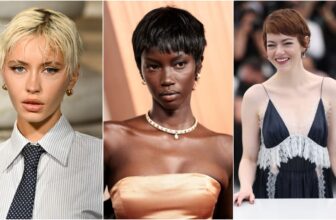
The bob has remained one of fashion’s most reliable symbols of confidence. From sharp chin-length cuts to soft Italian bobs and textured, French-inspired styles, shorter hair can completely change how the face is presented.
For many women, cutting their hair is not about rejecting femininity. It is about defining femininity on their own terms.
A short haircut can communicate confidence, independence, practicality, creativity, or simply a desire for change. It can also be liberating for someone who has spent years believing that long hair is necessary to look attractive.
 Photo Courtesy
 This is particularly relevant in Nigeria and across parts of Africa, where practical considerations play an important role in hair choices.
Heat, humidity, maintenance time, hair-care costs, protective styling, and the price of extensions can all influence whether someone chooses long or short hair.
For some women, a closely cropped style is easier to maintain and more comfortable in a warm climate. For others, braids, wigs, weaves, locs, or extensions provide the flexibility to experiment with length without permanently changing their natural hair.
African beauty culture also shows why there cannot be a single global definition of the long-hair beauty standard.
Hair has historically carried cultural meaning across the continent. Braiding traditions, threading, cornrows, beads, sculpted styles, and other techniques have been used to communicate identity, community, age, status, and creativity.
Today, African women continue to move between different expressions of beauty. One day, a woman may wear waist-length braids; the next, she may choose a short natural afro or a close crop. Neither choice makes her more or less feminine.
 Photo Courtesy
 Celebrity choices have helped make that message more visible.
When public figures choose short hairstyles instead of the expected long extensions, they show that glamour doesn’t depend on length. A minimalist haircut can be just as striking as a cascading mane, particularly when the cut complements the wearer’s features and personal style.
The natural hair movement has pushed this conversation even further.
For many Black women, the pressure to achieve long, straight, or loosely curled hair has been tied to broader social expectations around race and beauty.
Hair straightening, chemical treatments, extensions, and wigs have often been used not simply for fashion but to navigate professional and social environments where certain textures were considered more acceptable.
The rise of natural hair movements challenged those assumptions.
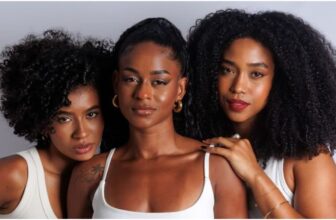
The big chop, teeny-weeny afro, defined curls, locs, protective styles, and sculpted natural cuts have become powerful expressions of identity.
Instead of asking how closely natural hair resembles a traditional beauty ideal, the conversation increasingly asks whether the hair is healthy, cared for, and meaningful to the person wearing it.
 Photo Courtesy
 This represents a major shift in the long hair beauty standard.
Length is no longer automatically placed above texture, health, personality, or cultural identity.
Age has also become less restrictive.
For years, women were given unspoken rules about what hairstyles were considered appropriate as they got older. Long hair was sometimes described as youthful, while shorter cuts were presented as more suitable for mature women.
That thinking is changing.
Women in their 40s, 50s, 60s, and beyond are increasingly wearing longer hair because they like it. Some choose flowing layers, long bobs, natural curls, silver lengths, or sleek straight styles. The decision is based less on age and more on hair condition, lifestyle, facial features, and personal preference.
This reflects a broader change in how women approach beauty. Instead of asking, “What hairstyle is appropriate for my age?” many are asking, “What hairstyle makes me feel like myself?”
That question is far more useful.
Long hair does have practical advantages. It offers enormous styling flexibility. You can wear it in ponytails, braids, buns, waves, curls, half-up styles, sleek straight looks, and elaborate updos.
Long hair also provides stylists with more room to create movement, layers, and dramatic shapes.
 Photo Courtesy
 However, length comes with responsibilities.
Long hair can take more time to wash, dry, detangle, and style. It may require more products and can be more vulnerable to split ends, breakage, heat damage, and friction. Maintaining length often requires regular trims and careful handling.
For women with busy schedules, short hair can therefore be the more attractive choice.
This is another reason the idea of one universal beauty standard is becoming harder to defend. A hairstyle may look incredible but still be completely wrong for someone’s lifestyle.
A woman who exercises frequently, travels often, works in a demanding environment, or simply dislikes spending an hour styling her hair may prefer a short cut. Another woman may enjoy her weekly wash day and love experimenting with long hairstyles.
Both choices are valid.
Class and access also influence the conversation. Maintaining extremely long, healthy hair can require considerable financial investment. Extensions, wigs, salon appointments, treatments, specialised products, and professional colour services can quickly become expensive.
For this reason, hair can sometimes function as a subtle marker of resources.
A glossy, waist-length hairstyle may communicate time and money spent on appearance, particularly when it requires regular professional care. But shorter hair can communicate something entirely different: practicality, modernity, confidence, or independence.
The meaning depends on context.
Race also plays a significant role in how people perceive hair length. Straight, long hair has historically been positioned as a dominant beauty ideal in many Western media spaces, while tightly coiled textures have often been unfairly judged.
The growing representation of textured hair has challenged that hierarchy.
Today, beauty campaigns, fashion magazines, entertainment platforms, and social media creators are showcasing a much broader range of hair types. This does not mean long hair has disappeared. Instead, it means long hair is increasingly seen as one possibility rather than a requirement.
This distinction may be the biggest shift happening in beauty culture.
 Photo: Instasgram/stardine_19
 So, is long hair still the ultimate beauty standard?
In 2026, long hair remains influential, desirable, and deeply connected to ideas of femininity. Its current resurgence proves that the fascination with length has not disappeared. From celebrity red carpets to salon requests and social media trends, long hair continues to command attention.
But it is no longer an uncontested ideal.
The popularity of short bobs, pixie cuts, natural textures, braids, locs, shaved styles, grey hair, and culturally specific hairstyles shows that women have more freedom to define beauty for themselves.
The modern beauty conversation is less about enforcing one look and more about personal expression.
That does not make long hair less beautiful. If anything, it makes the choice to wear it more meaningful.
A woman can grow her hair to her waist because she loves the drama and movement of long lengths. Another can cut her hair into a sharp bob because she feels stronger and more confident with shorter hair.
Someone else may choose to wear her natural coils exactly as they grow. Another person may switch between wigs, braids, extensions, and short cuts depending on her mood.
There is no contradiction in any of these choices.
The long hair beauty standard may still have cultural and commercial power, but its authority is weakening as beauty becomes more individual.
Perhaps that is the most important development of all.
Beauty ideals have always changed. What appears desirable in one decade can feel outdated in another. Long hair has survived these cycles because it carries powerful associations with femininity, youth, romance, health, and glamour. Its latest comeback shows that those associations remain strong.
But the rise of alternative hairstyles demonstrates that women are no longer willing to accept those associations as rules.
 Photo Courtesy
 The most compelling hairstyles in 2026 are not necessarily the longest ones. They are the hairstyles that make sense for the person wearing them.
Healthy hair matters. Confidence matters. Cultural identity matters. Personal preference matters. Lifestyle matters. Whether the hair reaches the shoulders or the waist is only one part of the picture.
Long hair can still be glamorous. Short hair can be just as striking. Natural hair can be powerful. Grey hair can be beautiful. Braids can be expressive. A shaved head can make a statement.
The future of beauty is not about replacing one standard with another. It is about making room for more than one.
So, is long hair still the ultimate beauty standard? Perhaps it is still one of the most enduring beauty ideals, but it is no longer the only one that matters. In 2026, beauty is becoming less about meeting a fixed expectation and more about making deliberate choices.
And that may be the most beautiful change of all.
Photo Courtesy
You May Also Like:
Cherry Cola Hair is Back, and Brunettes are Trying Out the Glossy Red Hairstyle
October 14, 2026Crimped Hair Is Back, But It Looks Nothing Like the Version You Remember
October 2, 2026The Gamine Pixie is Giving the Classic Crop a Softer, More Modern Update
September 29, 2026Hair Mistakes That Can Make an Expensive Hairstyle Look Basic
September 24, 2026Why Does Getting Your Hair Done Feel Like a Reset Button?
September 21, 2026The Celebrity Hair Transformations Nobody Saw Coming in 2026
September 21, 2026The New Hair Goal Is Fullness, Not Just Length
September 17, 2026Frontal Hairstyle Trends: When Does It End?
September 14, 2026Are Heatless Curls Actually Better for Your Hair?
September 8, 2026Miss America 2027 Regan Hutsell Makes History as First Winner Crowned in Natural Hair
September 8, 2026Are We Entering the Era of the Low-Effort Hairstyle?
September 2, 20267 Celebrities Who Sparked My Strong Affection for Pink Hair
August 28, 2026


Esther Ejoh is a Fashion Editor at Fashion Police Nigeria, where she writes all things fashion, beauty, and celebrity style, with a sharp eye and an even sharper pen. She’s the girl who’ll break down a Met Gala look one minute, rave about a Nigerian beauty brand the next, and still find time to binge a movie or get lost in a novel. Style, storytelling, and self-care? That’s her holy trinity.