A perfectly styled frontal once signaled status and a sophisticated beauty look.
Features like an invisible hairline, sculpted baby hairs, and a seamless blend from lace to skin distinguished the polished from the ordinary.
In salons across Lagos, Accra, Johannesburg, London, and Houston, the frontal became both a technical achievement and a cultural standard. It offered versatility, protection, and a level of camera-ready perfection that many felt natural hair could not always provide.
But as frontal hairstyle trends continue to change, the question is no longer simply whether frontals remain popular—they do—but whether the era of dramatic, highly constructed frontals is ending or simply evolving into a subtler, more enduring style.
Lace frontals gained popularity by addressing a key issue: traditional wigs and weaves often revealed unnatural hairlines. Covering the front from ear to ear, frontals enabled versatile styling and created the appearance of hair growing directly from the scalp.
The introduction of HD and transparent lace made the blend even more realistic. Pre-plucked hairlines, bleached knots, and precisely styled baby hairs elevated installations to an art form.
In many African cities, frontals shifted from special-occasion wear to an everyday beauty choice. Social media amplified this trend, with flawless installs attracting praise while imperfect ones could quickly become subjects of criticism.
The pressure to achieve a perfect hairline intensified as frontal hairstyle trends became increasingly visible online.
 Photo Courtesy
 The Lagos-style frontal or hairline, characterised by its deliberately irregular, natural-looking hairline, became one of the trend’s most distinctive and polarizing hair looks.
This hairstyle placed the hairline unusually low on the forehead, sometimes just above the eyebrows, and featured elaborate, precisely styled baby hairs.
At its peak, the Lagos frontal was considered the gold standard for a “proper” install in many Nigerian salons and online beauty spaces.
A well-executed version could look striking in photographs, particularly under professional lighting, while unsuccessful attempts often became subjects of criticism and humour.
Backlash followed, with critics arguing that the ultra-low hairline looked unnatural and that exaggerated baby hairs had become too uniform. Videos mocking “Lagos hairline fails” spread widely, turning what had once been considered a beauty achievement into a source of online debate.
Commentators also pointed out the practical problems that could appear after installation.
Once the holding band was removed and time passed, lace could lift, glue could become visible, and carefully sculpted edges could lose their shape.
 Photo Courtesy
 Media personalities described poorly executed versions as tacky. While some of the conversation was unnecessarily harsh, it reflected a growing fatigue with a style that had moved from innovative to overdone.
The Lagos frontal was part of a much broader evolution in frontal hairstyle trends. Initially, heavy, glossy baby hairs framing the forehead were almost essential, while deep side parts showcased the lace melt.
Sleek, bone-straight hairstyles with sharp edges dominated for several seasons, creating the highly polished appearance that became synonymous with frontal installations.
Later, curly and deep-wave frontals introduced more texture and movement while still requiring a carefully concealed hairline. The emphasis remained on achieving an installation that looked almost impossible to detect.
Then came the rise of glueless frontals. The appeal was obvious. Women could achieve a seamless finish without relying heavily on adhesives or committing to an installation that required professional removal.
Pre-plucked, ready-to-wear units with combs, adjustable bands, and improved construction also gained popularity. These options reduced installation time and made it easier for wearers to remove their wigs when necessary.
A quieter but significant counter-trend soon emerged: the natural hairline frontal.
Instead of creating an extremely low, perfectly symmetrical hairline, hairstylists began leaving small irregularities that mimicked the way natural hair grows. Baby hairs became softer and less sculpted. Hairlines were raised slightly to create a more believable proportion.
 Photo Courtesy
 The goal was no longer to prove that the lace had disappeared through an elaborate display of technique. The goal was for people to question whether there was lace at all.
This shift has become one of the most interesting developments in current frontal hairstyle trends. A natural-looking hairline does not need to be perfectly straight. It does not need rows of gelled baby hairs.
It does not need to sit unnaturally low on the forehead. In fact, slight imperfections can make an installation look more convincing. Nigerian hairstylists, in particular, have gained recognition for creating frontals that disappear into the wearer’s complexion while maintaining a realistic hairline.
When the hairline looks natural rather than heavily constructed, the installation reaches a different standard of beauty.
These changes also reflect broader conversations around beauty and hair health. As dramatic frontal installations became more common, discussions about scalp health, edge recovery, tension, and the long-term use of adhesives became harder to ignore.
Stories of thinning edges and lengthy recovery periods became increasingly common online. Women began asking whether maintaining a particular look was worth the physical, financial, and emotional effort involved.
For some, the answer was no. They returned to closures, which cover a smaller section of the scalp and can require less manipulation around the hairline. Others moved toward braids, twists, short natural hairstyles, sew-ins, or wigs that did not require a full frontal.
Some women continued wearing frontals but changed how they approached them, choosing better-quality lace, less aggressive adhesive techniques, shorter installation periods, and regular breaks between wears.
The commercial market for frontals, however, remains strong. Sales activity and consumer interest through 2025 and 2026 suggest considerable demand for HD lace, glueless designs, textured units, and natural-looking constructions.
 Photo Courtesy
 Manufacturers are competing on realism, comfort, convenience, and the ability to create a convincing hairline with less work. Influencers and hairstylists continue to attract large audiences with transformation videos showing clients going from their natural hair to a completely different look within hours.
This continued interest makes one thing clear: the frontal isn’t disappearing.
What appears to be changing is the aesthetic surrounding it.
The most extreme versions of the hairstyle are losing some of their dominance. The ultra-low Lagos hairline, extremely heavy baby hairs, thick adhesive melts, and highly constructed edges no longer represent the only definition of a good frontal.
Instead, newer frontal hairstyle trends are moving toward subtlety.
The installation should look believable, feel comfortable, and work with the wearer’s features rather than completely changing them.
The expectation that every frontal must feature dramatic, gelled edges is also weakening. A woman can wear a frontal with a simple hairline, minimal baby hairs, a middle part, loose waves, curls, or even a slightly imperfect finish and still look put together.
This marks a significant shift from when the quality of an installation was often judged by how invisible the lace appeared under intense scrutiny.
 Photo Courtesy
 Social media has played an important role in both creating and challenging these standards. Instagram and TikTok helped popularize the frontal by making transformation videos easy to share.
A hairstylist could post a before-and-after clip and instantly demonstrate the difference an installation could make.
But the same platforms also exposed the maintenance behind the look. Viewers saw glue applications, melting techniques, holding bands, removal processes, and the condition of natural hair underneath.
That visibility has encouraged more conversations about what happens after the perfect photograph.
Cultural context is also crucial. In many African communities, hair carries significant social, cultural, and economic importance. A polished appearance can influence how women are perceived in professional settings, social environments, and even within their own communities.
Frontals offer a relatively accessible way to achieve a highly styled look while letting wearers experiment with length, colour, texture, and parting.
For many women, wearing a frontal is simply fun. It allows them to become someone different for a few weeks. One installation can provide long waves for an event, another can offer a short bob for work, while another can introduce curls or a completely different colour.
That versatility is one reason the frontal remains relevant.
At the same time, you can’t ignore the financial and physical costs. High-quality lace can be expensive. Professional installations can require regular maintenance. Adhesives, removers, styling products, replacement units, and salon appointments add up.
There is also the question of what repeated tension and improper removal can do to natural hair and the scalp.
 Photo Courtesy
 The most useful conversation around frontal hairstyle trends therefore needs to acknowledge both sides.
Frontals can offer versatility, convenience, protection, and creative freedom. But the hairstyle can also become stressful when people treat a particular look as a requirement rather than an option.
Technology is helping to change that equation. Improved glueless systems are making installations easier to wear and remove. Finer lace can create a realistic hairline without requiring excessive bleaching.
Units are increasingly designed for different head shapes, hair textures, and skin tones. Adjustable construction is also giving wearers more control over how their wigs sit.
Education is becoming just as important. More women are learning about proper wig removal, scalp cleansing, installation breaks, edge protection, and the importance of avoiding excessive tension.
The conversation is shifting from simply asking, “Does this frontal look good?” to also asking, “Is this installation good for my hair?”
That may be the biggest change of all.
The future of frontal hairstyle trends is unlikely to be about abandoning the frontal completely. Instead, the category appears to be moving toward choice.
Women are no longer expected to follow one formula for what a perfect installation should look like. A natural hairline, glueless unit, textured wig, closure, or even exposed natural hair can all be part of the same beauty conversation.
So, when does the frontal hairstyle trend end?
The answer depends on which version of the trend we are talking about.
The most theatrical phase — the era of exaggerated Lagos hairlines, heavy baby hairs, aggressive adhesive installs, and the expectation that every lace unit must look heavily “melted” is already losing ground.
Years of repetition, online criticism, and growing awareness of hair and scalp health have made softer alternatives more appealing.
 Photo Courtesy
 But the broader frontal is not going anywhere.
Its ability to offer versatility, transformation, and styling freedom means there will always be demand for it. What is changing is the standard. A frontal no longer has to announce itself.
In fact, the most current versions are designed to disappear. The hairline is softer, the edges are lighter, the lace is finer, and the overall installation feels more believable.
This evolution mirrors what’s happened with many other beauty trends. Once a technique becomes widely adopted, consumers eventually become more selective. What was once impressive simply because it was difficult becomes ordinary.
The next stage is about refinement and practicality.
The frontal has always been more than a hairstyle. It addressed visible hairlines, offered creative expression, provided styling flexibility, and became a status symbol within certain beauty communities.
At the same time, it created pressure to maintain an extremely polished appearance and, in some cases, placed unnecessary stress on natural hair.
Now, women have more choices.
Those who once felt compelled to wear a flawless frontal are exploring closures, natural hairstyles, braids, glueless wigs, textured units, and simpler installations.
Others are still wearing frontals but choosing techniques that prioritise comfort and realism. This does not signal the death of the frontal. It signals the end of the idea that there is only one correct way to wear one.
The next chapter of frontal hairstyle trends will likely be less about creating the most dramatic transformation and more about creating a look that feels personal.
The perfect hairline may no longer be the lowest or most heavily styled one. It may simply be the one that looks like it belongs to you.
The frontal hairstyle trend is evolving, not disappearing. And perhaps that is exactly what a long-running beauty trend needs to remain relevant.
Photo: Instagram/torialuxuryhair
You May Also Like:
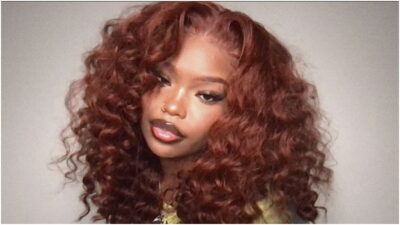
Cherry Cola Hair is Back, and Brunettes are Trying Out the Glossy Red Hairstyle
Crimped Hair Is Back, But It Looks Nothing Like the Version You Remember
The Gamine Pixie is Giving the Classic Crop a Softer, More Modern Update
Hair Mistakes That Can Make an Expensive Hairstyle Look Basic
Why Does Getting Your Hair Done Feel Like a Reset Button?
The Celebrity Hair Transformations Nobody Saw Coming in 2026

The New Hair Goal Is Fullness, Not Just Length
Is Long Hair Still the Ultimate Beauty Standard?
Are Heatless Curls Actually Better for Your Hair?

Miss America 2027 Regan Hutsell Makes History as First Winner Crowned in Natural Hair
Are We Entering the Era of the Low-Effort Hairstyle?
7 Celebrities Who Sparked My Strong Affection for Pink Hair


Esther Ejoh is a Fashion Editor at Fashion Police Nigeria, where she writes all things fashion, beauty, and celebrity style, with a sharp eye and an even sharper pen. She’s the girl who’ll break down a Met Gala look one minute, rave about a Nigerian beauty brand the next, and still find time to binge a movie or get lost in a novel. Style, storytelling, and self-care? That’s her holy trinity.