Published: May 21, 2026 Last Updated 5 months ago by Esther Ejoh
When a new African luxury fashion brand launches, particularly one offering sculptural leather bags priced up to $900, our initial response at Fashion Police Nigeria is cautious, not admiring. We have encountered many brands with impressive online presence and compelling stories, yet underwhelming products.
Customers often invest in bags that appear attractive online but fail to meet quality expectations. Reports of peeling leather, broken clasps, and unresponsive customer service are all too common.
When AABOUX, a Nigerian Luxury Leather bag brand, began gaining attention on international runways and among celebrities, and we learned of founder Zainab Aliyu’s transition from chartered accountant to leather artisan, we approached the brand with our usual scrutiny. We thoroughly investigated the claims, evaluating materials, construction, pricing, and the brand narrative with the same skepticism we apply to any new entrant in African luxury.
After discussions with industry experts and a detailed review of the Ripened Earth collection, Aaboux’s newest bag collection, we are prepared to share our verdict. Is AABOUX a genuine contender or another fleeting presence in African fashion? Continue reading for our honest verdict.
The Brand Story: Beautiful, But Does It Matter?
The brand’s origin is notable. Zainab Aliyu trained as a chartered accountant in the UK before returning to Lagos to establish AABOUX, a luxury leather brand. The name is derived from a family nickname given by her mother. The brand is inspired by personal memory, heritage, architecture, and the quiet strength of women.
 Photo Credit: AABOUX
 We will be honest. In African fashion, we have seen a lot of origin stories. Some feel authentic; others feel manufactured for press releases.
AABOUX’s story falls firmly into the former category. There is a sincerity to the narrative that is difficult to fake. The transition from accounting to design is unusual enough to be interesting, and the emphasis on “quiet strength” feels earned rather than performative.
Aliyu is not shouting about being a female founder or an African brand. She is letting the work speak. And in our opinion, that restraint is precisely what makes the story believable.
The Craftsmanship: Near-Stitchless Construction and Precision Rivets
AABOUX distinguishes itself through its signature near-stitchless construction, which is a genuine design innovation. By minimizing stitching, the brand emphasizes the integrity of the leather. There are no seams to split or threads to fray; instead, precision rivet work secures the sculptural forms.
We examined the construction claims closely. Each piece is handcrafted by third-generation artisans, and this expertise is evident in the finished product. The edges are clean, the rivets are precisely aligned, and the leather grain is preserved. These bags clearly reflect skilled, attentive craftsmanship rather than mass production.
 Photo Credit: AABOUX
 The near-stitchless approach may not appeal to everyone. Some customers appreciate the minimalist, architectural aesthetic, while others may prefer the softness and flexibility of traditionally stitched bags.
AABOUX bags are structured and maintain their shape. Those who value precision and form will find them appealing.
RIPENED EARTH: A Study in Colour, Form, and Time
The Ripened Earth collection is described as “a study in colour, form and time.” Its palette is inspired by nature, featuring shades such as tiger nut, palm fruit, citrus, grape, and aubergine. These colors are grounded and warm, distinct from the bright, saturated tones of fast fashion.
This approach is refreshing. While many African brands use predictable colour stories such as bold Ankara prints or primary colours, AABOUX offers something different. The Ripened Earth colours feel organic and sophisticated, suitable for various settings from corporate environments to gallery openings. This versatility is both rare and valuable.
The collection features three signature silhouettes: Mira, Lina, and Tali. Each explores scale, proportion, and refined color compositions, with duo-tone pairings and subtle contrasts defining the sculptural forms. Mira balances structure with wearability, Tali offers a more dramatic option for evening or statement dressing, and Lina serves as a versatile everyday bag that combines style and function.
 Photo Credit: AABOUX
 AABOUX utilizes a diverse range of materials, including ethically sourced leathers, metallic finishes, embossed textures, pony hair, printed leathers, and alternatives such as cactus leather, raffia, and jute. This variety is notable for a brand of its size.
The inclusion of cactus leather is especially commendable. Sustainable alternatives to animal products represent the future of luxury fashion, and it is encouraging to see a Nigerian brand proactively adopting this approach. The raffia and jute pieces also provide textural variety that sets AABOUX apart from competitors.
However, the price range ($250 to $900) varies significantly depending on the material chosen. Cactus leather and raffia pieces are at the lower end, while exotic finishes and metallic leathers reach the higher price points. A clearer justification for these price differences would be beneficial.
In the context of luxury leather goods, this is accessible. Comparable bags from European luxury houses such as Celine, Loewe, or Bottega Veneta start at $1,500 and can exceed $3,000. AABOUX delivers similar craftsmanship and design innovation at a significantly lower price.
This is a strategic market position. AABOUX does not compete with fast fashion; instead, it offers entry-level luxury to customers seeking distinctive products at accessible prices. The $250 to $500 range is especially appealing for gifts, first-time luxury buyers, and those who value design without the European markup.
However, at the $900 price point, customers expect exceptional quality. Based on our review, AABOUX meets these expectations. We recommend that potential buyers examine individual pieces, as handmade items may have minor variations. These variations add character but should be considered before purchase.
Potential buyers may question the durability of cactus leather compared to animal leather, or the longevity of raffia. Addressing these concerns directly would strengthen the brand’s positioning.
Global Availability and Recognition
AABOUX is available internationally through select retail partners and direct channels, shipping to the USA, France, the UK, Dubai, Ghana, Kenya, Côte d’Ivoire, and Senegal. This level of distribution is particularly impressive for a brand established just eight years ago and reflects its growing international relevance within the luxury accessories space.
The brand also maintains a physical presence in Lekki, Lagos, allowing customers to experience the craftsmanship, textures, structure, and colourways of the bags firsthand — an important advantage in the luxury market where tactile experience often influences purchasing decisions.
As AABOUX continues to grow globally, expanding its retail footprint and immersive brand experiences could further strengthen customer engagement and brand visibility across key markets.
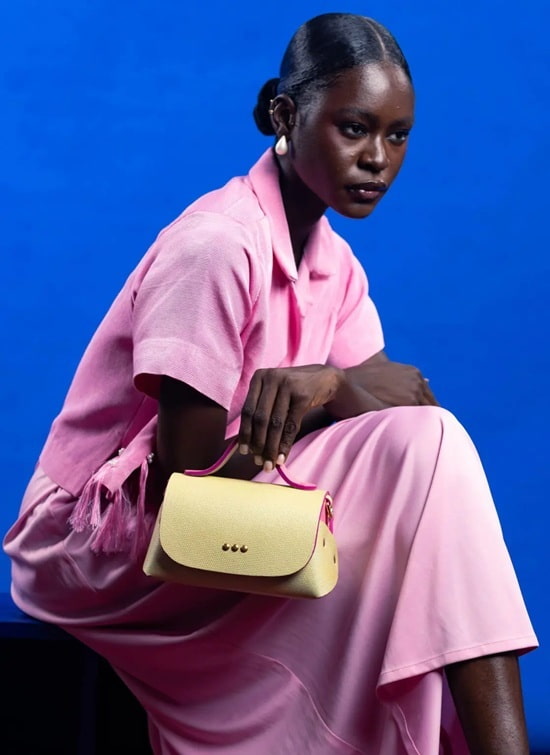 Photo Credit: AABOUX
AABOUX has also gained visibility through notable media features and celebrity placements. The brand has been featured in publications such as Essence, Glamour, and Bloomingdale’s, reinforcing its positioning within the global luxury and fashion conversation.
Its bags have been seen on respected style figures, including Rita Dominic, Beverly Naya, Shaffy Bello, and Kiky Festus — women whose personal style aligns naturally with the brand’s refined and contemporary aesthetic.
Rather than relying heavily on visibility alone, AABOUX appears to be building a more intentional brand identity rooted in craftsmanship, elegance, and cultural relevance. The brand’s aesthetic resonates strongly with executives, creatives, tastemakers, and modern luxury consumers across Africa and the diaspora.
With its growing international recognition, editorial visibility, and strong design language, AABOUX is steadily positioning itself as a notable voice in African luxury fashion.
Our Verdict: Buy, Wait, or Skip?
After careful consideration, here is FPN’s official verdict on AABOUX.
Overall FPN Rating: 8/10 – Highly Recommended
AABOUX stands out as an authentic luxury brand. Zainab Aliyu has created a label that is African in essence and global in ambition, combining innovative construction with timeless design and a thoughtful approach to sustainability. The bags are beautiful, the craftsmanship is exceptional, and the pricing is fair.
AABOUX has the potential to shape the future of African luxury, though there is room for growth. The brand would benefit from increased physical retail presence, clearer communication about material differences, and a broader network of authentic brand ambassadors. These are achievable goals, and we are confident that Aliyu and her team will address them.
For those seeking a sculptural leather bag designed to last and attract attention, AABOUX is an excellent choice. The Ripened Earth collection is especially noteworthy. Be prepared to answer questions about your bag, as it is sure to draw interest.
Photo Credit: AABOU
You May Also Like:
7 Fashion Trends to Watch at the 2026 Lagos Fashion Week
October 13, 2026Lagos Fashion Week 2026: What to Wear, Know and Expect
October 12, 20267 Emerging Fashion Designers We Would Love to See at Lagos Fashion Week 2026
October 8, 20269 Reasons You Should Attend (or Watch) Lagos Fashion Week 2026
October 7, 2026Maxhosa Africa: The First South African Fashion Brand Showcasing at Paris Fashion Week
October 2, 2026Method Dressing Among Nigerian Celebrities: Are We Finally Getting It Right?
September 8, 2026Camcassid: The Sustainable Fashion Brand Turning Textile Waste into Wearable Art
September 2, 2026The 2026 Africa Fashion Week London was a Defining Moment for African Fashion
August 24, 2026What Does Luxury Fashion Mean to an African?
August 20, 2026African Fashion Weeks 2026: Biggest Trends and Highlights
August 20, 202610 Top Affordable Luxury Fashion Brands in Africa
August 17, 2026How to Style Ankara Dresses for Every Occasion
August 11, 2026


Esther Ejoh is a Fashion Editor at Fashion Police Nigeria, where she writes all things fashion, beauty, and celebrity style, with a sharp eye and an even sharper pen. She’s the girl who’ll break down a Met Gala look one minute, rave about a Nigerian beauty brand the next, and still find time to binge a movie or get lost in a novel. Style, storytelling, and self-care? That’s her holy trinity.