During an awards season known for elaborate fashion, the cast of Ryan Coogler’s film Sinners drew attention with their distinctive braided hairstyles.
Throughout the 2025–2026 campaign, culminating at the 98th Academy Awards, Wunmi Mosaku, Jayme Lawson, Miles Caton, and Coogler transformed protective braids into artistic statements.
Their intricate, culturally significant styles celebrated Black heritage, reflected the film’s themes, and redefined expectations for red-carpet beauty.
Sinners, Coogler’s vampire epic inspired by blues music, hoodoo spirituality, and Southern Black history, received a record 16 Oscar nominations and won four awards, including Best Actor for Michael B. Jordan and Best Original Screenplay for Coogler.
In addition to its cinematic success, the Sinners’ cast’s braided hairstyles became a central beauty narrative of the season. These braids were not mere details; they honored the film’s cultural roots and highlighted the significance of Black hair as a symbol of identity, creativity, and storytelling.
Ryan Coogler’s Guitar and Treble Clef Braids: A Musical Tribute on Oscar Night
On Oscars night, Coogler’s signature cornrows were styled as a tribute to Sinners’ blues soundtrack. One side featured stitch braids shaped like a blues guitar, while the back displayed a treble clef.
These designs were created by his longtime braider and cousin, Tyzanna B. (Tyzanna Bailey), a Berkeley-based stylist who has worked with Coogler since childhood.
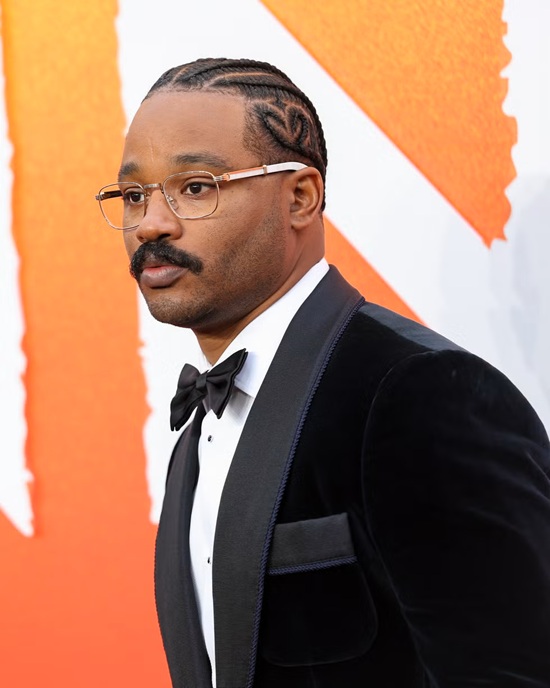 Photo: Getty Images
 Coogler accepted his Oscar for Best Original Screenplay with the guitar and treble clef braids clearly visible. This choice was both personal and thematic, reflecting the film’s integration of blues, gospel, and generational music.
Social media users praised the look, describing it as “icon energy” and noting that “winning an Oscar with a guitar braided into your hair is next level.” Coogler’s hairstyle reinforced the film’s cultural roots even in moments of celebration.
Wunmi Mosaku’s Spiraling Ancestral Braids: Celebrating Heritage and Pregnancy
Supporting Actress nominee Wunmi Mosaku, who also won the BAFTA for her role, showcased several braided styles throughout the season with hairstylist Dionne Smith. Her looks featured spiraling braids that complemented her natural hair texture.
For the London press tour, Mosaku requested “something that talks to the ancestors” and “African-inspired” elements, which Smith delivered through sculptural, regal braids.
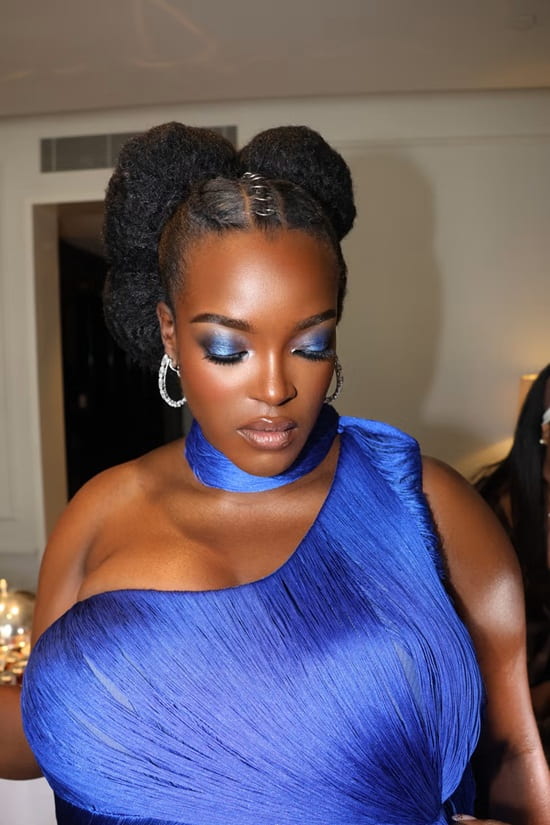 Photo: Dionne Smith
 At the Oscars, Mosaku’s braided updo celebrated both her Nigerian heritage and Hollywood glamour. The style reflected her character Annie, a rootworker and hoodoo practitioner who channels ancestral power.
Mosaku has shared that the role helped her reconnect with aspects of her identity she had set aside as an immigrant. Her braided looks visually represented this personal reclamation.
Jayme Lawson and Miles Caton: Fresh Takes on Classic Braids
Jayme Lawson reinterpreted classic cornrows with a modern, editorial approach, demonstrating that protective styles are equally impactful in high-fashion settings and everyday culture.
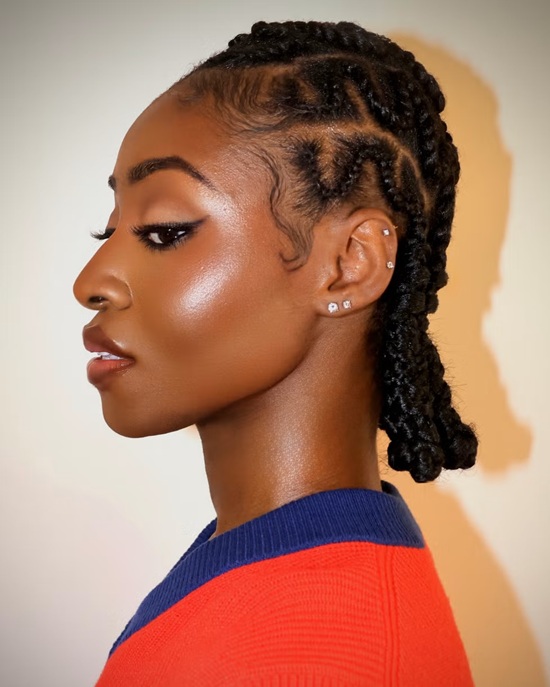 Photo: Getty Images
 By varying scale, direction, and negative space, she transformed traditional braiding into visually compelling designs. The resulting look honors heritage while remaining innovative, suitable for both red carpets and magazine editorials.
Miles Caton introduced a fresh approach to braided styling, using intricate stitch braids and precise geometric patterns that emphasize technical skill and artistry.
His method demonstrates a strong commitment to craftsmanship, ensuring each parting and braid placement creates a cohesive, distinctive look.
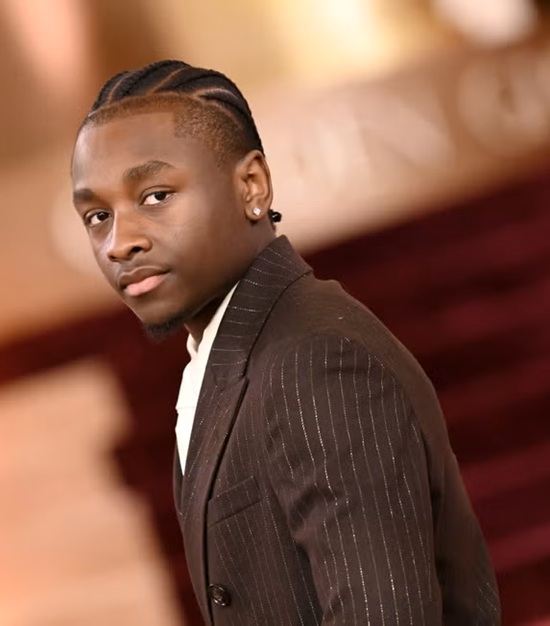 Photo: Getty Images
 As an emerging talent in Sinners, Caton’s hair choices reflect a purposeful connection to Black hairstyling traditions. His designs embrace cultural identity and present it within a modern, fashion-forward context.
The Bigger Cultural Shift
The Sinners cast’s choice to wear braided hairstyles was intentional. It signaled that awards-season beauty no longer requires straightening or conforming to Eurocentric standards. Braids, once overlooked in Hollywood, were elevated alongside couture gowns and fine jewelry. Hairstylists such as Dionne Smith, Tyzanna B., and Araxi Lindsey played a key role in shaping the red-carpet narrative.
This change reflects a broader trend in 2026 Hollywood: protective styles, natural textures, and culturally specific grooming are now recognized as mainstream excellence. The Sinners cast demonstrated that embracing Black hair traditions enhances, rather than diminishes, glamour. Their braids conveyed stories of ancestry, resilience, music, and joy, paralleling the film’s narrative.
In Hollywood, hair has long been subject to unspoken standards. For decades, Black actors were often expected to straighten or relax their hair to meet Eurocentric definitions of “polished” red-carpet beauty. Protective hairstyles like braids were rarely recognized as high-fashion choices suitable for major events.
The Sinners cast challenged these norms. By wearing sculptural, culturally significant braids tied to the film’s themes, they affirmed that Black hair traditions are powerful, artistic, and prestigious. The braids represented resistance to assimilation, celebrated skilled craftsmanship, and honored the communities and ancestors behind Sinners.
The cultural impact extended beyond fashion. In a year focused on representation, authenticity, and the future of Black storytelling in Hollywood, the Sinners cast used their hairstyles to assert their presence and redefine standards of excellence.
A Lasting Impact
The Sinners cast’s braided hairstyles will have a lasting impact. They demonstrated that protective styles can be couture and that Black hair can convey narrative significance equal to any designer garment. When Black creatives are empowered to tell their own stories, the results are transformative.
In 2026, the most memorable looks at the Oscars were not defined by extravagance. The most powerful statements were made through the careful artistry of each braid, highlighting the significance of cultural expression.
Photo Courtesy
You May Also Like:
Your Ultimate Guide to Different Types of Extensions
April 2, 202618 Best Haircut Trends for 2026: Your Guide to Soft, Romantic, and Effortless Styles
March 26, 2026Cardi B Reveals Why Using Raw Garlic is Bad for Your Hair
March 25, 2026The Only Hair Colours to Wear this Spring
March 24, 2026The French Twist is Making a Chic and Glamorous Comback
March 23, 2026Margot Robbie Just Made the Messy and Wet Bob Hairdo Covetable
March 10, 2026Teyana Taylor Oozes Style as She Debuts a Silver Hairstyle at the Chanel Fall/Winter 2026 Show
March 10, 202611 Best Curl Creams for Year-Round Bounce and Shine
March 9, 202615 Best Hairstyle Trends to Try This Spring
March 9, 2026The Japanese Bob is the New Minimalist Hairstyle to Wear in 2026
March 3, 202620 Covet-Worthy Balayage Highlight Hairstyles to Rock in 2026
February 27, 2026Money Piece Hair: Your Complete Guide and 17 Hairstyle Ideas
February 27, 2026


Esther Ejoh is a Fashion Editor at Fashion Police Nigeria, where she writes all things fashion, beauty, and celebrity style, with a sharp eye and an even sharper pen. She’s the girl who’ll break down a Met Gala look one minute, rave about a Nigerian beauty brand the next, and still find time to binge a movie or get lost in a novel. Style, storytelling, and self-care? That’s her holy trinity.