When a fashion showcase turns into a conversation about life, motherhood, and heritage, the result feels less like a seasonal collection and more like a story that lingers.
That is exactly what happened when British-Nigerian designer Tolu Coker unveiled her Spring 2026 vision with none other than Naomi Campbell at its heart. Rather than relying on the familiar models’ catwalk, Coker invited audiences into an experience that mixed fashion, cinema, and intimate storytelling.
Her 15-minute film, Unfinished Business, co-directed with her brother Ade Coker, became the canvas on which themes of motherhood, legacy, and Black womanhood unfolded with striking honesty.
The decision to move away from a runway was bold but intentional. The talented designer wanted to step outside the spectacle and offer something reflective, something that matched the weight of the questions she was asking through her designs.
The inclusion of Naomi Campbell was more than a casting choice; it was a statement about lineage in fashion. Campbell’s career has spanned decades, making her one of the most recognizable faces in global culture, yet here she was presented differently. Not only as the powerful supermodel the world reveres, but also as a woman in transition; one who embodies motherhood, memory, and the quiet strength often hidden behind public image.
Coker explained to WWD, “Everyone sees and knows Naomi as this really strong, powerful supermodel, but beyond that, she’s a mother to so many people, and now she’s in this transition where she’s a mother to her children as well. I really just wanted to present Naomi, the human being.” Those words guided the film, weaving together visuals that placed the supermodel in moments of softness and reflection, surrounded by garments designed not just for the runway but for the life lived off it.
The film became a mirror of Coker’s broader design philosophy. For her, fashion is not just fabric stitched together to capture fleeting trends. It is an heirloom, clothing that carries memory, designed to outlive its first owner and move between generations. This way of thinking touches every part of her creative process.
The fashion designer sees clothes as companions, pieces that grow with the wearer, adapting to shifting identities and roles over time. “I was thinking about the connection we have to our clothing, particularly as a woman designing for women, and the way our wardrobes evolve as we evolve as people,” she said.
Her reflections revealed the care with which she approached functionality. “Like the two-way zip, or the idea of corsetry that’s comfortable without the boning, these are pieces that honor the way the body evolves and changes.”
That idea of honoring change was clear in the collection itself. The designs balanced fluidity and structure, carrying both a sense of elegance and utility. A collared corset-style dress with a double zip and flared skirt stood out as a reimagination of classic femininity: practical, adjustable, and free of the discomfort often tied to traditional corsetry.
Sharply tailored separates were paired with bomber-style jackets, creating contrasts that spoke to modern life’s mix of sharpness and ease. Wide-leg suit trousers moved with confidence, while silhouettes suggested an adaptability that welcomed different stages of womanhood. Nothing felt static.
 Photo: Instagram/tolucoker
 Naomi Campbell’s presence gave the showcase a weight that no runway could have achieved alone. She has long been a symbol of strength, resilience, and visibility for Black women in fashion. Yet in this project, audiences saw another layer: Naomi the nurturer, Naomi the woman reflecting on legacy. It was a rare window into her personal evolution, captured through Coker’s lens of care.
What made the project even more resonant was how it touched on shared cultural experiences. In many African and diasporic traditions, clothing is inheritance, a marker of identity, and a vessel for memory.
Mothers pass down wrappers, dresses, jewelry, and fabrics that become woven into family histories. Coker drew directly from this understanding, embedding it into the structure of her designs. Her coutures were not just meant to be worn once, photographed, and forgotten. They were built to last, to transform, to be given from one generation to the next.
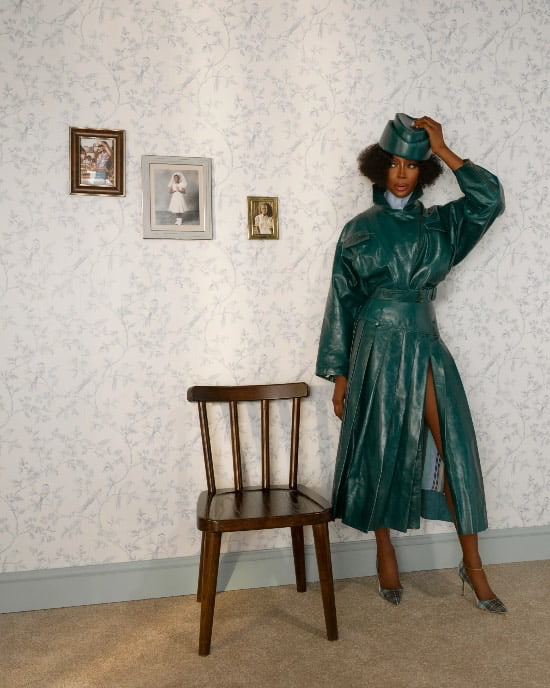 Photo: Instagram/tolucoker
 The film’s title, Unfinished Business, itself spoke volumes. It suggested that fashion is not a completed project but an ongoing dialogue between past and present, between personal identity and communal heritage, between private life and public image.
By choosing a figure like Naomi Campbell, Tolu Coker underscored how these themes exist not just in abstract but in lived reality. Campbell’s career has been one of breaking boundaries and setting records, yet even she continues to evolve, balancing her role as an icon with her role as a mother.
There was also an element of subtle defiance in the presentation. In an industry that often treats women, particularly Black women, as symbols without exploring their humanity, Coker carved space for vulnerability and authenticity. She challenged the gaze that flattens icons into one-dimensional figures, offering instead a portrayal that was layered and deeply human.
 Photo: Instagram/tolucoker
 Fashion critics and audiences alike noted how different the presentation felt. It was less about spectacle and more about intimacy. By choosing film as the medium, Tolu Coker slowed the pace, giving viewers time to notice textures, details, and emotions that are often lost on the runway’s fast march. The narrative unfolded with a rhythm closer to storytelling than showmanship, inviting reflection rather than applause.
It also spoke to a broader shift in fashion. Designers are increasingly turning to film, digital platforms, and hybrid experiences to express their ideas. But Coker’s film did more than display clothes on screen. It gave them context, emotion, and meaning.
By anchoring the story in motherhood and legacy, she tapped into universal experiences that extended far beyond fashion insiders. The film became not just a showcase of garments but a meditation on identity and memory, anchored by one of the world’s most recognizable women.
What lingers after watching Unfinished Business is not just the image of Naomi Campbell in Coker’s designs, but the questions it leaves behind. How do we carry the memories of those who came before us? How do we honor the ways our bodies and identities change over time? What does it mean to treat clothing not as disposable but as heirlooms? These questions ripple far beyond fashion, touching on how we live, how we connect, and how we pass on what matters.
 Photo: Instagram/tolucoker
 Tolu Coker’s Spring 2026 showcase may not have had a runway, but it had something deeper: resonance. It invited audiences into a story about women, about Black womanhood, about motherhood and memory, and about fashion that refuses to be shallow.
It proved that clothing, when designed with intention, can carry meaning across generations. And it showed that icons like Naomi Campbell are not just faces of fashion but living embodiments of heritage, strength, and evolution.
The fashion designer chose to present Naomi Campbell not just as an icon but as a woman navigating motherhood and legacy. That choice made all the difference, turning her Spring 2026 showcase into more than a presentation. It became an heirloom itself; a story to be remembered, retold, and passed on.
Photo: Instagram/tolucoker
You May Also Like:
Kim Kardashian is set to Auction Her 'All's Fair' Wardrobe with Glamorous Photos
March 26, 2026Mai Atafo, Toju Foyeh, Mo’Cheddah Step out in style for the Launch of The Fashion Roundtable
March 23, 2026Zara is Teaming up with John Galliano to Design its Seasonal Collection
March 17, 2026Bvlgari Just Tapped Chimamanda Adichie for its Latest Campaign
March 10, 2026Bhavitha Mandava Joins Chanel as the Newest House Ambassador
March 7, 2026Womenswear Brand 'Hanifa' is Taking a Pause Until Further Notice
March 5, 2026Met Gala 2026: Everything You Need to Know About the Dress Code
February 23, 2026Yemi Alade Launches Aso-Oke Heritage Collection with Zephans and Co
February 21, 2026Bhavitha Mandava Becomes First Indian Solo Cover Star on British Vogue
February 12, 2026Louis Vuitton Taps Zendaya for its 130th Anniversary Campaign
February 4, 2026This Mystery Model Crashed a Show During Nairobi Fashion Week 2026
February 2, 2026Meet Prince Charles: the High Fashion Nigerian Model Who Was Discovered on the Street
January 30, 2026


Esther Ejoh is a Fashion Editor at Fashion Police Nigeria, where she writes all things fashion, beauty, and celebrity style, with a sharp eye and an even sharper pen. She’s the girl who’ll break down a Met Gala look one minute, rave about a Nigerian beauty brand the next, and still find time to binge a movie or get lost in a novel. Style, storytelling, and self-care? That’s her holy trinity.