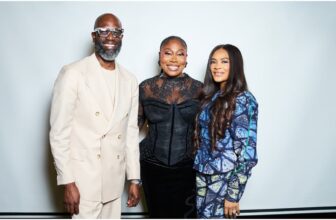
Industrie Africa, launched in 2018 by Tanzanian entrepreneur Nisha Kanabar, quickly established itself as the leading online destination for high-end African luxury fashion.
The platform offered curated access to top fashion designers across the continent, shipping to nearly 60 countries and competing with industry leaders like Net-a-Porter and Farfetch. By blending cultural storytelling with modern retail, Industrie Africa helped emerging brands achieve international recognition.
However, on April 2, 2026, it announced the closure of its e-commerce operations, effective April 30, 2026, and its transition to an advisory model, Industrie Africa Plus (IA+).
This closure represents more than the end of a single platform. It underscores the challenges of scaling African fashion in a global e-commerce environment marked by logistical barriers, tariff fluctuations, and the mismatch between craft-led production and rapid retail expectations.
 Photo: Instagram/industrieafrica
 For many emerging designers, being featured on Industrie Africa was a significant endorsement. Its exit creates a gap in discovery and cross-border sales, prompting brands to reconsider their strategies amid industry consolidation.
As African fashion gains global recognition through exhibitions, celebrity endorsements, and demand for authentic craftsmanship, Industrie Africa’s journey provides important lessons on ambition, resilience, and the future of luxury from the continent.
The Rise of Industrie Africa: Filling a Critical Gap in African Fashion
Nisha Kanabar founded Industrie Africa in 2018 as a digital portal to showcase exceptional African designer talent. Drawing on her experience at Vogue and Style.com, she identified the lack of a centralized, credible platform connecting African fashion brands to international consumers.
By 2020, Industrie Africa had evolved into a multi-brand e-commerce site using a dropshipping model, enabling designers to ship directly from their studios and retain control over production.
This model was transformative. Industrie Africa featured leading brands such as Nigeria’s Lisa Folawiyo and Dye Lab, Ghana’s Christie Brown, Senegal’s Tongoro and Diarrablu, and Lagos-based Hertunba.
 Photo: Instagram/industrieafrica
 The platform shipped to nearly 60 countries, with the United States representing about 80% of sales. Returning customers spent 21% more on average, reflecting strong loyalty among those who valued craftsmanship, storytelling, and authenticity over fast fashion.
Strategic collaborations further increased its impact. Partnerships with luxury safari lodges such as Singita, the V&A Museum’s Africa: Fashion exhibition in 2022, and digital trunk shows with Lagos Fashion Week improved conversion rates and average order values.
For emerging designers, particularly those from Nigeria, being featured on Industrie Africa offered immediate credibility and access to customers willing to invest in higher-priced pieces. Brands like Diarrablu reported that up to 75% of their revenue in this range came from the US market through the platform.
At its peak, Industrie Africa was an agile model that supported small-batch and made-to-order production, while remaining committed to celebrating authentic African narratives.
Why Industrie Africa Is Shutting Down: The Perfect Storm of Challenges
Despite early momentum, Industrie Africa encountered significant challenges that led to its e-commerce closure. Founder Nisha Kanabar identified three main issues: cross-border logistics, inconsistent tariff policies, and overall market volatility.
The US market, the platform’s largest, was significantly affected by new tariffs of 15% to 50% (later adjusted to 15–30%) on imports from several African countries. The removal of the de minimis loophole required American consumers to pay duties on purchases that were previously duty-free, resulting in an immediate change in shopping behavior. Kanabar noted that until this shift, the company was on a strong growth path.
Additional complications arose from the African Growth and Opportunity Act (AGOA), including inconsistent compliance across countries, complex rules of origin, and renewal uncertainties that disrupted pricing and fulfillment. Fluctuating freight rates and currency risks further increased operational challenges, making large-scale execution difficult even when demand and creativity were strong.
 Photo: Instagram/industrieafrica
 African fashion’s production model conflicted with global e-commerce standards. As Kanabar stated, “Fashion from the continent is produced in small batches. It’s made-to-order. It’s craft-led. It’s slower by nature.” In contrast, other platforms prioritize instant replenishment, free shipping, and predictable logistics.
High shipping costs, fragmented supply chains, and operational variability among fashion designers made scaling expensive and complex. Industrie Africa’s marketing focused on cultural storytelling rather than discounts, which resonated with its audience but limited rapid growth in a discount-driven market.
These challenges reflect broader industry trends, as other luxury e-tailers such as Matches and Ssense have also experienced similar volatility in recent years.
The Human and Industry Impact: A Loss for African Designers
The shutdown has a significant impact on emerging talent. Florentina Agu of Hertunba, the platform’s top seller after Lagos Fashion Week, described Industrie Africa as a credible platform with a customer base that valued artisanal qualities.
For Nigerian brands, it helped overcome credibility barriers in global markets. Diarra Bousso of Diarrablu praised the dropshipping model for reducing excess inventory and providing valuable insights into customer preferences and pricing.
Following the platform’s closure, many designers are moving toward direct-to-consumer models or seeking retailers who understand craft-led production. This shift requires enhanced digital marketing, inventory management, and customer service skills, which can be challenging for smaller brands without intermediary support.
 Photo: Instagram/industrieafrica
 More broadly, Industrie Africa’s closure highlights the need for improved infrastructure, including reliable power, standardized manufacturing, better logistics, and stable policies to enhance global competitiveness. It also points to opportunities within the African Continental Free Trade Area (AfCFTA) for increased intra-continental trade, though implementation is still inconsistent.
The shutdown has a significant impact on emerging talent. Florentina Agu of Hertunba, the platform’s top seller after Lagos Fashion Week, described Industrie Africa as a credible platform with a customer base that valued artisanal qualities.
For Nigerian brands, it helped overcome credibility barriers in global markets. Diarra Bousso of Diarrablu praised the dropshipping model for reducing excess inventory and providing valuable insights into customer preferences and pricing.
Following the platform’s closure, many designers are moving toward direct-to-consumer models or seeking retailers who understand craft-led production. This shift requires enhanced digital marketing, inventory management, and customer service skills, which can be challenging for smaller brands without intermediary support.
More broadly, Industrie Africa’s closure highlights the need for improved infrastructure, including reliable power, standardized manufacturing, better logistics, and stable policies to enhance global competitiveness. It also points to opportunities within the African Continental Free Trade Area (AfCFTA) for increased intra-continental trade, though implementation is still inconsistent.
What’s Next: The Pivot to Industrie Africa Plus (IA+)
Instead of a complete exit, Industrie Africa is evolving. On April 30, 2026, the e-commerce site will close, and the business will transition to Industrie Africa Plus (IA+), an advisory division. IA+ will use seven years of industry experience to connect African designers and the broader fashion ecosystem with premium retail opportunities, luxury hotels, and cultural institutions through concept stores, pop-ups, retail activations, and experiential showcases.
The first major project is a concept boutique on Bawe Island in Zanzibar, Tanzania, in partnership with a luxury hotel. This moves from online to curated physical experiences aligns with the storytelling and artisanal strengths of African fashion and may deliver greater impact through immersive environments.
Kanabar reflected positively: “Success for me was responding to the market and filling gaps that needed to be filled. I do feel like I achieved what I wanted to achieve in that we created a model that we can learn from, and the industry can learn from.”
 Photo: Instagram/industrieafrica
 The story of Industrie Africa is bittersweet. It demonstrated strong global demand for high-quality African design when presented with curation and credibility. The platform accelerated brand visibility and showed the value of cultural pride over imitation.
However, it also revealed vulnerabilities, including over-reliance on the US market, sensitivity to geopolitical trade changes, and the mismatch between traditional craft production and global e-commerce efficiency. For the industry to succeed, stakeholders must invest in infrastructure, skills development, and hybrid retail models that combine digital discovery with physical experiences.
As African fashion gains momentum internationally, platforms like the original Industrie Africa will be recognized as pioneers. The shift to IA+ suggests a more sustainable approach, leveraging the continent’s strengths in narrative, craftsmanship, and experiential luxury rather than conforming to external models.
Ultimately, Industrie Africa did not fail; it set a new direction. The future of African luxury fashion will likely focus on building resilient, culturally grounded ecosystems that celebrate the continent’s creativity. The global fashion industry will be watching as IA+ and new brands like Natty Africa lead the way.
Photo: Instagram/industrieafrica
You May Also Like:
Olandria Carthen and Other Bombshells Flaunt Their Coveted Bodies in the New SI Swimsuit Issue
April 1, 2026Kim Kardashian is set to Auction Her 'All's Fair' Wardrobe with Glamorous Photos
March 26, 2026Mai Atafo, Toju Foyeh, Mo’Cheddah Step out in style for the Launch of The Fashion Roundtable
March 23, 2026Zara is Teaming up with John Galliano to Design its Seasonal Collection
March 17, 2026Bvlgari Just Tapped Chimamanda Adichie for its Latest Campaign
March 10, 2026Bhavitha Mandava Joins Chanel as the Newest House Ambassador
March 7, 2026Womenswear Brand 'Hanifa' is Taking a Pause Until Further Notice
March 5, 2026Met Gala 2026: Everything You Need to Know About the Dress Code
February 23, 2026Yemi Alade Launches Aso-Oke Heritage Collection with Zephans and Co
February 21, 2026Bhavitha Mandava Becomes First Indian Solo Cover Star on British Vogue
February 12, 2026Louis Vuitton Taps Zendaya for its 130th Anniversary Campaign
February 4, 2026This Mystery Model Crashed a Show During Nairobi Fashion Week 2026
February 2, 2026

Esther Ejoh is a Fashion Editor at Fashion Police Nigeria, where she writes all things fashion, beauty, and celebrity style, with a sharp eye and an even sharper pen. She’s the girl who’ll break down a Met Gala look one minute, rave about a Nigerian beauty brand the next, and still find time to binge a movie or get lost in a novel. Style, storytelling, and self-care? That’s her holy trinity.