There’s a particular ache that lives in the chest of anyone who has ever searched for a hairstylist who truly understands natural, textured hair. You grow up being told your curls are difficult, unruly, or worse, unprofessional. You spend years straightening, relaxing, and masking the shape that your scalp naturally gives you.
Then one day, you decide to stop changing your hair and start caring for it. You join the movement that celebrates coils, spirals, and kinks. You watch tutorials, buy products that promise moisture and definition, and dream of a salon where hands know how to treat your natural hair without damage.
When you finally find that sanctuary, a place where the tools, techniques, and potions are chosen specifically for dense, delicate strands, the bill hits differently. The irony cuts deep: you’re paying more to embrace something that has always been yours.
At first glance, the price tag feels unfair. Why should it cost more to wear what grows from your own head than to chemically alter it into acceptance? The short answer is that caring for textured hair properly is not inexpensive. The long answer is woven from history, scarcity, skill, time, specialized supplies, and the emotional labor of being seen. Those threads combine into a reality where expertise and passion are priced accordingly.
Let’s start with availability. In many towns and cities, hairstylists trained to work with coarse, tightly coiled textures are rare. Mainstream cosmetology programs historically prioritized techniques for straight and loosely wavy hair because this was the market demand for decades. Natural hair education was either minimized or treated as an elective. That left a knowledge gap.
People with voluminous, springy natural hair learned to rely on community wisdom, family traditions, and, more recently, online creators. When hairstylists did invest in learning how to maintain porosity, stretch methods without heat, and detangle without breakage, they often did so through specialized workshops, apprenticeships, and mentorships that cost money and time. Those investments factor into the service price.
 Photo: Instagram/thelaurynicole
 Also, working on kinky or coily patterns is not the same as flattening a mane with heat and chemical relaxers. The science underneath matters: hair porosity, elasticity, strand diameter, curl clumping, and the health of the follicle all influence what products and methods will preserve strength while producing an aesthetic result.
Detangling without ripping, applying deep treatments so nutrients penetrate rather than just sit on the surface, and creating protective styles that actually protect; these are crafts learned slowly, with many mistakes along the way. A hairstylist who can coax shine from dense twists, execute faultless braid installations with tension that honours edges, or sculpt a definition that lasts past the first wash deserves a professional rate.
It’s the difference between paying someone who knows how to do something and paying someone who knows how to do it well.
Time is another major component. The average appointment for natural, textured hair can be hours longer than for other hair types. Washing, conditioning, detangling, treatments, setting, and styling are steps that cannot be rushed if the goal is healthy retention.
A single client might take up the same time block that would otherwise be split between multiple clients in a conventional salon. That means fewer appointments per day, which forces the cost per session upward to keep the business sustainable.
Add to this the time the hairstylists spend on continuing education, product research, and client consultations outside of the chair, and you begin to see how the calendar fills up quickly, even though the return per day must cover rent, utilities, and payroll.
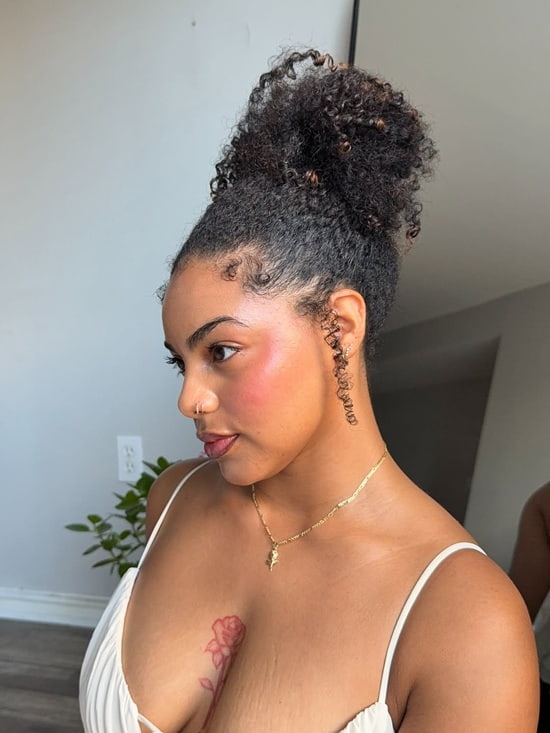 Photo: Instagram/soyzhaniya
 Product selection is an overlooked factor in the conversation about cost. Not all conditioners and creams are made the same. A shampoo designed to strip buildup from relaxed hair does a different job than one formulated to hydrate coils without disturbing curl formation. Ingredients matter: humectants, emollients, occlusives, oils, proteins; each plays a role, and a mismatch can spell breakage, dryness, or limpness.
Many salons committed to serving clients with natural, textured hair stock higher-quality, often smaller-batch items that might be ethically sourced, sulfate-free, paraben-free, and formulated with natural but stabilized ingredients that are safe for frequent use.
Those products are more expensive to buy wholesale because they are crafted for results rather than mass appeal. When hairstylists choose to invest in these lines, they are, in effect, prioritizing the client’s hair health over a cheaper margin. This choice shows up on receipts.
There’s also a supply-and-demand dynamic. When few providers offer truly informed services, the demand for those who do becomes concentrated. People travel across cities to sit in the right chair, and when a hairstylist has proven results and glowing client testimonials, they command premium rates.
Scarcity creates value. It’s not a deliberate ploy to extract more money; it’s the market responding to a shortage of skilled practitioners. Over time, as more hairstylists train and as textured haircare becomes mainstreamed within beauty education, prices may normalize. Until then, the immediate reality is this disproportion between the number of clients seeking specialized care and the number of professionals equipped to deliver it.
 Photo: Instagram/chocodamiix
 Another subtle but powerful component is cultural context. For generations, beauty standards pushed a narrow ideal that excluded a wide range of Black and textured-haired presentations.
The natural hair movement is a corrective force, but it also exposes the reality that what was once dismissed as “low maintenance” or “difficult” actually requires respect and attention.
For a long time, markets ignored the nuance, and products were created for a single dominant type. The result was an industry that undervalued our hair and overcharged for the shortcuts that made it conform. Reclaiming natural texture is more than aesthetics; it’s justice. That reclamation has costs attached, not because of greed but because the ecosystem that supports it is rebuilding from an unequal past.
Let’s be candid: salon spaces that center textured patrons often take care to create environments that feel safe and specific. Chairs, dryers, brushes, and even music choices are made with the clientele in mind. The experience shifts from a general beauty stop to a culturally attuned session.
Those intentional comforts are investments. The chairs might be sturdier to support longer sitting times. The hair steamers and processors might be higher-end to deliver true hydration. The staff training budget contains funds for anti-burn techniques and protective style studies.
All these elements contribute to overhead that larger, generic salons don’t always absorb. When you pay for that environment, you’re paying for a space designed around you rather than one that expects you to adapt.
There’s another practical reality: retention versus aesthetics. In natural haircare, the long game is often more important than the instant look. A style that looks phenomenal but compromises the strand will cost more in repairs down the road. A salon committed to steady growth, to long-term hair health, must sometimes refuse services that damage rather than enhance.
Refusing to perform a service that could lead to breakage may cause short-term dissatisfaction, but it protects the client’s future. That responsibility requires courage and integrity, and when stylists operate from that place, their pricing reflects not only the immediate labor but the insurance of hair longevity.
Many clients respond by learning to do more at home. There’s a profound empowerment in mastering your routine: co-washing, an effective detangling method, layering moisturizing agents correctly, and recognizing when to give the scalp a break. But learning takes time and mistakes.
Not everyone has the bandwidth to trial product after product, and even fewer have the patience to undo damage done by a poorly executed salon visit. For those people, the salon remains an essential resource, and they’re willing to pay a premium for guarantees: that their style will last, that their hair will remain strong, and that their growth will follow without setbacks.
Community economics also plays a role in the price conversation. Many stylists serving textured clients are small business owners operating on tight margins. They support local suppliers, hire within their neighborhoods, and offer apprenticeships. They’re not backed by national capital; they’re supported by clients who value craft and care.
Sustaining these businesses means setting prices that allow for reinvestment: new training, better equipment, and staff pay that prevents burnout. When salons pay their teams fair wages, the community wins through consistent, skilled service. When they don’t, turnover leads to inconsistent experiences for clients who need reliable hands.
One of the most poignant ironies is how mainstream hair products and approaches still dominate shelf space, often marketed as versatile but falling short for kinkier textures. You can walk into a mass retailer and see shelves labeled “universal,” filled with items that work for some patterns but strip moisture from others.
Hair stylists committed to textured care often have to curate or craft product assortments. They mix oils, source botanicals, and sometimes even make in-house treatments tailored to the client’s porosity profile. Those bespoke solutions cost more to create, but they’re effective. When you pay for a salon that offers bespoke hair treatment plans and customized product blends, you’re paying for targeted problem-solving, not generic promises.
There’s also an ecosystem of education that feeds into the price. When a hair stylist attends a seminar on low-manipulation methods, learns to identify protein versus moisture imbalance, or masters a protective style that minimizes tension, they’re investing in hours of off-the-clock study.
Those hours don’t appear on an itemized bill, but they are factored into the cost structure of maintaining a professional offering. When you patronize someone committed to ongoing learning, you get a practitioner whose knowledge evolves with the science, who can suggest evidence-based regimens rather than trend-driven fads.
Still, the question persists in many minds: should embracing natural texture be a luxury? On a fundamental level, no. The celebration of what we inherently are should not be limited to those who can afford it. The dream is a world where appreciating your natural pattern is accessible and sustainable without a financial divide.
Achieving that will take systemic shifts: better inclusion of natural, textured hair in beauty education curricula, more affordable product lines that prioritize hair health, and community initiatives like clinics and workshops that teach affordable home care. When brands partner with local stylists, when governments or NGOs support small business training for beauty entrepreneurs, the cost of quality care can come down for everyone.
 Photo: Instagram/olovesuuu
 In the meantime, creative solutions are emerging. Some hair salons offer sliding-scale pricing, community nights with discounted services, or teach-your-own-hair workshops where stylists demonstrate techniques publicly for a lower fee. Subscription models and maintenance plans allow clients to spread the cost of regular care over several months.
Local co-ops sometimes bulk-purchase raw ingredients so members can make their own hair masks at reduced prices. Digital platforms connect clients with emerging stylists offering lower introductory rates in exchange for portfolio-building opportunities. These innovations aren’t perfect, but they show that affordability and quality are not mutually exclusive if ingenuity and community intention lead the way.
The conversation must also include a gentle but firm reframe: paying for natural, textured hair expertise is not merely an economic transaction; it is a cultural acknowledgment. For decades, systems encouraged us to conform to standards that did not reflect the breadth of human beauty. When we now choose to honor our own shapes, we’re not only changing a style; we’re asserting worth.
That shift comes with measurable costs because it requires rebuilding an industry that previously neglected the needs of a large portion of the population. The Naira you spend in a hair salon that understands coils, kinks, and spirals is part of an ecosystem investing back into representation, education, and dignity.
If, while reading this, you remember the relief of finding someone who could detangle without tears, who recommended a product that actually reduced breakage, or who treated your hair as an asset, instead of a problem, you know why the chair feels like a refuge.
The feeling of being finally understood is valuable. It’s important to acknowledge both the practical reasons prices are higher in salons and the very human reasons we are willing to pay them. In a perfect world, those reasons wouldn’t necessitate premium labels; for now, they do.
So when the next appointment arrives and you hesitate at the receipt, resist the urge to reduce the moment to a complaint. Recognize what that cost supports: expertise accrued through study and failures, products chosen for nourishing, not glamorizing, a space that honours your identity, time spent on careful hands, and a business that aims to sustain a craft.
At the same time, keep pushing for wider access. Demand that educational institutions include textured hair curricula as standard, encourage brands to invest in affordable yet effective formulations, and support community-based programs that democratize knowledge. When those pieces come together, the irony will soften: one day the choice to be natural will be affordable by design, not expensive by exception.
Until then, treat the process as both a personal practice and a community project. Learn a few techniques that save time and protect the strands between salon visits. Find hairstylists who teach rather than just do. Invest in a few high-quality hair staples rather than every trending item. Share resources with friends and neighbors. Advocate for inclusive training in beauty schools.
Whenever possible, spend where your values align with those who uplift hair health and cultural pride rather than those who profit from shortcuts.
Photo: Instagram/thelaurynicole
You May Also Like:
18 Best Haircut Trends for 2026: Your Guide to Soft, Romantic, and Effortless Styles
March 26, 2026Cardi B Reveals Why Using Raw Garlic is Bad for Your Hair
March 25, 2026The Only Hair Colours to Wear this Spring
March 24, 2026The French Twist is Making a Chic and Glamorous Comback
March 23, 2026What the Braided Hairstyles on Sinners' Cast Really Mean
March 19, 2026Margot Robbie Just Made the Messy and Wet Bob Hairdo Covetable
March 10, 2026Teyana Taylor Oozes Style as She Debuts a Silver Hairstyle at the Chanel Fall/Winter 2026 Show
March 10, 202611 Best Curl Creams for Year-Round Bounce and Shine
March 9, 202615 Best Hairstyle Trends to Try This Spring
March 9, 2026The Japanese Bob is the New Minimalist Hairstyle to Wear in 2026
March 3, 202620 Covet-Worthy Balayage Highlight Hairstyles to Rock in 2026
February 27, 2026Money Piece Hair: Your Complete Guide and 17 Hairstyle Ideas
February 27, 2026


Esther Ejoh is a Fashion Editor at Fashion Police Nigeria, where she writes all things fashion, beauty, and celebrity style, with a sharp eye and an even sharper pen. She’s the girl who’ll break down a Met Gala look one minute, rave about a Nigerian beauty brand the next, and still find time to binge a movie or get lost in a novel. Style, storytelling, and self-care? That’s her holy trinity.