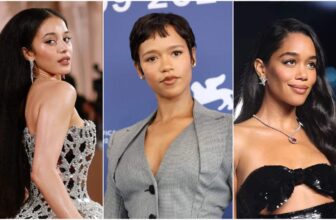
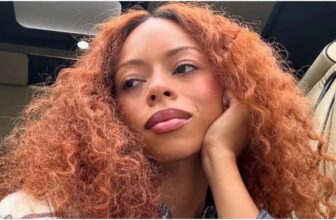
From the late 2000s into the early 2020s, Black women across the globe began reclaiming their roots, quite literally. Shea butter, castor oil, and curl creams became the new status symbols of self-love.
“Going natural” wasn’t just a beauty decision; it became a declaration of pride, identity, and protest. The phrase “big chop” became as iconic as a breakup anthem, marking the start of something powerful: a movement that told Black women their hair was enough.
Then, the shift leapt from bedrooms to runways. In 2015, Angolan supermodel Maria Borges made history as the first Black woman to wear her natural afro on the Victoria’s Secret Fashion Show stage, breaking decades of straight-hair expectations.
“I was nervous, but I had to do it,” she told Essence. “When they said yes, I didn’t expect it, but I was so happy.” Out of forty-four models, only eight were Black, and Borges was the only one who walked with her natural hair; a bold visual of progress and pride.
By the late 2010s, that courage began spreading. Models like Crystal Noreiga proudly wore their curls during New York Fashion Week, celebrating how far the industry had come. “I’ve gone from them straightening my hair for every show to now, where they let me wear my curls,” she told Essence. “It’s been amazing to be part of that transition.”
Still, progress wasn’t without friction. In 2019, model London Myers took to Instagram to call out hairstylists at Paris Fashion Week who couldn’t or wouldn’t style Black hair. In a lengthy Instagram post, Myers explained how she was snubbed by hairstylists simply because she was a black model with natural hair.
“I don’t need special treatment from anyone. What I need is for hairstylists to learn how to do black hair. I’m so tired of people avoiding doing my hair at shows. How dare you try to send me down the runway with a linty, busted afro. We all know if you tried that on a white model you’d be #canceled👌🏽 If one doesn’t stand, we all fall. If it isn’t my fro it’ll probably be yours.”
Her post sparked a global conversation about texture discrimination; the persistent reality that, even in fashion’s most glamorous spaces, natural hair was still misunderstood.
Even legends weren’t spared. Naomi Campbell once recalled how early in her career, stylists avoided her chair because they didn’t know how to handle Afro-textured hair. It took years and countless conversations for the industry to begin addressing a problem that had been normalized for generations.
And yet, natural hair continued to shape culture beyond fashion. Solange Knowles’ 2016 anthem Don’t Touch My Hair turned everyday microaggressions into global consciousness. Lupita Nyong’o and Viola Davis brought textured crowns to the red carpet, while the CROWN Act made strides in the U.S. to legally protect natural hairstyles in workplaces and schools.
Natural hair was no longer underground; it was everywhere.
But as we step into 2025, the movement that once defined a decade feels quieter. The social media feeds once filled with twist-outs, wash days, and protective styles are now dominated by lace frontals, 30-inch installs, and laid baby hairs. What was once rebellion has become choice, and the natural hair movement, once loud and defiant, now whispers a different story.
So, what happened? Did the natural hair movement lose its fire, or has it simply evolved into something more nuanced, where freedom means being able to wear your hair any way you choose?
From Activism to Aesthetics
When the natural hair wave took off, it gave Black women a sense of freedom. Black women across continents rejected chemical relaxers, straighteners, and weaves to embrace their God-given texture. It was revolutionary.
For decades, women were told their hair needed to be “managed” or “tamed.” The movement flipped that script, celebrating curls, coils, and kinks as symbols of identity and pride. It forced brands to expand their product lines, pushed workplaces to rethink discriminatory policies, and gave birth to an entire ecosystem of influencers and entrepreneurs.
But like every movement, it matured. The loud defiance that once defined it turned into quiet confidence. Once mainstream brands caught up, and natural curls appeared in every shampoo commercial, the message didn’t feel radical anymore.
Somewhere between acceptance and adaptation, the urgency faded. Now, in 2025, women are once again redefining beauty on their own terms, and this time, it involves bundles, closures, and custom HD lace.
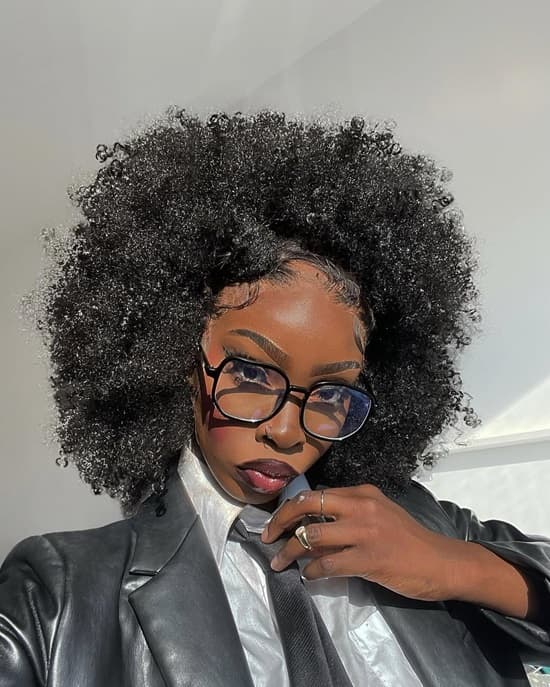 Photo: Instagram/@afroprincesses
 Scroll through Instagram or TikTok today, and one thing becomes clear: the lace era is alive and thriving. From high-end stylists in Africa to celebrity glam squads in Atlanta, the human hair industry is bigger than ever. Premium brands market “raw Cambodian,” “bone straight Vietnamese,” or “kinky-curly human hair” extensions that cost more than a month’s rent.
Natural hair, while beautiful, demands patience. Wash days can feel like marathons; detangling, deep-conditioning, twisting, drying, and maintaining moisture. For working women, content creators, and students juggling everything, extensions and frontals provide a stylish shortcut. They offer instant polish without the long prep time. You can go from boardroom to brunch without worrying about humidity ruining your twist-out.
And it’s not just convenience. It’s the illusion of effortlessness. With human hair extensions, women can switch from curly to straight, short to long, black to blonde, all without touching their natural strands. It’s hair freedom in another form.
There’s also a deeper social layer to the return of human hair. In many places, particularly across Africa and the diaspora, certain looks still carry coded meanings. Long, silky hair is subconsciously tied to sophistication, success, or affluence. The rise of the “soft life” aesthetic, designer bags, minimalist nails, and perfectly laid wigs, reinforces this link between polished appearance and status.
It’s not that women have abandoned pride in their natural hair; rather, they are playing by a new beauty economy’s rules. Looking “put together” has become visual currency, and extensions deliver that effortlessly polished finish society often demands.
Still, the irony is hard to ignore. The natural hair movement fought to dismantle these very standards; to prove that textured hair could be elegant, professional, and powerful. Yet, ten years later, the pendulum seems to have swung back to where we started, just with better lace glue.
The Rise of Protective Versatility (Wigs and Extensions)
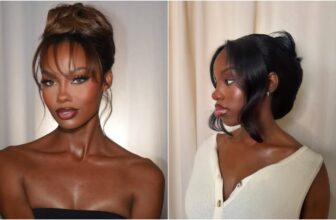
Ask any woman why she wears wigs or extensions, and the answer often sounds practical: “It’s protective.” Indeed, wigs and frontals shield natural hair from constant manipulation, heat, and environmental damage. But in reality, what began as a protective habit has evolved into a performance of beauty itself.
For some, it’s about presentation. Wigs are now art pieces. They are custom-coloured, pre-plucked, and professionally installed to the point where even fellow hairstylists pause in admiration.
Entire businesses revolve around the wig economy, from hair vendors to stylists, content creators, and influencers who unbox new bundles like fashion drops.
Social media, of course, amplifies it all. The polished “laid” look dominates timelines, creating a cycle of aspiration. Viewers see flawless installs and subconsciously link them to confidence, desirability, and financial success. It’s not that natural hair has lost its beauty; it’s that beauty has found a new stage, one lined with HD lace and baby hairs brushed to perfection.
 Photo: Instagram/@cheetahbeautywig99
 Let’s talk numbers. The global human hair extension market is projected to surpass $13 billion in 2025. African and Black-owned beauty brands occupy a growing share, with salons across Lagos, Johannesburg, and Accra becoming beauty powerhouses. Social media tutorials on “melting lace” or “frontal maintenance” get millions of views.
In contrast, the once-booming natural hair product market has plateaued. Many small natural hair brands that launched during the 2010s boom struggled to compete once multinational beauty companies entered the space. Some were bought out; others simply faded away. Even major drugstore aisles have shifted focus; fewer curl creams, more lace glue, and wig-care sprays.
Economically, the message is clear: beauty spending follows trends. As long as wigs and extensions are seen as aspirational, the money and the marketing will follow.
There’s also something many naturalistas rarely admit: fatigue. The natural hair journey, though rewarding, can be exhausting. The hours spent twisting, coiling, and hydrating can wear down even the most dedicated curl enthusiast. For women with type 4 hair, shrinkage and tangling often make styling unpredictable. After years of experimentation, many women simply want a break.
A wig gives you that break without guilt. You can still keep your curls tucked underneath, moisturized, and protected. But you also get to wake up, style once, and look photo-ready all week. It’s convenience without compromise, or at least that’s the marketing promise.
But this fatigue also exposes a larger truth: perhaps the natural hair movement wasn’t sustainable as a strict lifestyle for everyone. It demanded time, patience, and skill; luxuries not everyone has. So while the movement changed beauty standards, it didn’t necessarily make hair care easier. Extensions stepped in to fill that gap.
The Influence of Celebrity Culture
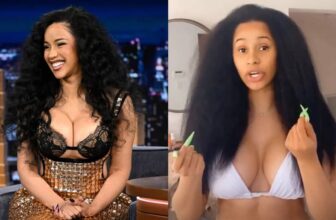
Pop culture also plays its part. In the 2010s, icons like Solange Knowles, Lupita Nyong’o, and Yara Shahidi made natural hair glamorous. They turned afros and braids into red-carpet statements. But as trends evolved, the celebrity landscape shifted. Now, stars like Kylie Jenner, Tiwa Savage, Beyoncé, and Cardi B popularize long, luxurious wigs that move like liquid silk.
 Photo: Instagram/beyonce
 Fashion weeks, music videos, and magazine covers are dominated by glossy, waist-length human hair looks. Even those who once championed natural textures now experiment with lace installs for versatility. The message has subtly changed from “Love your natural hair” to “Do whatever makes you feel beautiful.”
This shift mirrors a broader cultural sentiment, one where self-expression trumps rigid ideology. Women no longer feel the need to prove anything by wearing their curls. They know their texture is beautiful; they just don’t want to be limited by it.
Interestingly, the obsession with “natural-looking” wigs and frontals reveals something deeper about “authenticity, if you consider that to be authentic. The goal now isn’t necessarily to wear your real hair, but to make whatever you wear look believable. The industry has mastered illusion: knots are bleached, lace is tinted, and hairlines are plucked to mimic scalp realism.
What’s considered “real” has shifted. A woman wearing a perfectly installed frontal might still call it her “real hair”, and in a sense, it is, because she paid for it, maintains it, and styles the hair as part of her identity. The line between enhancement and authenticity has blurred.
In a way, this mirrors the evolution of makeup culture. Once upon a time, full glam meant faking beauty. Now, it’s just part of the routine. Likewise, wigs aren’t necessarily about hiding who you are; they’re tools to create who you want to be today.
Social Media and The New Beauty Gaze
Social media changed everything. The natural hair movement’s early rise came from community-driven content: tutorials, product reviews, and empowerment stories. But in 2025, the algorithms favour spectacle. Seamless lace melts, transformation videos, and dramatic before-and-after reveals get more engagement than wash-day routines ever did.
Influencers have adapted accordingly. Many who once built followings around natural hair now mix it up with wig installs and extension reviews. The audience expects variety, and creators follow demand. It’s not betrayal; it’s business.
But this shift also shapes perception. The more people see wigs and extensions as the norm, the more “natural” that look becomes, even if it’s not one’s actual hair. The new digital beauty standard isn’t about texture; it’s about finish.
Beyond beauty, there’s a psychological side to this evolution. Hair is often the first thing people notice. It frames your face, sets a tone, and communicates how much effort you’ve put in. For many women, a neat lace wig instantly boosts confidence. It’s controlled, consistent, and safe from the chaos of humidity or frizz.
Meanwhile, natural hair, while beautiful, can sometimes feel unpredictable. A twist-out might turn out perfect one day and shrink into a puff the next. In professional settings or social spaces where appearance still affects perception, that unpredictability can create pressure.
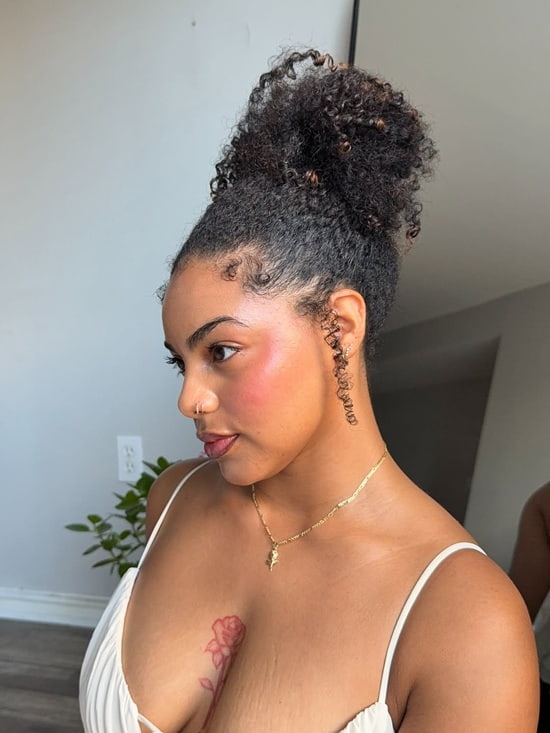 Photo: Instagram/soyzhaniya
 So, many women reach for wigs not out of insecurity, but out of strategic practicality. It’s a reliable form of presentation; one that guarantees control in a world that often demands it.
What’s more fascinating is how this shift plays out globally. In Nigeria, Ghana, South Africa, and other parts of the continent, the natural hair movement initially had less cultural shock value because textured hair was already common. But even there, the glam culture associated with imported human hair took over. A sleek frontal is seen as aspirational, especially among urban professionals and influencers.
The same is true across diasporic spaces: London, New York, Toronto. The “Lagos girl aesthetic” or “soft babe look” dominates online. It’s less about rejecting natural hair and more about embracing luxury aesthetics. In this sense, human hair has become a lifestyle symbol; a marker of taste, status, and self-investment.
Still, we can’t ignore the politics behind the shift. The natural hair movement began as resistance — a stand against Eurocentric beauty norms and workplace discrimination. But when natural hair becomes optional rather than political, does that dilute its meaning?
Maybe not. Maybe this is what true freedom looks like: the ability to choose without judgment.
The power to wear an afro hair on Monday and 30-inch Brazilian waves on Friday. Authenticity doesn’t always mean natural; sometimes it means flexibility.
The question is no longer “Are you natural?” but “Are you free?” If you can move between styles, experiment with colour and texture, and still feel like yourself, that’s a new kind of liberation.
Is It Really the End Of The Natural Hair Movement?
So, is 2025 the end of the natural hair movement? Perhaps it’s better to call it the evolution of the movement. The original mission, to celebrate natural texture and challenge bias, succeeded. Now, that victory allows women to make choices without fear or shame. The movement didn’t die; it expanded.
Natural hair opened doors. It forced the world to accept diversity in beauty. That acceptance laid the foundation for today’s hair freedom, where wigs, braids, locs, silk presses, and afros coexist in one vibrant ecosystem.
What’s ending isn’t the pride in natural hair; it’s the pressure to prove something with it. The natural hair movement made texture mainstream. The new era is making versatility aspirational.
In the next few years, we might see an even more fluid approach to beauty. The rise of “texture-inclusive” extensions, 3D-printed scalp lace, and eco-friendly wig systems shows that technology and identity will keep evolving together.
Meanwhile, a quiet undercurrent of minimalism is returning; some women are rediscovering the joy of simplicity, cutting their hair short, or wearing their coils without embellishment. Others will continue to switch up looks, like changing outfits. Both can exist.
The point isn’t to declare one better. It’s to recognize that hair, like fashion, reflects the times. In 2025, those times are about fluid identity, creative freedom, and the ability to look however you choose, whenever you choose.
Maybe the natural hair movement didn’t end. Maybe it just got a lace front. Because in a world that now accepts wigs, curls, braids, and blowouts as equal expressions of beauty, the truest sign of progress is choice. Whether you rock a twist-out or a 30-inch frontal, the message remains the same: your hair, your rules.
Photo: Pinterest
You May Also Like:
18 Best Haircut Trends for 2026: Your Guide to Soft, Romantic, and Effortless Styles
March 26, 2026Cardi B Reveals Why Using Raw Garlic is Bad for Your Hair
March 25, 2026The Only Hair Colours to Wear this Spring
March 24, 2026The French Twist is Making a Chic and Glamorous Comback
March 23, 2026What the Braided Hairstyles on Sinners' Cast Really Mean
March 19, 2026Margot Robbie Just Made the Messy and Wet Bob Hairdo Covetable
March 10, 2026Teyana Taylor Oozes Style as She Debuts a Silver Hairstyle at the Chanel Fall/Winter 2026 Show
March 10, 202611 Best Curl Creams for Year-Round Bounce and Shine
March 9, 202615 Best Hairstyle Trends to Try This Spring
March 9, 2026The Japanese Bob is the New Minimalist Hairstyle to Wear in 2026
March 3, 202620 Covet-Worthy Balayage Highlight Hairstyles to Rock in 2026
February 27, 2026Money Piece Hair: Your Complete Guide and 17 Hairstyle Ideas
February 27, 2026


Evelyn Adenike is an Associate Beauty Editor at Fashion Police Nigeria, where she covers all things beauty, from the glossiest nail trends to the best skincare finds. With a soft spot for storytelling and an eye for what’s fresh, she brings culture, creativity, and just the right dash of drama to every post. If it’s bold, beautiful, and blog-worthy, Evelyn’s probably already writing about it.