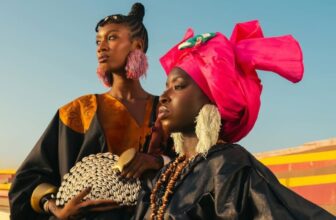
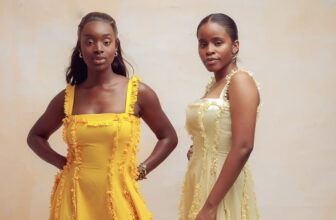
For years, our fashion sense leaned more towards contemporary pieces that felt global, modern, and very Instagram-worthy.
We all wanted the jeans that looked imported, the sneakers that screamed international, the slim-fit shirts that made us feel in tune with the rest of the world. Western styles seemed more appealing, as they were more in touch with what was happening in the fashion capitals of the world.
Our wardrobes were filled with fast-fashion brands and pieces inspired by European and American trends. In the midst of that obsession with modern styles and trends, adire, Nigeria’s traditional indigo-dyed fabric, was quietly pushed aside.
The fabric was still present, yes, but not at the forefront of how we expressed ourselves through fashion. To many, wearing Adire was considered old-fashioned, something associated with cultural events at school or with grandmothers who still wore wrappers to sit on verandas in the evenings.
Fashion is a cycle, however, and today, that same vibrant adire has returned with full force, louder, bolder, and more stylish than ever. Step into any gathering in Lagos and you’ll see everyone wearing Adire. Scroll through Instagram feeds, and Adire is everywhere. Even on international runways, that distinct tie-dye fabric that once felt too traditional has become the face of something fresh and exciting.
From adire boubous to oversized palazzos, and even adire cargo pants to two-piece sets, the fabric has been reimagined into countless forms, and suddenly, Adire becomes the fabric everybody wants to wear.
 Photo: Instagram/tonayas_creation
 It’s fascinating to see how quickly Adire has become part of everyday style. Children are stepping out in adire shirts, young people are rocking adire cargos with sneakers, women are flowing gracefully in adire boubous, and men are experimenting with adire shorts and button-downs. Adire is no longer locked into ceremonies or special occasions.
The tie-dye textile has slipped seamlessly into brunch outfits, casual Fridays, beach hangouts, and even office wear. The fabric has become a lifestyle fabric, not just a cultural one.
The most interesting part of this revival is how designers and tailors have modernized Adire styles. What used to be simple wrappers with familiar motifs has now become structured dresses, wide-legged palazzos that sway dramatically, oversized shirts styled with statement jewelry, even corsets and fitted gowns made entirely from adire.
There are also bomber jackets with adire accents, bucket hats, blazers, and skirts. Names are also being customized on these fabrics. It’s as though the fabric has been reborn, shedding its reputation as “old” and emerging as this versatile canvas for every creative idea possible.
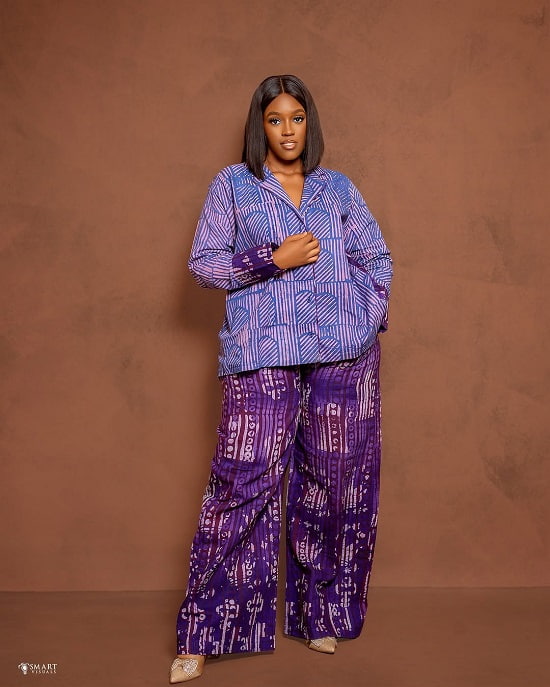 Photo: Instagram/nobazfashion
 And yes, some people poke fun and say Nigerians like to overdo things. Once fashion is trending, everyone dives in at the same time. Suddenly, it feels like seven out of ten people you see are wearing some version of adire. Cargo pants everywhere, big palazzos dominating events, and Instagram flooded with adire looks.
But if there’s ever a time for us to “overdo” fashion, this feels like the right one. Because the Adire trend isn’t just about a passing trend. It’s about cultural pride sneaking its way into everyday life in the most fashionable manner. It’s about us embracing something that has always been ours and showing it off boldly to the world.
The truth is, wearing adire today feels different. It feels like making a statement that we are stylish, yes, but also rooted. That we can match global trends while still keeping our own culture in the spotlight.
 Photo Courtesy
 Where in the past it might have felt old-fashioned to wear adire, today it feels modern, expressive, and relevant. It’s a way of saying, “We see what’s happening around the world, but we are also proud of what’s ours.” And it’s even more beautiful because this revival is not limited to one age group or one gender. Everybody is wearing Adire — from little kids to their parents, and fashion influencers to corporate executives.
Everywhere you go in Nigeria, you’ll notice the explosion of colors and patterns. Adire isn’t stuck in indigo blues anymore. There’s neon pink, burnt orange, sea green, and rich purple. The dyeing process has evolved, but the spirit of handcrafting remains.
 Photo: Instagram/radelabel_ng
 Artisans are experimenting, designers are pushing boundaries, and young people are embracing these new expressions with open arms. Let’s not also pretend that social media hasn’t fueled this fire.
Instagram stylists and TikTok influencers have made adire look effortlessly chic. Scroll long enough and you’ll find videos of young Nigerians wearing adire cargo pants with white tank tops and sneakers, twirling in oversized palazzos that sweep the floor, or strutting in fitted adire dresses at weddings.
Those posts rack up thousands of likes and shares, and before you know it, everyone wants to replicate the look. Fashion, after all, thrives on visibility, and adire has found its place in the spotlight.
This isn’t limited to Nigeria either. The Nigerian diaspora is carrying adire proudly abroad. In London, you’ll spot adire jackets on young Africans at cultural festivals. In New York, models are walking the runway in adire gowns designed by Nigerian designers. Even global celebrities have been spotted wearing Adire, styled in ways that blend traditional charm with modern elegance. What once felt local now feels global, and it’s a beautiful thing to witness.
The charm of adire lies not just in its patterns or colors, but in what it represents. Every time someone wears Adire, it feels like a nod to history, a quiet acknowledgment of the generations of women who perfected the art of resist dyeing with their hands.
It feels like remembering that our culture has always been beautiful and worth showing off. Something is grounded in that, even as the vibrant fabric is turned into the most contemporary silhouettes.
Of course, there’s the question of whether wearing adire is just another trend that will fade as quickly as it appeared. Fashion, after all, is fickle. But adire feels different. Its comeback is built on versatility. The fabric can be crafted into anything — for example, comfortable lounge wear, dramatic runway gowns, children’s school clothes, and blazers. It adapts to whatever the wearer wants it to be. That kind of flexibility gives it staying power.
 Photo: Instagram/temiotedola
 There’s also the fact that the global fashion world is shifting towards sustainability. Handmade fabrics, natural dyeing processes, and unique pieces are becoming more desirable in contrast to mass-produced fast fashion. Adire fits perfectly into that narrative. Each piece is unique, handcrafted, and carries a story. That authenticity makes it valuable not just here in Nigeria but also internationally.
Think about it: a fabric that was once overlooked is now commanding space on runways and in street style, worn by both the everyday Lagosian and the international fashion elite. The transformation is powerful. It shows how culture, when reimagined and embraced, can become timeless.
And maybe this is why Nigerians are so enthusiastic about Adire now. Maybe we are “overdoing it,” but maybe what we’re really doing is reclaiming something that belongs to us and wearing it with pride.
For once, we are not looking outside to find what’s stylish. We are looking inward and showing the world what we have always had. We are saying, “This is ours, and it is beautiful enough to be worn everywhere.”
So yes, today, if you walk through the streets of Lagos, it may feel like every second person is in some form of adire. Kids in shirts, teenagers in cargos, women in boubous, men in palazzos, Instagram full of vibrant looks. But instead of seeing that as “too much,” maybe we should see it for what it is: a collective celebration of culture through fashion. Because in every swirling pattern, in every bold color, in every oversized trouser or flowing boubou, what you’re really seeing is pride. Pride in roots, pride in history, pride in the ability to transform the old into something fresh and current.
Adire has stopped being something we wear only on cultural days. It has become something we wear because we want to. Because it looks good. Because it feels good. Because it represents who we are. And that, more than anything, is why wearing adire is not just a passing trend. Adire has taken over the streets, and it is here to stay.
Photo: Instagram/temiotedola
You May Also Like:
15 Unpopular African Fabrics You Didn't Know Existed
March 13, 20267 Emerging Fashion Brands in Ghana You Need to Know
March 2, 20266 African Denim Brands that are Reimagining the Fabric
February 25, 202613 Aso-Oke Styles You’d Want to Copy Now
February 17, 2026The Ultimate Guide to Aso-Ebi Attire for Wedding Guests
February 15, 202611 Nigerian Clothing Brands You Need In Your Wardrobe In 2026
February 13, 202610 African Male Models Who Just Made Their Fashion Week Debut
February 4, 2026Nairobi Fashion Week 2026: Decarbonizing the Runway with African Ingenuity
February 2, 202611 Ankara Styles That Will Dominate The New Year
January 7, 2026Highlights from the 2025 Africa Fashion Week Nigeria
December 22, 2025Wana Sambo Returns With a New Collection Inspired by New Beginnings
December 18, 2025Everything You Need To Know About Nairobi Fashion Week 2026
December 16, 2025


Esther Ejoh is a Fashion Editor at Fashion Police Nigeria, where she writes all things fashion, beauty, and celebrity style, with a sharp eye and an even sharper pen. She’s the girl who’ll break down a Met Gala look one minute, rave about a Nigerian beauty brand the next, and still find time to binge a movie or get lost in a novel. Style, storytelling, and self-care? That’s her holy trinity.