What exactly do we mean when we say “African fashion”? Is it the bold Kente cloth from Ghana? The intricate Shweshwe patterns from South Africa? Or the vibrant Kitenge worn in Kenya and Tanzania?
While these fabrics and styles are beautiful and deeply cultural, referring to them all under one umbrella term “African fashion” oversimplifies and flattens the rich and layered identity of an entire continent. If someone said “European fashion,” would we instantly think of just one style? Of course not. So why do we lump the entire African continent into one narrow fashion box?
Africa is not a monolith. It is home to over 1.4 billion people across 54 countries, speaking more than 1,000 languages and representing countless ethnic groups, climates, religions, and historical backgrounds. Each of these aspects shapes how people dress and express themselves through fashion. To group all of that diversity into one single category “African fashion” doesn’t just miss the mark, it erases the uniqueness of each culture.
The Origin of the “One Africa” View
How did the world come to view Africa as one singular fashion identity?
The roots lie in colonization. In the late 19th century, European powers held the Berlin Conference (1884–1885) where Africa was divided into colonies with little to no regard for existing ethnic, cultural, or linguistic boundaries.
Colonizers grouped people who had never lived under the same rule and forced them into arbitrary borders for their own convenience and control.
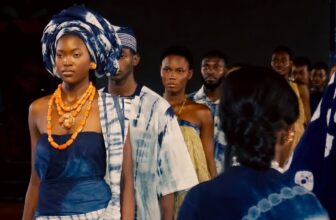
 Photo: Instagram/oluchifashions
 This erasure of complexity didn’t stop with politics. It filtered into global perceptions of Africa from the way its people were viewed to how its cultural outputs, including fashion, were understood. The result? A long-standing myth that Africa is one homogenous entity, when in truth, it is a mosaic of civilizations, traditions, and styles.
Why “African Fashion” Is Too Limiting a Label
To lump the diverse styles, silhouettes, fabrics, and fashion histories of a billion people under one label is not just inaccurate, it’s reductive. The term “African fashion” risks turning deep-rooted cultural expressions into a trend, exoticizing traditional garments, and ignoring the distinct identities behind each look.
Take Nigeria, for example. It’s just one country, but it’s home to over 300 ethnic groups. The Igbo people have Akwete cloth, coral beads, and the regal Isiagu shirts. The Yoruba are known for Aso-Oke, Agbada, Adire, and Iro and Buba. The Hausa wear flowing Babaringa, richly embroidered caps, and striking Atampa prints. And that’s just scratching the surface. In each group, the colors, materials, and designs carry meaning: social class, marital status, religion, or even personal milestones.
Go north and you’ll find something entirely different. In Morocco and Algeria, fashion is shaped by Arab, Amazigh (Berber), and Islamic traditions. You’ll see kaftans, djellabas, flowing linen robes with ornate embroidery, and lots of silk and fine cotton designed for desert heat and spiritual modesty. Veils and turbans are not just cultural but practical, shielding wearers from the harsh sun.
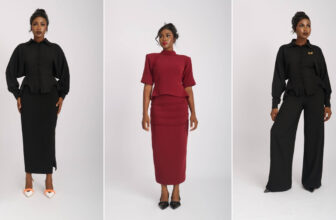
 Photo: Instagram/babayoofficial
 In East Africa, it’s another whole story. Kenya, Tanzania, Uganda, and Rwanda bring in bold, structured beadwork and fabrics like kitenge and khanga. The Maasai people are known worldwide for their iconic red shukas and intricate jewelry made from beads, shells, and metals. In Ethiopia and Eritrea, women wear the elegant habesha kemis; a white cotton dress adorned with colorful borders, often worn during holidays and religious celebrations. These are generational symbols of pride.
In Southern Africa, particularly in countries like South Africa, Namibia, and Botswana, traditional attire includes the famed Shweshwe fabric, bold beadwork, and designs that reflect centuries of culture. The Zulu, Xhosa, and Ndebele peoples, for instance, each have their own distinct styles; skirts, wraps, bead collars, and leatherwork that visually tell you where someone is from and sometimes even what stage of life they’re in.
And let’s not forget Central Africa, where Congolese sapeurs take elegance to the next level, often dressed in sharply tailored suits and flamboyant colors, turning the streets of Kinshasa and Brazzaville into fashion runways. Or the Chitenge in Zambia and Malawi, both everyday wear and a symbol of identity. These choices are shaped by community, history, weather, spirituality, and sometimes even rebellion.
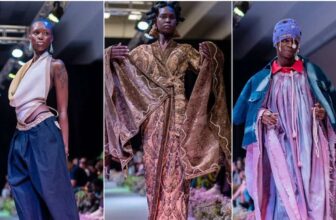
 Photo: Instagram/byisydulce
 So when you think about it, reducing all of this centuries of weaving, dyeing, draping, and storytelling into a single category called “African fashion” feels like trying to sum up all music with just one genre. You simply can’t. It would be like saying both Beyoncé and Burna Boy make the same kind of music just because they’re both Black. It’s a blanket term that hides more than it reveals.
Interestingly, what some people call “African fashion” often gets reduced to just Ankara. That bold, colorful wax print you see everywhere from weddings to red carpets. While Ankara is loved and widely worn, it’s actually Dutch in origin, brought into West Africa through trade. Africans made it their own, adding local patterns, meanings, and styling. But again, it’s just one fabric among hundreds. It doesn’t represent the entire continent.
Another beauty of African fashion is the way it travels. Just because the Kanzu is traditional to Ugandan men doesn’t mean you won’t see it worn in Kenya or Somalia. South Africans proudly wear beaded Ndebele patterns in Nigeria, and Ghanaians style Nigerian Aso-Oke for weddings. This cross-border love is not appropriation, it’s appreciation. It’s how culture lives, breathes, and evolves.
The Role of Modern Designers and Global Recognition
African fashion designers are pushing back against the “one-style-fits-all” narrative. Icons like Lisa Folawiyo (Nigeria), Imane Ayissi (Cameroon), Rich Mnisi (South Africa), and Thebe Magugu (South Africa) create collections rooted in their heritage but speak to global audiences.
They don’t just “make African fashion”, they tell stories, challenge narratives, and reclaim space in an industry that once exoticized their work.
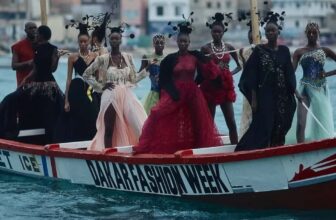
 Photo: Instagram/yesidelaguda
 By embracing the uniqueness of their roots and refusing to conform to a Western idea of what “African fashion” should be, these creatives are reshaping how African identity is presented on global runways. As a result of this, designers in New York, Paris, London, and Milan regularly draw from African textiles, beadwork, and colors.
If Not “African Fashion,” Then What Should we be Saying?
Rather than grouping the entire continent under one generic term like “African fashion,” let’s shift our language to reflect the richness and individuality that truly defines it. Because when we name things correctly, we don’t just identify them; we honor them.
Talk about Yoruba ceremonial attire; a regal ensemble of Aso-Oke headwraps, Iro and Buba, and Agbada robes, each woven with symbolic threads of heritage, hierarchy, and celebration.
Highlight the Maasai tribe’s iconic beadwork from Kenya and Tanzania, crafted by hand, worn with pride, and steeped in spiritual and social significance. Every color, every bead tells a story of identity, age, and tradition.
Celebrate the grace of Habesha Kemis in Ethiopia and Eritrea; elegant white cotton dresses embroidered with vibrant borders, worn during weddings, religious festivals, and rites of passage. These garments are living testaments to culture, modesty, and beauty.
Appreciate the precision of South Africa’s Shweshwe fabric; a dyed cotton cloth rich with geometric patterns and worn with cultural reverence. Often seen at traditional weddings and family gatherings, it represents both heritage and modern expression.
By naming these styles for what they are and the people they come from, we move beyond tokenism. We create space for education. We show reverence for the artisans, the ancestors, and the communities that breathe life into every stitch and silhouette.
Because the truth is: specificity is respect. And fashion, at its core, is not just what we wear, it’s who we are.
 Photo: Instagram/ara.thebrand
 There is no single look, fabric, or silhouette that can be boxed up as “African fashion.” What we call “African fashion” is, in reality, a continent’s worth of individual fashion identities; each with their own story, climate, symbolism, and spirit.
Rather than reducing this kaleidoscope of beauty into one overused phrase, let’s take the time to name, honor, and celebrate each fashion heritage for what it is. Because the real beauty of African fashion is that there is no such thing as just one.
So the next time you hear someone talk about “African fashion” like it’s one thing, you might want to gently correct them. Not because they mean harm but because the real story is way more beautiful. It’s not one fabric, one look, or one identity. It’s a mosaic. A map. A living archive of traditions, struggles, pride, and innovation.
African fashion is not a label. It’s a universe.
And that’s the point.
Photo: Instagram/ehiwoman