The term “luxury fashion” is now used so frequently and casually that it has lost much of its original meaning. Many individuals label their clothing, small businesses, or limited collections as “luxury,” suggesting that a high price alone qualifies a garment as haute couture.
For example, in Nigeria and other regions, a small clothing line may use secondhand or lower-quality materials but market its products as “luxury” by assigning a high price. Social media often promotes terms like “luxury fashion,” “high-class luxury,” and “luxury pieces.” It is important to assess what truly defines luxury critically.
If you look at the dictionary definition, “luxury” is described as something that provides pleasure, comfort, or enjoyment and is not essential. That’s it. That’s what it literally means. It’s not about calling a cheap-looking T-shirt a “luxury piece” because the tag says 50,000 Naira. It’s not about adding the word to a post so it feels like you’re catering to the elite. It’s about quality, attention to detail, rarity, and sometimes even the experience that comes with it.
 Photo Courtesy: Wanni Fuga
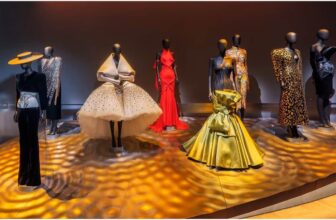
 Most of the time, when people talk about “luxury fashion,” it’s not really about the qualities of the piece itself. It’s about popularity. If a fashion designer is famous, then everything they create is somehow automatically labeled as “luxury.” Think about Dior. Dior is expensive, yes, and it is globally popular.
People are willing to spend millions to get a Dior bag, Dior clothes, or even Schiaparelli pieces. Because the name is recognizable, the price is astronomical, and the brand has prestige, it is assumed that it must be a luxury product.
But here’s the thing: luxury is not automatically created by popularity or price. High price alone does not make something luxurious. Fame alone does not make something luxurious. For a piece to truly be a luxury item, it must offer pleasure, comfort, or enjoyment and exist outside the realm of necessity. It must give something beyond the ordinary.
A Dior bag is not just luxury because it costs thousands; it’s luxury because it is crafted meticulously, designed thoughtfully, and provides a unique sense of status, beauty, or pleasure to the person who owns it.
 Photo Courtesy
 Luxury is subjective. I think that’s a point people forget. What feels luxurious to one person might not feel luxurious to another. For me, luxury is when I can look at a piece of clothing or an accessory and instantly see that it’s made well and of good quality.
You don’t need a label to tell you that. You can see it in the stitching, the cut, the material, and the overall care in its creation. That feeling… the sense that someone put thought and effort into this, that’s what luxury is.
So when someone prints “luxury fashion” on an Instagram page and tags every product with “luxury,” it feels like a shortcut. It’s trying to capture the essence of something rare and special, but often without doing the work to actually make it that way. You’re telling people it’s luxury instead of letting them experience it and come to that conclusion themselves. That’s the disconnect I keep seeing.
I personally don’t even like the word “luxury.” It has been overused to the point where it feels empty. I’m not saying that high-quality fashion doesn’t exist in Nigeria or anywhere else; it absolutely does. But when the word becomes a marketing gimmick rather than a description of something genuinely exceptional, it loses meaning.
True luxury should speak for itself. You shouldn’t have to add extra labels, hashtags, or phrases. The moment you feel the need to tell people it’s “luxury,” you risk proving the opposite.
People can tell when something is thoughtfully made, when materials are premium, and when a product has the kind of care that justifies admiration and respect. That’s the moment it becomes luxury, not because a price tag says so.
 Photo Courtesy: Wanni Fuga
 I think this is why the term feels out of touch. Fashion has always had aspirational elements, but over the years, especially with social media and influencer culture, the definition of luxury has shifted.
Luxury is no longer strictly about quality, rarity, or craftsmanship. Instead, it’s become about presentation, perception, and sometimes, profit margins. And while there’s nothing inherently wrong with wanting to sell something at a higher price, calling it “luxury” when it doesn’t meet the standard is misleading.
At the end of the day, what I want people to understand is that luxury is a feeling and a recognition of quality. It’s not just a label or a price point. You don’t need to tell people a piece is luxury; they should be able to see it, feel it, and experience it for themselves. Anything less is just marketing buzz, and frankly speaking, it cheapens the very meaning of the word.
So, next time someone says “luxury fashion” on a post, I’ll probably raise an eyebrow. And I hope more people start asking themselves the same question: Are we creating luxury, or are we just calling it that because we can? There’s a difference, and it matters.
Photo Courtesy
You May Also Like:
An Insight into the Schiaparelli Exhibition at the V&A Museum
April 1, 2026Celebrity Haircare Brands: 14 Stars Revolutionizing Your Haircare Routine
March 30, 2026Fall 2026 Runway Trends: 12 Bold, Romantic & Futuristic Looks Defining the Season
March 19, 2026How Cloud Dancer Colour Trend Took Over the 2026 Oscars
March 17, 2026How Celebrities are Turning Lingerie into Chic Fashion Moments
March 17, 202615 Boubou Dress Styles You'd Want to Wear Now
March 17, 2026Louis Vuitton Women’s Fall 2026 Combines Nature, Folklore, and Bold Escapism
March 11, 2026Chanel Fall 2026 Collection: The Butterfly Effect – Matthieu Blazy's Transformative Vision at Paris ...
March 10, 2026How Designers are Using Recycled Materials to Create Covetable Wardrobe Pieces
March 9, 2026Honouring the Women Who are Impacting the African Fashion Industry
March 8, 2026Kim Kardashian Dressed Like a Vegas Showgirl and No One Saw It Coming
March 6, 2026Tom Ford Fall 2026 Collection: The ’90s Revival No One Saw Coming
March 5, 2026


Esther Ejoh is a Fashion Editor at Fashion Police Nigeria, where she writes all things fashion, beauty, and celebrity style, with a sharp eye and an even sharper pen. She’s the girl who’ll break down a Met Gala look one minute, rave about a Nigerian beauty brand the next, and still find time to binge a movie or get lost in a novel. Style, storytelling, and self-care? That’s her holy trinity.