The perception of beauty and standards of hair care can often be a sensitive subject, particularly when it comes to naturally kinky or curly hair.
I remember the very first time I sat in a salon chair to get my hair relaxed. I was young, probably too young to fully understand what was happening, but I knew exactly what I wanted. I wanted to look like the women I saw on television and in magazines. Their hair flowed with the wind, caught the light with a shine that seemed effortless, and carried a freedom that my own thick, coiled strands simply did not. I wanted that same kind of ease, that same kind of beauty.
When the hairstylist was done and I reached up to touch my newly straightened hair, I felt a rush of excitement and, if I’m honest, relief. For the first time, my hair seemed to behave. It lay flat, it swung, it showed its length, and I finally felt like I had the kind of hair I had admired for so long.
My natural curls were thick, unruly, and took hours to detangle. Wash days often felt like battles, ones that I rarely had the patience or energy to win. So when I was told that relaxing my hair would make it softer, straighter, and easier to manage, it felt like a solution. It seemed like the answer to all the frustration I carried around my natural texture. At that age, I didn’t think deeply about what it meant; I only knew that straight hair felt like freedom, and I looked like those women on TV.
Looking back now, years later, I realize that moment was more complicated than I thought. Was it really just a hairstyle, or was I stepping unknowingly into a lifelong conversation about beauty standards, identity, and self-love? That’s the question so many of us wrestle with: Does choosing to relax your hair mean you don’t love what grows naturally from your head? The truth is not simple. It’s layered, and it carries more weight than a ‘yes’ or ‘no’ could ever cover.
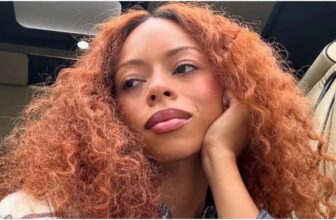
 Photo: Instagram/xarabeqele
 For Black women in particular, hair has never been just hair. It carries history, culture, politics, and deep personal meaning. Every choice we make about our hair — whether to big chop, braid, loc, twist, wear it natural, or relax it — sits inside a bigger story shaped by society, family, and community.
Our hair does not exist in isolation. It’s influenced by the images we see in media, the rules of professionalism at work, the traditions passed down at home, and even the comments whispered or shouted by strangers. When we choose to relax our hair, it doesn’t happen in a vacuum; it happens against the backdrop of centuries of pressure to conform.
For a long time, there has been an unspoken assumption that relaxing your hair means you don’t love yourself. That it signals a desire to look like someone else, that it’s an attempt to erase your roots, that it shows a lack of pride in your natural identity. This idea has followed Black women for generations, hanging over our choices like a shadow. But is it really true? Or even fair?
I don’t believe it is that simple. Yes, historically, relaxers were tied to Eurocentric beauty standards. Straight hair was upheld as the gold standard, while afros and kinks were dismissed as unkempt, unprofessional, or undesirable. That history can’t be erased.
But in today’s world, the reasons women relax their hair are often far more complex. Many women do it because it makes their lives easier. Because maintaining natural hair, as gorgeous as it is, takes work; hours of detangling, products that pile up on bathroom shelves, and wash days that feel endless. For some, it’s not even about shame. It’s practicality, preference, and the realities of life.
That realization has shifted how I view my own choices. Relaxing my hair doesn’t mean I hate it, and it doesn’t mean I’m ashamed of it. It means I made a decision that worked for me in that moment. Sometimes that decision was about convenience. Sometimes it was about aesthetics. Either way, it was mine, and I believe we should all have the freedom to make those choices without carrying the weight of guilt or judgment.
 Photo Courtesy
 It’s also important to remember that for many women, relaxing hair was about survival. Not so long ago, wearing natural hair in certain spaces came with risks. An afro at a job interview could quietly shut a door before you even walked through it.
Children have been punished at schools for wearing locs or afros, accused of being “distracting” or “messy.” Mothers who wanted to protect their daughters from mockery or discrimination sometimes chose relaxers as a shield. In those cases, relaxing hair wasn’t a sign of self-hate; it was a strategy to navigate a world that too often refused to accept us as we were.
That doesn’t mean the decision is ever completely free of outside influence. The reality is that Eurocentric beauty ideals have shaped our sense of what is acceptable and attractive for centuries. Even now, with the rise of the natural hair movement, whispers remain. Comments like, “You’d look more professional with straight hair,” or “Your curls need taming for this event” still surface. These pressures are real, and they do affect our choices. But to flatten every relaxed head into a story of shame erases the nuances that matter.
The truth is that relaxed hair does not automatically mean self-rejection, just as natural hair does not automatically prove self-love. Hair is also personal, a form of self-expression, and sometimes simply a matter of time and convenience. Some women relax because they love the sleek look. Some because it saves hours on wash day. Some go back and forth between natural and relaxed, depending on what stage of life they’re in.
Loving your natural hair does not require you to wear it in its raw state every single day. It means you recognize your natural hair as beautiful and valuable, even if you choose to style it differently sometimes.
Natural hair is a commitment, and anyone who has experienced it fully knows the truth. Wash days often stretch into hours of detangling, conditioning, and styling. The list of hair tools and products grows long: wide-tooth combs, detangling brushes, leave-in conditioners, oils, gels, curl creams, satin bonnets. The cost, the time, the energy; it can feel endless.
For a mother working twelve-hour shifts or a student balancing exams and part-time jobs, the idea of dedicating three or four hours to hair care every week isn’t realistic. For them, relaxers are a relief, a way of managing life with fewer battles.
 Photo: Instagram/veeiye
 The natural hair movement changed everything by reclaiming space, representation, and pride. It reminded us that our curls and coils are crowns, not flaws. Seeing afros and braids celebrated on runways, in boardrooms, and on television felt liberating. But that movement also introduced a new kind of pressure.
Suddenly, relaxing your hair was framed as betrayal. Women who chose relaxers were sometimes shamed, as if one decision could erase their pride in their heritage. In replacing one rigid expectation with another, we created a different kind of policing.
The irony is that true self-love should mean freedom; the freedom to choose, to experiment, to go natural or relaxed, to braid or loc, to wear wigs or chop it all off, without judgment. Relaxing your hair doesn’t have to mean you dislike your natural hair. It can simply mean you are exercising that freedom.
Of course, relaxers are not without their risks. The chemicals can weaken strands, leaving them brittle. Scalp burns are a very real and painful part of the experience. Over time, the damage often forces people to cut it all off and start over.
But even in that, there is a kind of liberation. Women today aren’t afraid of the big chop; it doesn’t feel like defeat anymore. It feels like renewal, a fresh beginning, a chance to start again. I’ve seen so many women go through that cycle: relax, damage, chop, regrow, repeat. And in each stage, they discover something new about themselves and their hair.
For me personally, the problem was never the relaxer itself. The problem was the reason behind the choice. If someone relaxes their hair because they’ve been made to believe their curls are ugly or unworthy, that reflects internalized shame and a lack of healing. But if the decision comes from preference, convenience, or simply liking the look, it doesn’t mean you’ve rejected your natural self.
My own journey has carried me through every phase. There were times I wore my afro with pride, times when braids gave me versatility, and times when relaxers gave me simplicity when I needed it most. Each phase taught me something different, and none of them erased my love for the hair that grows naturally from my head. They only showed me the many ways I can navigate life with it.
 Photo: Pattern Beauty
 What frustrates me even more is how much pressure is placed on women’s hair choices compared to men’s. Rarely do we stop to debate whether a man’s haircut reflects his self-love or cultural pride.
Rarely do we ask him to justify whether his grooming choices carry political weight. Yet for women, every strand seems loaded with meaning, every hairstyle is scrutinized, and every choice is framed as either an act of resistance or a betrayal. That is an exhausting burden to place on something as deeply personal as hair.
The truth is that self-love isn’t determined by texture; it’s determined by acceptance. If you can look in the mirror at your natural hair and see its beauty, then you love it, even if you sometimes choose to wear the hair differently.
If you can wear a relaxer without believing that your curls are unworthy, then you still love your natural hair. The danger comes only when the choice is rooted in shame, when someone truly feels their natural hair is inherently ugly. That is where healing and unlearning are needed. But not every relaxed head carries that wound, and assuming otherwise oversimplifies the truth.
What we need is less judgment and more honesty. Less division and more understanding. Hair is personal, but it is also communal, tied to history and culture, yes, but still an individual choice.
The way we wear our hair might say something, but it should never be reduced to a test of loyalty or authenticity. We can acknowledge the historical weight, we can critique the systems that shaped these preferences, and still affirm the freedom of individuals to choose what works best for them.
Conclusion
So, does relaxing my hair mean I don’t love my natural hair? Not at all. It simply means I’m making a choice; one that fits my life, my mood, and my moment. Sometimes that choice looks like coils. Sometimes, it looks like sleek strands. Sometimes, it looks like a big chop and a brand-new beginning.
At the end of the day, hair grows, styles change, and people evolve. What doesn’t change, or at least, what shouldn’t, is the love we carry for ourselves in every stage of that evolution. Whether natural, relaxed, braided, or bare, our hair is ours. And owning that truth, unapologetically, is the real definition of love.
Photo: Getty Images
You May Also Like:
18 Best Haircut Trends for 2026: Your Guide to Soft, Romantic, and Effortless Styles
March 26, 2026Cardi B Reveals Why Using Raw Garlic is Bad for Your Hair
March 25, 2026The Only Hair Colours to Wear this Spring
March 24, 2026The French Twist is Making a Chic and Glamorous Comback
March 23, 2026What the Braided Hairstyles on Sinners' Cast Really Mean
March 19, 2026Margot Robbie Just Made the Messy and Wet Bob Hairdo Covetable
March 10, 2026Teyana Taylor Oozes Style as She Debuts a Silver Hairstyle at the Chanel Fall/Winter 2026 Show
March 10, 202611 Best Curl Creams for Year-Round Bounce and Shine
March 9, 202615 Best Hairstyle Trends to Try This Spring
March 9, 2026The Japanese Bob is the New Minimalist Hairstyle to Wear in 2026
March 3, 202620 Covet-Worthy Balayage Highlight Hairstyles to Rock in 2026
February 27, 2026Money Piece Hair: Your Complete Guide and 17 Hairstyle Ideas
February 27, 2026


Esther Ejoh is a Fashion Editor at Fashion Police Nigeria, where she writes all things fashion, beauty, and celebrity style, with a sharp eye and an even sharper pen. She’s the girl who’ll break down a Met Gala look one minute, rave about a Nigerian beauty brand the next, and still find time to binge a movie or get lost in a novel. Style, storytelling, and self-care? That’s her holy trinity.