Aso-ebi is one of the most important style decisions at a Nigerian wedding. The fabric signals respect, unity, and celebration, but the final look depends on far more than simply buying what everyone else is wearing.
The difference between looking well put together and looking unprepared often comes down to fabric choice, tailoring, colour, and context.
Not every aso-ebi works for every event. A daytime garden ceremony demands something breathable and soft. A hotel ballroom reception can handle heavier lace, richer textures, and more structure. The same applies to colour. Some shades photograph beautifully on deep skin, while others can look harsh under flash or stage lighting.
This is why planning matters. The best aso-ebi outfits start with understanding the wedding, choosing the right material, and styling with balance, not excess. From cord lace to chantilly, each fabric choice affects comfort and overall finish.
Here we’ll cover everything you need, how to choose the right aso-ebi fabric, pick flattering colours, avoid common mistakes, and ensure your final look feels polished, appropriate, and memorable.
What Exactly Is Aso-Ebi?
Aso-ebi simply means “family cloth,” but in Nigerian weddings, the fabric has grown into something much bigger than a literal family fabric.
Aso-ebi is the chosen material worn by a specific group of guests to show connection to the couple, the family, or the celebration. Friends might wear one fabric, the bride’s family another, and the groom’s side something completely different.
Once you see the colours and prints filling the venue, everything makes sense. This chosen fabric is how Nigerian parties turn unity into a visual moment, and how guests show up with both respect and style.
Why Aso-Ebi Matters at Nigerian Weddings
At its core, Aso-Ebi started as a shared dress code worn by relatives during important ceremonies, weddings, funerals, birthdays, anniversaries, and moments where family presence mattered and unity needed to be shown.
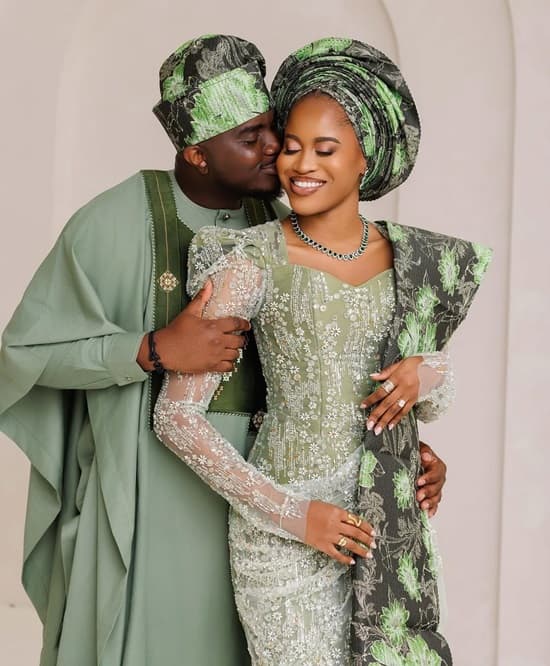 Photo: Instagram/@asoebiafrica
 Over time, this material moved beyond just blood relatives. Friends, coworkers, and well-wishers began wearing uniform clothes too, as a way of saying, “I’m part of this celebration.”
The tradition also grew alongside Nigeria’s evolving fashion scene. Between the mid-1960s and late 1970s, imported fabrics like Lace and George became popular choices for Aso-Ebi, adding richness and status to the look. As demand increased, tailors and designers began specialising in native wear, creating more detailed cuts, stronger silhouettes, and bolder uniform styles.
Lagos fashion magazines even played a role, with designers pulling inspiration from print spreads and guests buying copies just to spot familiar faces in coordinated outfits.
Today, if you attend a wedding in Lagos or a ceremony outside Nigeria, you will likely see groups dressed in the same fabric or colour, each person styled differently, that’s Aso-Ebi. A shared material, turned into a full cultural fashion language.
Aso-Ebi Etiquette: Do’s and Don’ts for Wedding Guests
Aso-ebi comes with unspoken rules, and getting those right matters as much as the outfit itself.
If a couple invites you to wear the chosen fabric, showing up in it signals support and helps fund the event. Non-Aso-Ebi guests can join by wearing the “colour of the day.” Always dress to impress; Nigerian weddings are glamour central, and you can never be overdressed.
At Nigerian weddings, always respect elders with greetings, balance timing, and follow the dress code.
Guests should also pay attention to boundaries. All-white looks can read as trying to upstage the bride, and overly dramatic styling can feel like competition instead of celebration. The goal is always harmony. A polished outfit that fits the group, photographs well, and still feels personal.
Step One: Understand the Wedding Before Choosing Anything
Start with the wedding itself, because aso-ebi is never one-size-fits-all.
A traditional engagement ceremony in the afternoon calls for something very different from a white wedding reception at night. Day weddings usually look best with lighter fabrics and softer finishes, especially if the venue is outdoor and the weather is hot. Evening receptions, on the other hand, can handle richer textures, deeper colours, and more dramatic styling.
Also, pay attention to the setting. A garden wedding will feel completely different from a ballroom reception. Outdoors, you want fabric that moves well and does not trap heat. Indoors, you can wear heavier, more structured materials without discomfort.
Most importantly, consider the couple’s vision and the family’s expectations. Some families prefer a fully traditional and coordinated look, while others opt for modern cuts and subtle elegance. Once you understand the tone of the event, choosing your fabric and style becomes much easier.
How to Choose the Right Fabric
Fabric choice is where the entire look begins.
Lace remains one of the most popular options, but not all lace is the same. Cord lace gives structure, which makes the fabric perfect for fitted gowns and sharp corset styles. Dry lace feels richer and heavier, so the material works well for weddings where you want a more formal presence.
Sequined tulle adds sparkle and photographs beautifully at night, but the material can feel too loud for simple daytime ceremonies. Chantilly lace is softer and lighter, making the lace fabric a great choice for guests who want something delicate and breathable.
For traditional weddings, Aso-Oke always stands out. The regal fabric holds its shape and pairs beautifully with gele and coral accessories.
 Photo: Instagram/@bakaretaiwo_photography
 Brocade and damask fabrics suit more tailored silhouettes because of their weight and stiffness. Ankara and other printed fabrics feel more relaxed and vibrant, so they work best for smaller weddings or casual celebrations. Velvet and satin blends, on the other hand, shine at evening receptions, especially when the venue lighting brings out the depth of the fabric.
Besides material, colour can also make your outfit look expensive or completely off, so you need to choose carefully. Colour affects how your outfit photographs under flash, stage lighting, and outdoor sun. Jewel tones like emerald, wine, cobalt, and deep gold tend to glow beautifully on deeper skin.
Pastels can also work, but undertone matters. Warm pastels like peach or soft coral usually flatter more than icy pinks or pale lilacs, which can look washed out in flash photography. In 2026, expect earth tones and metallics to dominate, blending heritage with avant-garde.
Avoid icy shades when the wedding is outdoors or when the fabric has too much shine, because the colour can turn harsh in pictures. If you want to stand out without clashing with the bridal party, stay within the chosen colour family but pick a slightly deeper or softer variation.
For example, if the bridal train wears bright royal blue, guests can wear navy or dusty blue for balance. That way, you look intentional, coordinated, and still distinct enough to feel special.
Common Styling Mistakes to Avoid
Most Aso-Ebi looks do not go wrong because of the fabric. Problems usually come from the small decisions people ignore until the morning of the wedding.
Over-accessorising is one of the quickest mistakes. When the fabric already has sequins, heavy embroidery, or bold colour, too much jewellery competes with the outfit. A cleaner approach always looks more polished. Pick one focus, either statement earrings, a bold gele, or a standout clutch, then keep the rest simple.
Wrong undergarments can ruin even the most expensive lace. Strapless gowns need proper support, fitted dresses need smooth shaping, and sheer fabrics need the right lining. Always test your underwear during fittings, not on the wedding day. Confirm your lining and finishing from the start.
Ask what fabric will go underneath, how sheer areas will be handled, and how the seams will be finished. These details separate a clean luxury look from something rushed.
Poor tailoring is another common issue. Aso-Ebi is meant to look custom, so a loose bust, uneven hem, or tight sleeves will immediately show. The best fabric still looks cheap if the fit is wrong. Never skip fittings, because one fitting is rarely enough, especially with corset styles or detailed lace. Fittings catch problems early, before the outfit becomes impossible to fix.
Many times, we also choose fabric without considering the weather. Nigerian weddings can run for hours, and heavy lace or thick brocade in an outdoor venue can become uncomfortable fast. Comfort matters because discomfort always shows in your posture and mood.
Finally, do not sacrifice comfort just for photos. If you cannot sit, dance, or breathe properly, the outfit will feel like a burden. The best looks always allow movement.
Stunning Aso-Ebi Styles for Women: From Classic to Contemporary
Women’s Aso-Ebi styles are a canvas for creativity. Classic options include mermaid silhouettes in lace or brocade, with dramatic slits for flair. For modern twists, try corset tops with high-low skirts or two-piece sets for versatility. Remix a top with trousers after the wedding. Peplum blouses paired with iro (wrappers) and buba offer traditional vibes with a contemporary edge.
 Photo: Instagram/@asoebiladies
 For 2026, velvet Aso-Ebi gowns with 3D embellishments are popular, along with lace combinations for Owambe glamour. Whether you’re curvy or petite, choose silhouettes that flatter. A-line gives flow, fitted adds drama. Add a tied gele for that iconic head-turning moment.
Dapper Aso-Ebi Styles for Men: Elevating Masculine Elegance
Men’s Aso-Ebi looks are just as important, especially for groomsmen and close family groups.
In Nigerian weddings, men shine in agbadas, kaftans, or buba and sokoto sets, often in complementary shades to women’s outfits. Embroidered details on senator wears or agbadas add sophistication, with Fila (traditional caps) completing the look. For modern flair, choose slim-fit pants with flowing tops, adding beads or patterns.
In 2026, expect bold colours like royal blue or white with red accents, tailored for the groomsmen’s unity.
Pro tip: Coordinate with the group but add personal touches like a statement necklace or walking stick for regal vibes.
Accessorising Your Aso-Ebi Look: The Finishing Touches
Accessories elevate Aso-Ebi from good to unforgettable.
For women, a dramatic gele or fascinator adds height and drama, paired with coral beads or gold jewellery. Men can choose embroidered caps, beaded necklaces, or leather shoes. Structured handbags, feather fans, and statement earrings balance tradition and trend.
Keep it cohesive: Match metals to fabric accents and do not overdo it. Let the outfit shine. When lace already carries heavy detail, accessories should support the look, not compete with it. For versatility, choose detachable elements like trains for post-event wear.
Current Aso-Ebi Trends to Watch in 2026
2026 is all about “fabric as a base” and coordinated concepts over strict uniformity.
Luxury velvet for “Rich Aunty” vibes, lace with sequins for sparkle, and multi-piece sets for remixing are the dominant trends. There is no single “colour of the year” as couples encourage personal palettes within themes.
Sustainability stands out with reusable designs, blending heritage with avant-garde for global appeal.
Where to Source Your Aso-Ebi: Online and Beyond
Sourcing is easy online.
Use Etsy for custom bundles, Middlesex Textiles for group laces, or specialised sites like Buifabrics and Asoebi Mall. For authenticity, check vendors like 5 Yard Fabrics or Fabriq Star. For your budget, group buys reduce costs and always factor in tailoring.
Aso-Ebi Wedding Guest Styles You’d Want to Bookmark
Now that you understand the foundation, here are the aso-ebi styles worth bookmarking.
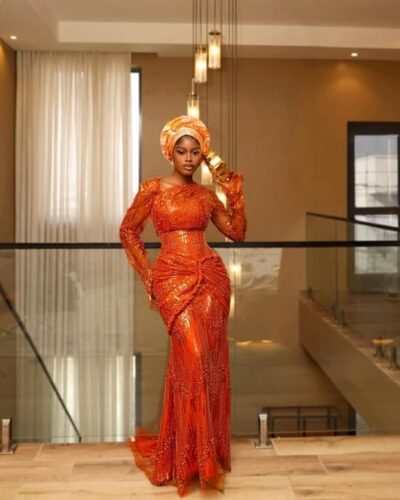
This Aso-ebi style stands out because the tailoring does all the work.
The beaded fabric catches light beautifully, and the matching gele pulls the look together in an event-ready look. With this style, you’ll be turning heads effortlessly.
Photo: Instagram/the.modetcollective
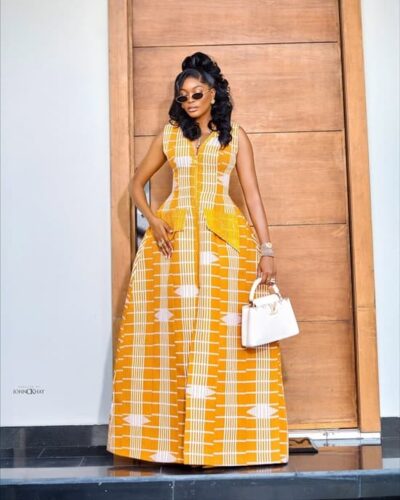
If the Aso-ebi fabric chosen for the wedding is aso-oke, we’ve got you covered too! This Aso-Oke style blends tradition with a fresh modern feel.
The fabric’s pattern pops, the structured bodice flatters, and the pockets add a fun, current touch that makes the whole look feel special.
Photo: Instagram/@kie_kie__
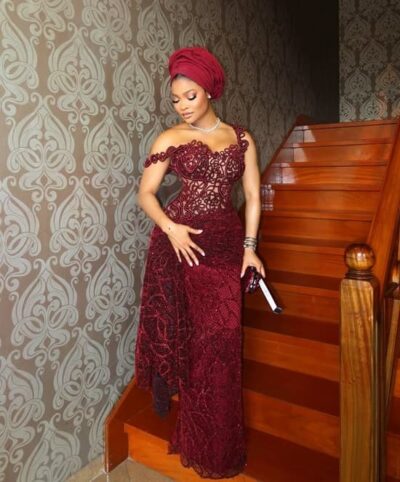
This aso-ebi style is a sure head-turner!
The off-shoulder neckline and clean, fitted shape make the Aso-ebi style a strong choice for a wedding where you want to look polished and memorable.
Photo: Instagram/@kubisfabric
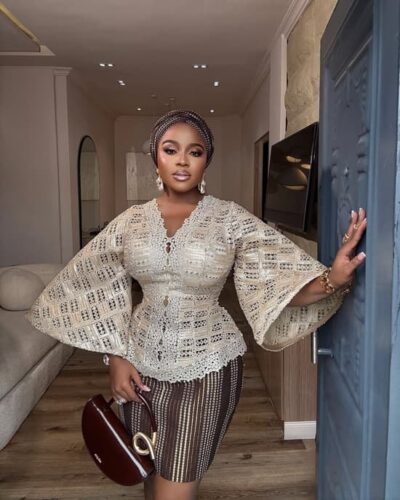
Looking for a classy way to combine your Lace and Aso-oke?
This structured lace peplum is one of those styles you screenshot immediately.
The bold sleeves, defined waist, and crisp lace feel dramatic but still wearable, especially with a simple skirt to balance it out.
Photo: Instagram/@veekee_james
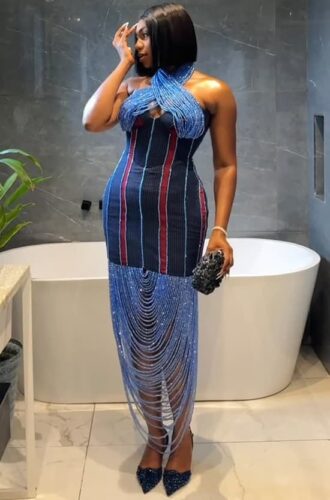
This Aso-Oke dress is pure perfection.
The beaded criss-cross neckline frames the shoulders beautifully, and the layered beaded hem adds movement and luxury with every step. The style feels classy, artistic, and impossible to ignore.
Photo: Instagram/@stylebysai

If you’re a lover of a structured neckline, you’d love this Aso-ebi style.
The halter neckline and structured corset bodice perfectly sculpt the silhouette, making the dress flattering.
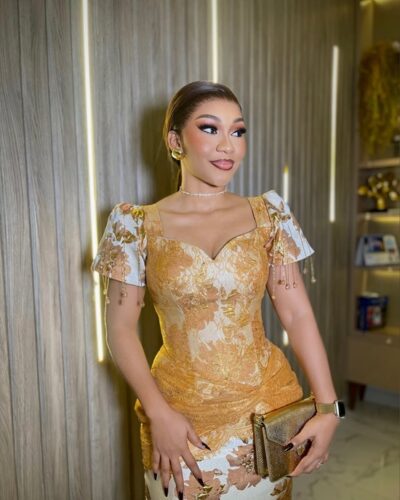
Brocade always stuns in pictures, and this style steals the spotlight, too.
The form-fitting bodice with its sweetheart neckline expertly flatters the figure.
Photo: Instagram/@rosegold_beautypalour
Aso-Ebi is more than fashion. It is a celebration of culture, community, and creativity. Whether you wear a flowing lace gown or a tailored agbada, remember it is about unity in diversity.
As you prepare for your next Nigerian wedding, let this guide inspire your perfect Aso-Ebi style. Dress up, show up, and dance like the star you are, because in the world of Aso-Ebi, every guest is part of the magic.
Photo: Instagram/@oluwaniifemiii_
You May Also Like:
11 Nigerian Clothing Brands You Need In Your Wardrobe In 2026
February 13, 202610 African Male Models Who Just Made Their Fashion Week Debut
February 4, 2026Nairobi Fashion Week 2026: Decarbonizing the Runway with African Ingenuity
February 2, 202611 Ankara Styles That Will Dominate The New Year
January 7, 2026Highlights from the 2025 Africa Fashion Week Nigeria
December 22, 2025Wana Sambo Returns With a New Collection Inspired by New Beginnings
December 18, 2025Everything You Need To Know About Nairobi Fashion Week 2026
December 16, 2025Dakar Fashion Week 2025 Reveals a New Era for the African Runway
December 11, 2025Africa Fashion Week Nigeria 2025: Everything You Need To Know
November 6, 2025Lagos Fashion Week 2025 Day 4 Highlights: A Celebration of Colour, Culture and Craft on the Runway
November 4, 2025Who Owns Ankara? The Untold Story Behind Africa’s Most Loved Fabric
November 3, 2025Lagos Fashion Week 2025 Day 3 Connected Business, Culture, and the Future of African Fashion
November 3, 2025

Evelyn Adenike is an Associate Beauty Editor at Fashion Police Nigeria, where she covers all things beauty, from the glossiest nail trends to the best skincare finds. With a soft spot for storytelling and an eye for what’s fresh, she brings culture, creativity, and just the right dash of drama to every post. If it’s bold, beautiful, and blog-worthy, Evelyn’s probably already writing about it.