Every so often, something old finds its way back into the spotlight. In Nigeria right now, that “something” is lace clothing.
For years, lace dresses sat quietly in our wardrobes, reserved for weddings, church services, and family functions. Beautiful, yes, but predictable. It was the fabric our mothers adored and our grandmothers swore by.
Now, lace dresses are everywhere again; on red carpets, in music videos, and in everyday streetwear. You see the piece of garments in markets, boutiques, Instagram feeds, and especially on singer Falz. Somehow, lace fabric has become cool again, and this time, it feels bigger than fashion.
Falz (real name Folarin Falana) has never been just a rapper. He’s an entertainer who blends humor, politics, art, and culture into one vibrant identity. Known for turning social commentary into catchy verses, Falz has now turned his attention to lace clothing, transforming it from a traditional staple into a cultural statement. His latest album, The Feast, doesn’t just sound Nigerian; it ‘looks’ Nigerian. From the cover art to the music videos, lace ensembles take center stage. He wears the lightweight fabric with pride and purpose.
You can tell it’s more than a fashion choice. In his visuals, Falz appears in a full agbada lace, surrounded by dancers in gold, mint green, and deep blue lace dresses. The light catches every thread, making the fabric shimmer like it’s alive. Suddenly, lace fabric doesn’t feel like a relic anymore; it feels reborn. Falz understands that delicate fabric carries history, but he’s proving it doesn’t have to stay trapped in it.
Of course, in true Nigerian fashion, some critics have joked that he’s making lace clothing too expensive for the rest of us; a funny, but revealing reaction. Because really, shouldn’t we be celebrating someone who’s proudly putting our fabric on the world stage?
At the heart of this revival is a bigger idea: transforming something traditional into something modern. Nigerians are reimagining lace clothing. It’s no longer just for ceremonies or the older generation. Young designers are remixing it; lace shirts with sneakers, skirts with denim jackets, tops layered over tanks. What used to be formal now feels fun. What used to be “Sunday’s best” now fits anywhere, any day.
Of course, lace clothing has always carried deep cultural meaning, especially among the Yorubas, where aso-ebi symbolizes unity, love, and belonging. Wearing a lace dress once meant you were part of something: a family, a story, a celebration. The more intricate the fabric, the more special the occasion. But as Ankara fashion rose in popularity, lace was labeled “old-school,” something you wore for duty, not desire.
That’s changing fast. A new generation is reconnecting with fabrics that tell stories. We want to wear our heritage, not just talk about it. Lace clothing fits perfectly into that desire. It carries history and artistry, yet still feels fresh and flexible.
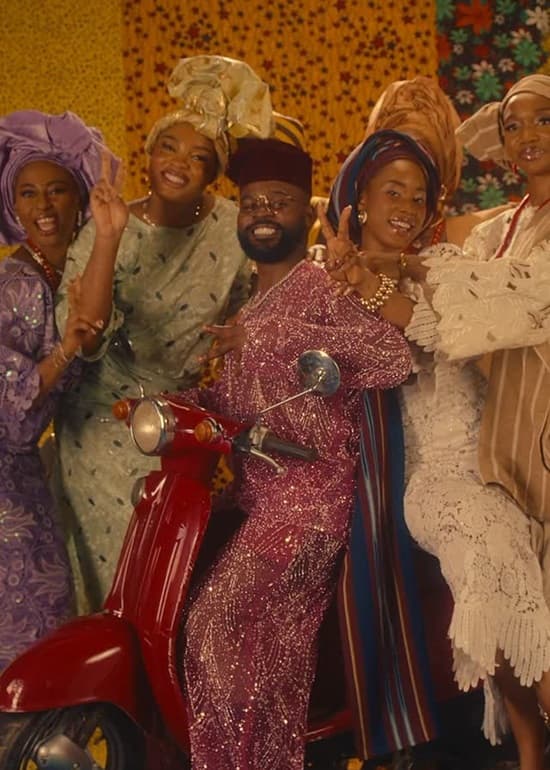 Photo: Instagram/falzthebahdguy
 Visit any Nigerian market today and you’ll see the shift. The lace fabric stalls are buzzing again. Young shoppers reach for neon, metallic, and geometric-patterned lace that their mothers might not even recognize. Tailors are getting creative requests — lace jumpsuits, crop tops, and co-ords. The fabric has been permitted to breathe again.
Designers are doing their part, too. Many are bringing lace clothing into high-fashion collections, crafting the fabric with denim, silk, or leather. It’s no longer seen as delicate or dated, but as powerful; a symbol of craftsmanship and confidence.
At the 2025 FashionEvo Summit & Show, Shakara Trybe took cultural storytelling to the next level, exploring lace clothing in bold new ways. The result was breathtaking; a reimagining of the past through a modern lens.
And then there’s Falz, leading the charge. The lawyer-turned-music artist is proving that lace clothing isn’t just feminine or ceremonial; it’s fluid. It can be masculine, playful, or deeply artistic, depending on how you wear it. When he steps out in lace, he’s not just dressing up; he’s challenging expectations about masculinity, style, and culture.
That confidence is catching on. More Nigerian male artists and influencers are embracing lace dresses, pairing them with sneakers, sunglasses, and jewelry. It’s part of a larger movement of men leaning into colour, texture, and freedom in fashion. Lace fabric, with its intricate patterns and soft drape, sits perfectly at the center of that shift; elegant without being uptight, expressive without being loud.
 Photo: Instagram/falzthebahdguy
 For women, lace never really disappeared. It has always been tied to joy: weddings, birthdays, and naming ceremonies. But what’s different now is how women wear the fabric. Gone are the heavily structured dresses and rigid designs. In their place: lace blouses over jeans, lace skirts with sandals, lace slip dresses paired with denim jackets. The fabric’s versatility makes it work for almost any setting, formal or casual, day or night.
Its comeback also makes sense in Nigeria’s climate and culture. Lace breathes. The lightweight fabric lets air pass through while still looking put-together; a blessing in Lagos’ heat. And because it can be dyed, embroidered, or layered, lace offers endless creative possibilities for designers. It’s local fashion at its most inventive.
Still, beyond the style, there’s something deeply emotional about this return. Lace fabric carries nostalgia. It reminds us of watching mothers and aunties preparing for big occasions; ironing their lace wrappers, adjusting geles, taking photos before heading out. Wearing a lace dress today feels like stepping back into those moments, but this time on your own terms. It’s nostalgia, reimagined.
And visually? Lace is magic. The way it catches light, the way it moves; it was made for the camera. In Falz’s videos, lace almost becomes another character: glowing, shifting, commanding attention. On social media, lace dresses are everywhere in carousels, reels, and red-carpet recaps. Whether it’s a full agbada or a lace mini dress, the texture adds dimension and drama.
This moment feels different because Nigerians aren’t waiting for global validation. We’re defining style on our own terms, and the world is watching. Whether it’s Falz performing in a lace 2-piece or a designer showing it in Paris, the fabric is instantly recognizable. It’s proudly, unmistakably Nigerian.
Some may argue that lace never really left. But what’s happening now is a reinvention; a new chapter that transcends age, gender, and occasion. Today, when we wear lace, we’re saying something powerful: we can honour where we come from while moving boldly toward what’s next.
 Photo: Instagram/emporium_de_vogue
 As more artists, designers, and creators join the movement, lace fabric in Nigeria has become its own language; one that speaks of pride, memory, and innovation. It bridges generations, connecting the past to the present, tradition to creativity.
And in the midst of it all stands Falz; artist, rebel, storyteller, wrapped in lace, grinning like he knows what the rest of us are just starting to see. He’s not just wearing fabric; he’s wearing an idea: that Nigeria’s past and future can coexist on the same body, stitched together by culture, courage, and creativity.
So yes, lace is having its fashion moment in Nigeria. A celebration of heritage and imagination. A reminder that what once felt ordinary can become extraordinary again, as long as someone dares to see it differently.
And right now, through Falz and countless others, lace in Nigeria isn’t just back. It’s reborn; brighter, bolder, and prouder than ever.
Photo: Instagram/thevine.apparels
You May Also Like:
Highlights from the 2025 Africa Fashion Week Nigeria
December 22, 2025Wana Sambo Returns With a New Collection Inspired by New Beginnings
December 18, 2025Everything You Need To Know About Nairobi Fashion Week 2026
December 16, 2025Dakar Fashion Week 2025 Reveals a New Era for the African Runway
December 11, 2025Africa Fashion Week Nigeria 2025: Everything You Need To Know
November 6, 2025Lagos Fashion Week 2025 Day 4 Highlights: A Celebration of Colour, Culture and Craft on the Runway
November 4, 2025Who Owns Ankara? The Untold Story Behind Africa’s Most Loved Fabric
November 3, 2025Lagos Fashion Week 2025 Day 3 Connected Business, Culture, and the Future of African Fashion
November 3, 2025Lagos Fashion Week 2025 Day 2 Celebrated Confidence, Craft and Conscious Design
November 2, 2025How Aso-Oke Fabric is Woven From Start to Finish
October 13, 2025Why Dakar is Becoming the New Hub for African Streetwear and Couture Fashion
October 1, 202516 Fashion Schools in Africa Every Aspiring Designer Should Know
September 12, 2025


Esther Ejoh is a Fashion Editor at Fashion Police Nigeria, where she writes all things fashion, beauty, and celebrity style, with a sharp eye and an even sharper pen. She’s the girl who’ll break down a Met Gala look one minute, rave about a Nigerian beauty brand the next, and still find time to binge a movie or get lost in a novel. Style, storytelling, and self-care? That’s her holy trinity.